England. June 1940. Things looked bleak for the Allies after the fall of France and the retreat from Dunkirk, Britain was on the defensive and most people believed that the invasion of England would soon begin. In an effort to take some of the fight to the enemy Winston Churchill authorised Hugh Dalton, the Minister of Economic Warfare, to set up a clandestine organization to help form, supply and run resistance movements in occupied countries. This new Special Operations Executive (SEO) was to be responsible for recruiting and training agents who would then be sent behind enemy lines. (The work of the SOE). One of the most difficult roles which members of the SOE undertook was that of wireless operator.
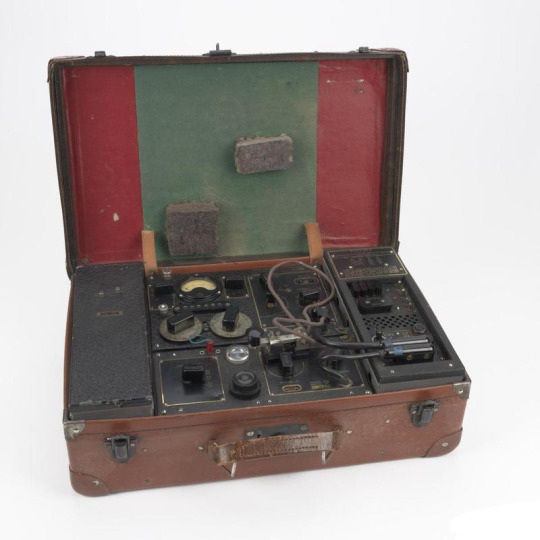
The early equipment needed by radio operators was cumbersome – a short-wave morse transceiver (capable of both sending and receiving messages) weighing a hefty 30 pounds along with a flexible aerial 70 feet long – all of which had to be concealed in a suitcase 2 feet long. It was hard to be inconspicuous and not act suspiciously whilst carrying such incriminating equipment in enemy held territory. The SOE realised how important the correct equipment would be for the survival of their agents and began to design their own lighter and more portable sets. The culmination of this work was the Paraset, a major improvement as it weighed just 9 pounds and was small enough to carry in a small attache case yet powerful enough to send and receive messages over distances in excess of 500 miles.
Type 3 Mark II (B2),
An SOE wireless operator had to know the area they worked in intimately. It was vital that they transmit from a different place, and only very briefly, each time they made contact with base as it was estimated that, in an urban environment, the Germans were able to track down a transmitter in around half an hour. Agents also had to create schedules for their transmissions which did not involve making contact on the same day of the week or at the same time of day, as any sort of pattern which could be identified by the Germans would be disasterous. The ideal for an agent was to set up, transmit, dismantle and get away within a maximum of 20 minutes to avoid capture and torture. To be found transmitting would almost certainly mean death to the operator, but it could also be devastating to the resistance group they worked with. If the enemy captured a transceiver and code books they would try to use them to trap the rest of the grouup. To try to prevent such deceptions each wireless operator was instructed to spell certain words incorrectly – if a transmission was made with the word spelt correctly the handler back in England would know that the operator had been compromised and, hopefully, have time to warn field agents in time for them to make good their escape.
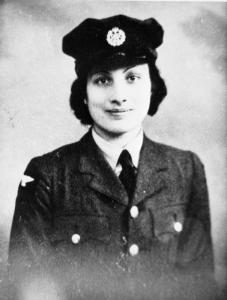
The majority of radio operators sent behind enemy lines by the SOE were women as it as believed that they would be able to move around with their equipment without drawing as much attention to themselves as a man would. After all, it was quite common for women to be out shopping with a bag during the day whilst a man in a similar situation would be much more conspicuous. The women who signed up to do this work were under no illusions as to the importance, and the danger, of what they were committing to – the life expectancy of as SOE wireless operator working in Occupied France was just six weeks. (The Women Who Spied For Britain)
Some resistance groups were set up by the SOE whilst others were formed by locals with SOE support, yet regardless of how they began all groups received their instructions directly from England (or one of the subsidiary bases in other theatres of war, such as Cairo). The wireless operator in the ‘circuit’ lived in isolation with only brief contact with a single member of the group. It was a lonely existence in order to protect the remainder of the group. A wireless operator would not take part in operations such as sabotage, their only role was to be responsible for transmitting orders, or arranging the transport of agents and drops of supplies. In the early days all transmissions went through the radio station at Bletchley Park but the SOE later had its own stations at Poundon and Grendon Underwood – messages from the field would come in there to be forwarded to SOE HQ in London by teleprinter.
Security was vital in this clandestine world, both for the agent in the field and the information being transmitted. One way of ensuring security was by having an agent who knew how to transmit safely and securely, but the use of codes was also incredibly important. To begin with insecure poem codes were used, but these led to a number of disasters and so Leo Marks was made chief cryptographer. As part of his role Marks helped to develop single use ciphers printed on silk in an effort to save agents lives. The reason for such an expensive material was simple – it didn’t make a rustling sound like paper so, once concealed in the lining of clothing, it would not be detectable during a casual search.
Wireless operators who served behind enemy lines played an incredibly important role during the Second World War, particularly in the weeks leading up to the D Day landings in June 1944. Without their courage and sacrifice the war could have dragged on for months longer, and many more lives been lost. In my novel, Heronfield, one of the characters is a young woman who places her life on the line to be an SOE wireless operative in St Nazaire. My creation is an amalgamation of many women who served, and is my tribute to them all.







 Dorinda Balchin - Author