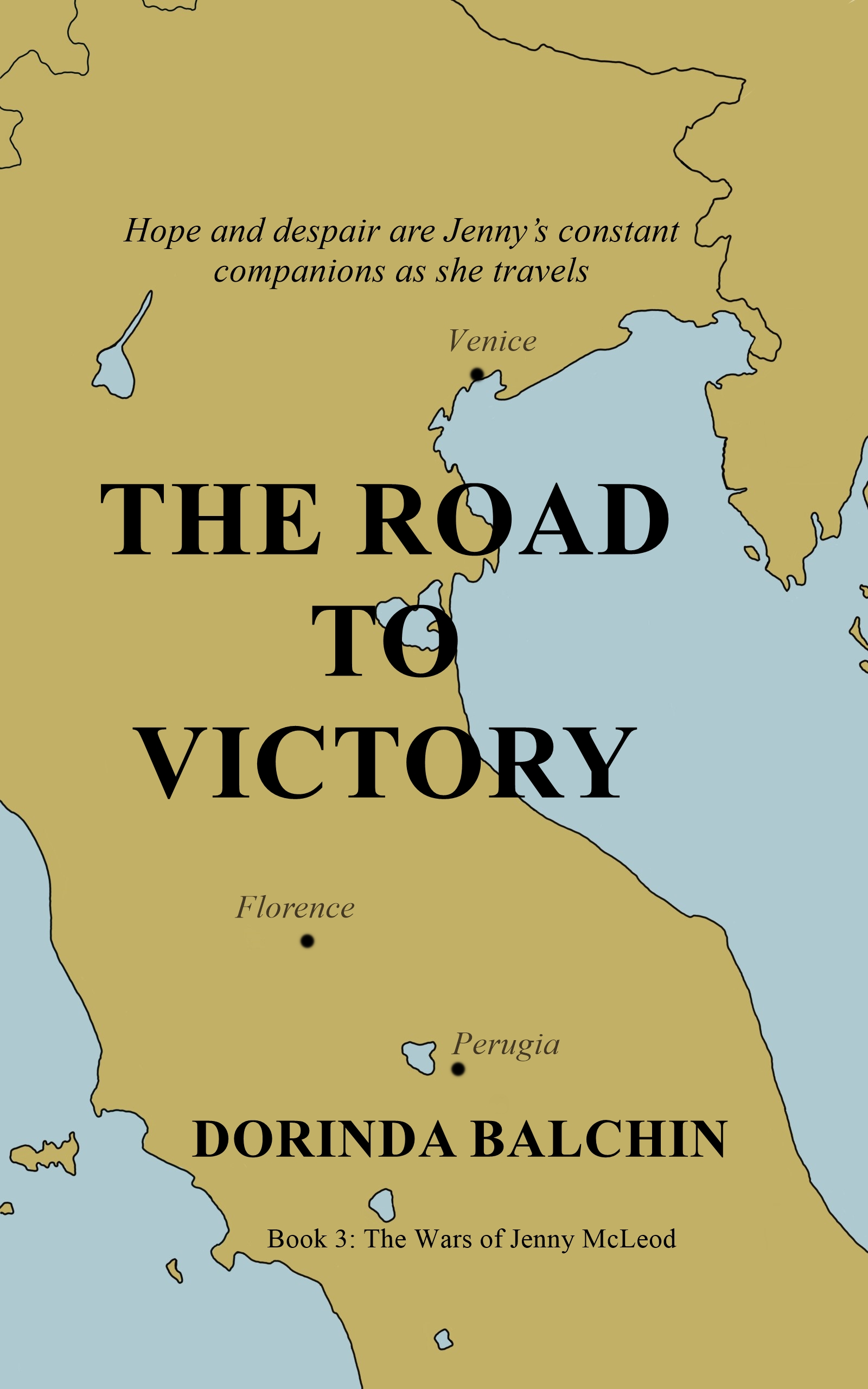
Book 3 of my series The Wars Of Jenny McLeod has now been published.
In The Road To Victory Jenny continues her fight to be accepted as an equal by male colleagues, and journeys through Italy with the Desert Rats as the Second World War draws to a close…
Exciting news. I’ve been writing stories with BBC presenter and theatre director, Chris Jarvis, for a couple of years now. Our new project together is called ‘The Wonky Apples’, which is to be performed at RHS Wisley during October half term. The two main characters in the play (aimed at ages 3-8) are being played by Sarah Day (West End actress, director and choreographer), and Rachel Cantrill (who has also appeared in the West End).
If you have small children/grandchildren, and are in the Surrey area over half term, why not pay a visit to the lovely gardens as Wisley, and enjoy a fun-filled show full of singing, dancing and jokes!
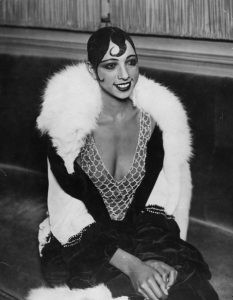
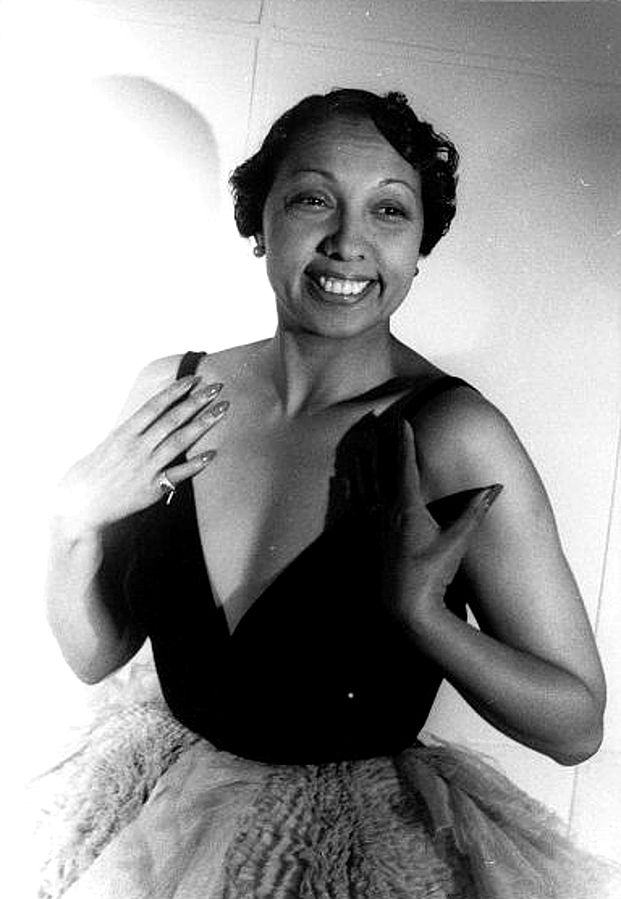
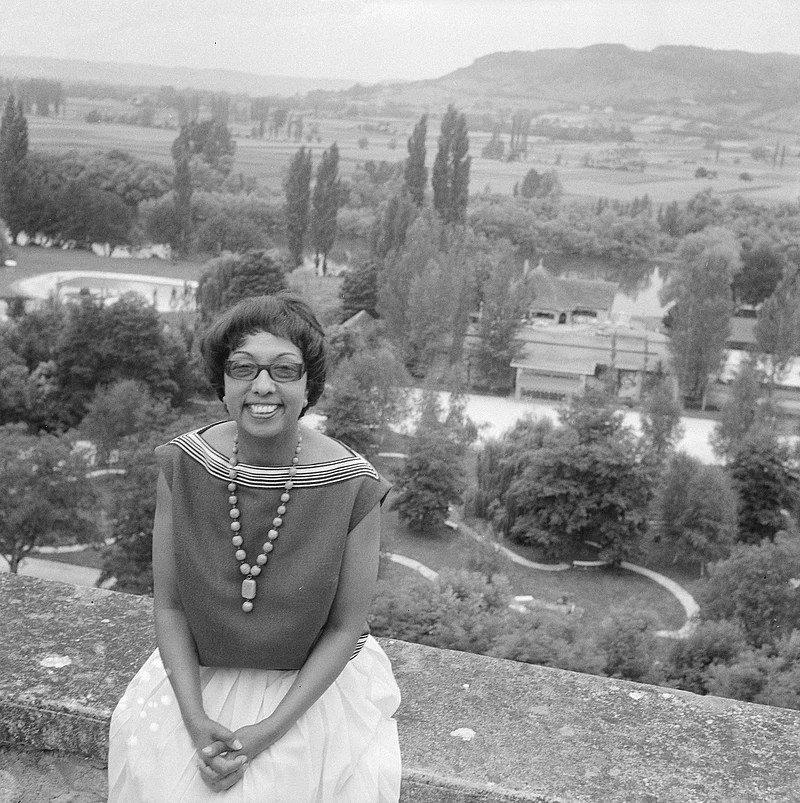
On 30th November 2021 France honoured the US-born 20th Century singer and activist Josephine Baker with a place in the Pantheon, the memorial to France’s national heroes, the first black woman to receive such an honour. So, who was Josephine Baker, and why is she such a hero to the French?
Josephine McDonald, the daughter of Carrie McDonald, was born in St Louis on 3rd June 1906. Her official biography states that her father was a vaudeville drummer, Eddie Carson, but it’s believed that she was actually the daughter of a member of a wealthy German family whom her mother was working for at the time. Carrie and Eddie often took Josephine onto the stage with them during their act but, unfortunately, their stage careers weren’t a success and the couple eventually split up.
Josephine grew up in a poor part of St Louis where she helped with the family finances by doing laundry, waiting on tables and babysitting; when she couldn’t find work she would dance in the streets collecting money from passers-by. By the age of 13, Josephine had left home and was touring with a vaudeville troupe, the Jones Family Band and Dixie Steppers, before joining the first African-American musical, Shuffle Along. In the show she was placed on the end of the chorus-line but drew attention to herself by exaggerating the dance routines in a comical way and soon became popular with audiences, the start of an illustrious career.
Josephine married four times over the years. Her first marriage was to Willie Wells when she was just 13 years old; the marriage was very short-lived. She married for a second time in 1921, to Willie Baker. This marriage didn’t last long either, but she kept Willie’s surname for the rest of her life as it was her name when she first became famous.
In 1925 Josephine travelled to Paris where she took part in a new show, La Revue Negre’ (The Negro Review). Her ‘Danse sauvage’ where she worn nothing but a feather skirt was seen as wild, sensual and charismatic, and she became an overnight sensation, becoming a symbol of the jazz age. She then moved on to perform at the Folies Bergère with her iconic costume – a skirt of artificial bananas and very little else. Although her audience was predominantly white Josephine’s performances followed African themes and styles. She became a French citizen in 1937 after her third marriage, to French industrialist Jean Lion. Her pet cheetah, Chiquita, often appeared on stage with her – it wasn’t uncommon for the animal to leap into the orchestra pit and terrify the musicians!
Josephine became the most successful American entertainer working in France – a level of success she could never have achieved in racially divided America. She was earning more than any other entertainer in Europe and was introduced to the elite of the time – Ernest Hemingway, Georges Simenon, Pablo Picasso and Gertrude Stein amongst others.
In 1927 Giuseppe Abantino became Josephine’s manager and lover. In the same year she took etiquette and singing lessons and embarked on a world tour. By the time Josephine returned to Paris she had re-invented herself and set the foundations for an enduring career. Yet despite her popularity in Europe Josephine received mixed reviews in America, often with racial undertones. TIME magazine said “Josephine Baker is a St. Louis washer-woman’s daughter who stepped out of a Negro burlesque into a life of adulation and luxury in Paris… In sex appeal to jaded Europeans of the jazz-loving type, a Negro wench always has had a headstart… But to Manhattan theatre-goers last week she was just a slightly buck-toothed young Negro woman whose figure might be matched in any night-club show, and whose dancing and singing might be topped almost anywhere outside of Paris.” An unhappy Josephine returned to France.
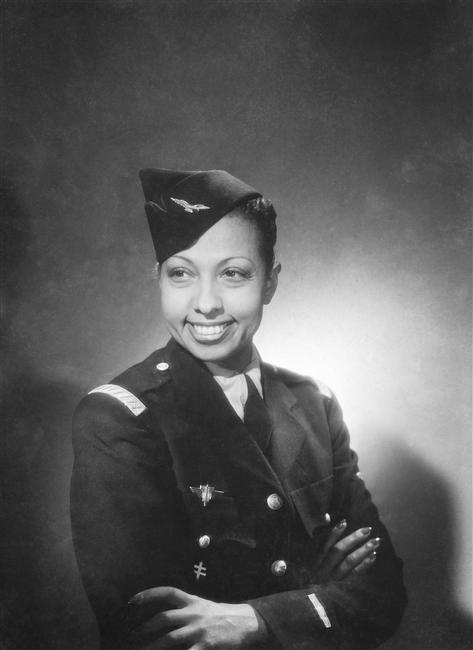
When France declared war on Germany in September 1939 Josephine was recruited by French Military Intelligence – the Deuxieme Bureau – to collect information about troop movements etc. from German officials she met at parties in ministries and embassies. Josephine’s undercover work was successful because of her fame which allowed her to mix with everyone from Italian bureaucrats to Japanese officials. When Germany finally invaded France Josephine left Paris for her home, Chateau des Milandes in the Dordogne, where she helped the Free French arrange visas to escape the country; Josephine also used her work as an entertainer to travel around Europe visiting neutral countries such as Spain and Portugal. She smuggled intelligence about airfields, harbours and German troop concentrations to the Spanish resistance written in invisible ink in her sheet music, from there it was sent on to England. She also carried notes pinned to her underwear, hoping that her celebrity status meant she wouldn’t be searched. As well as her work with the Resistance Josephine was a member of the Free French Forces and Women’s Auxiliary Air Force, she also served in the Red Cros, and performed for troops in North Africa and the Middle East. After the war Josephine was awarded the Croix de Guerre and the Legion d’Honneur by de Gaulle. She was also awarded the Rosette of the Resistance.
Josephine had divorced Lion in 1940, she married for the fourth and last time in 1947, to conductor Jo Bouillon. This was a period in which she re-invented herself as a more serious singer, returning to the Folies Bergères in 1949. In 1951 she returned to perform in the US, initially a very successful run in which she refused to perform to segregated audiences and was named NAACP’s ‘Woman of the Year’. But her stance against discrimination and segregation ruffled too many feathers. Josephine was accused of being a communist, her work visa was cancelled, and she returned to France from where she continued to champion the American Civil Rights Movement.
Josephine returned to perform in the US where she continued to refuse to play to segregated audiences; her work for the Civil Rights Movement led to her being invited to speak at the March on Washington, where Martin Luther King gave his famous ‘I have a dream’ speech. Dressed in her Free French uniform and wearing her medals Josephine described how a segregated America was so different from France – “You know, friends, that I do not lie to you when I tell you I have walked into the palaces of kings and queens and into the houses of presidents. And much more. But I could not walk into a hotel in America and get a cup of coffee, and that made me mad.”
After Martin Luther King’s assassination, his widow Coretta Scott King approached Josephine and asked if she would take her husband’s place as leader of the Civil Rights Movement. Josephine saw this as a great honour but eventually declined, saying that her children were “too young to lose their mother”.
In an effort to show that all people can live together in harmony if they are not brought up with ideas of discrimination Josephine adopted 12 babies from countries all around the world; she called them her ‘rainbow tribe’, part of what she described as her ‘experiment in brotherhood’. She continued to fight racial injustices for the rest of her life.
On 8th April 1975 Baker starred in a revue marking 50 years in show business, the audience included Sophia Loren, Mick Jagger, Shirley Bassey, Diana Ross, and Liza Minnelli. Four days later Josephine was found in a coma in her bed, surrounded by newspapers with their rave reviews – she had suffered a cerebral haemorrhage. She died later that day, aged 68.
Like so many people, the war years were only a small part of Josephine’s life, yet her actions during that time showed a courage which and dedication to her adopted country which means that she has always been a popular figure. That popularity, and the gratitude of the people of France, has now been recognised by an honour given to only a few.
You can see a short BBC video about Josephine here
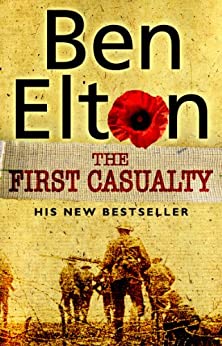
The first casualty when war comes is truth . . .Flanders, June 1917: a British officer and celebrated poet, is shot dead.He is killed not by German fire, but while recuperating from shell shock well behind the lines.A young English soldier is arrested and, although he protests his innocence, charged with his murder.Douglas Kingsley is a conscientious objector, previously a detective with the London police, now imprisoned for his beliefs. He is released and sent to France in order to secure a conviction. Forced to conduct his investigations amidst the hell of The Third Battle of Ypres, Kingsley soon discovers that both the evidence and the witnesses he needs are quite literally disappearing into the mud that surrounds him.
Ben Elton’s tenth novel is a gut-wrenching historical drama which explores some fundamental questions:
What is murder? What is justice in the face of unimaginable daily slaughter? And where is the honour in saving a man from the gallows if he is only to be returned to die in a suicidal battle?
The First Casualty is set during the First World War but this novel is about more than the physical war. Kingsley, the main character, faces the horrors of the Third Battle Of Ypres on the ground – in the trenches, in no-man’s land, and in a hospital for solders suffering from shell shock. But complicating this is the fact that Kingsley is a conscientious objector. He is not a pacifist against all wars but a moral man who can see no point in a war where men are dying in their hundreds of thousands to take a few feet of land which is likely to be taken back by the enemy at any time. He cannot see either side winning, for how can you win when a whole generation of your young men have been slaughtered? Worst of all, he sees the government and the army as murderers – they know what is happening, they know that victory would be hollow but they send men again and again against the artillery and machine-guns and bayonets rather than sue for peace. Kingsley believes that their pride comes before the lives of the men under their care and so he takes a moral stand and refuses to fight.
Kingsley, a police detective, now has to face those who give him a coward’s white feather, he is sent to prison and has to face men who he put there and who do not want to see him leave prison alive; but most harrowing of all for Kingsley is the fact that he must face the future alone for his wife cannot be associated with a coward and has left him, taking his son with her.
Against this backdrop Kingsley is released from prison to find a murderer somewhere amongst the hundreds of thousands of men waiting to go over the top at Ypres, and the conscientious objector finds himself on the front line fighting to survive the war, find the killer and start a new life.
Ben Elton has written a well-researched and cleverly plotted novel which puts the reader right in the midst of the most terrible carnage. The sights and sounds, the atrocious conditions, the heroism and the loss of hope are all laid bare in a clear and concise writing style which leaves little to the imagination, whilst at the same time you are immersed in a murder enquiry with just enough suspects to keep you guessing until the end. The characters are well-drawn and believable which helps to bring a stark reality to this novel – the wife who loves her husband but cannot face the social ostracism that being married to him will bring; the officer whose unpleasant nature has been twisted even further by the horrors that he has experienced and his expectation of an imminent death; the ordinary soldiers who put up with appalling conditions to fight for their country; soldiers who have embraced communism seeing it as the only way to end the war and bring about a just and fair society – all bring something to make this novel the well-rounded polemic that it is.
As a murder mystery The First Casualty is intriguing. As an ethical debate on the evils of war, duty to country, pacifism and conscience it is thought provoking. I hope you enjoy reading it as much as I did.
As a complete change from my usual historical writing I have been asked to write a short story for ‘Little Radio’. This radio station for children is run by TV presenter and actor Chris Jarvis (people in the UK will know him from the BBC TV children’s channel CBeebies, or may have seen him in pantomime). ‘Little Radio’ is a great resource which you can listen to 24 hours a day via the app or online.
If you have some little ones at home please do listen in at 6.30pm or 8.30pm on Wednesday 12th August when Chris will be reading my story, ‘The Lost Egg’.
A Treachery of Spies is an espionage thriller to rival the very best, a high stakes game of cat-and-mouse, played in the shadows, which will keep you guessing every step of the way.
A body has been found. The elderly victim’s identity has been cleverly obscured but one thing is clear: she has been killed in the manner of traitors to the Resistance in World War Two.
To find answers in the present, police inspector Inès Picaut must look to the past; to 1940s France, a time of sworn allegiances and broken promises, where the men and women of the Resistance fought for survival against Nazi invaders.
But, as Picaut soon discovers, there are those in the present whose futures depend on the past remaining buried, and who will kill to keep their secrets safe. Old fashioned espionage might be a thing of the past but treachery is as dangerous as ever.
A Treachery of Spies is a well-crafted fast-paced thriller. Much of the novel focusses on the exploits of a number of agents in France – French, English, and American – and their efforts to thwart the Nazis. Ms Scott writes with a clarity which opens up for us the supreme courage of the people who found themselves in such situations; she also describes in detail the time and place so that one can almost feel yourself there, struggling to survive in Occupied France.
As counter-point to this we have the 2018 investigation into the murder of an elderly woman which leads back to the individuals who had lived and fought beside each other in France without knowing that one amongst their number was a traitor. Who was the traitor? Why did they do it? And which, if any, of these old spies is responsible for the trail of death created to hide a dark secret…?
Ms Scott has conducted a great deal of research to provide authenticity to her story with many of her characters based on real people, from the infamous Klaus Barbie to the numerous agents whose biographies inspire many of the actions of the Resistance in her novel. Using the concept of a dual time-line the author is able, however, to take the actions of these agents one step further – how did the men and women of the SOE, the Maquis and the Jedburghs influence post-war spying and politics? What happened to many important Nazis who escaped at the end of the war, and what influence have they had in shaping the world in which we now live?
A Treachery Of Spies is a novel which will appeal to those interested in war stories, particularly the Second World War, and those who love a good thriller which keeps you guessing right to the end. If, like me, you enjoy both genres, then this book is for you.
‘Powerful… Poignant, bleak and haunting, this is a small masterpiece’ Sunday Mirror
Brother and sister, Ted and Rose Howker, grew up in Mount of Zeal, a mining village blackened by coal. They know nothing of the outside world, though both of them yearn for escape. For Rose this comes in the form of love, while Ted seizes the chance of a job away from the pit. But neither can truly break free and their decisions bring with them brutal consequences…
‘Gripping all the way to its unexpected end’ Spectator
This is a little gem of a book, short but gripping. Ms Hill describes the pit village in all its gritty reality – the home of tired people struggling day by day with the harsh reality of mining life, crowded housing, back-breaking daily labour; a place some feel compelled to stay whilst others seek escape. The houses are dirty, not from want of a woman’s touch but from the all-pervading coal dust which blackens everything, including the lives of people for whom mere existence is hard leaving little time for enjoyment or expressions of love.
Yet love is there, buried deep in the close-knit community, whether it be the love of family or the love of neighbours. Ms Hill describes how support is offered to those who find it hard to make ends meet, and for those who are affected by the tragedy which all mining communities fear (no spoilers). Black Sheep is a bleak novel in many ways, yet that bleakness holds the reader through the atmospheric descriptions and the well-written characters. The reader will find themselves sympathising with Rose whose options were so limited that there was little hope of her ever finding a way out of the gruelling life which her mother had lived, and with Ted who finds the path out of the village to the clean air of the hills and the fulfilling life of working with animals. But will he be able to hang on to his freedom or will duty call him back?
The ending of this short novel is as moving as it is unexpected. Anyone who is familiar with Ms Hill’s work will not be expecting a hearts and flowers love story, but her deceptively simple style evokes a depth of understanding of people placed alongside the allegorical view of life as three levels of existence. Her description of Mount of Zeal – the ‘hell’ of the pit, the ‘world’ of the Middle Terrace, and the ‘Paradise’ that awaits those who can escape to the upper slopes of the hills which surround the pit and beyond – reflect the struggles that we all undergo in life. This book will not be for everyone, but I urge you to try it. Whether you read it as a simple tale of village life or look for deeper meaning, Black Sheep is a book which will stay with you long after you turn the last page.
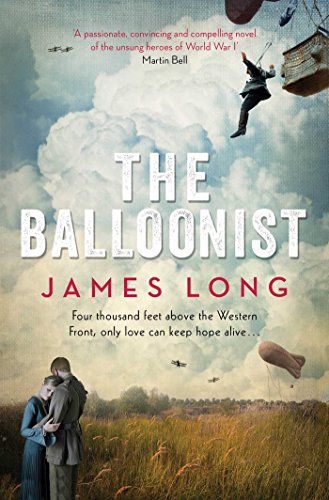
Lieutenant Willy Fraser, formerly of the Royal Flying Corps, has been delegated the most dangerous job on the Western Front – a balloon observer hanging under a gasbag filled with explosive hydrogen, four thousand feet above the Ypres Salient, anchored by a slender cable. Swept across enemy lines after his balloon is damaged, Willy is hidden by Belgian farmers, whom he grows close to during his stay. With their aid, he manages to escape across the flooded delta at the English Channel and return to his duties. But once he’s back in the air, spotting for artillery and under attack, Willy is forced to make an impossible decision that threatens the life of the woman he has come to love.
This novel by James Long is divided into two distinct parts. The first finds Willy Fraser in Berlin during the last few days before the outbreak of the First World War and follows him as he makes his way to Belgium keeping just ahead of the rapidly advancing German war machine. This well researched section tells of the heroic stand of a neutral country which fought hard for every inch of land as her army retreated to the final Yser enclave which the Belgians were able to maintain for the long years of war which lay ahead. This stand by a greatly outnumbered and ill-prepared army allowed the French and British the time to strengthen the border and halt the German race for Paris.
Two years later we find Willy Fraser serving as a balloonist, a role which few people know much about. Mr Long’s detailed research of the few first hand accounts of these men (few of them lived long enough to write about their experiences) is the framework on which this novel hangs. Tethered balloons flying at almost a mile high were sitting targets for enemy planes and artillery whilst the balloonists had to combat terrible conditions as they observed the enemy lines and called in attacks onto the big guns which were turning the trenches into desperate killing fields. There were numerous ways for observers to die – failed parachutes, burning up with their balloons, or being cut adrift and coming down behind enemy lines to name but a few – and life expectancy was short. The historical accuracy of The Balloonist draws the reader in, educating on little known aspects of the war without ever seeming to preach.
Added to the historical background of this novel is the story of Willy’s journey into himself, his character and motives which change as he lives through tumultuous times. It is here that I find the one weakness in the story as there are perhaps a few too many co-incidences bringing the main characters together at key moments but this is, after all, fiction so if you are able to suspend belief at times, and enjoy an action packed and pacey ‘boys own’ storyline you will enjoy The Balloonist.
Winter 1885. Lieutenant Colonel Allen Forrester accepts the mission of a lifetime, to navigate Alaska’s Wolverine River. It is a journey that promises to open up a land shrouded in mystery, but there’s no telling what awaits Allen and his small band of men.
Allen leaves behind his young wife, Sophie, newly pregnant with the child he had never expected to have. Sophie would have loved nothing more than to carve a path through the wilderness alongside Allen – what she does not anticipate is that their year apart will demand every ounce of courage of her that it does of her husband.
To The Bright Edge of The World was inspired by the real-life journey of Lieutenant Henry Allen into Alaska in 1885 and tells the story of an expedition up the Wolverine River in search of passage through the mountains. It is an absorbing tale of a western explorers meeting with the First Nations people who had lived on the North American continent from time immemorial, a people steeped in myth and superstition at a point where their way of life was coming into conflict with one which was so very different to their own; a conflict in which we see that there will only be one final ‘victor’.
In her novel Ms Ivey has brought the stunning Alaskan landscape to life and peopled it with characters who are not only searching for a route across the land but are also searching for the truth within themselves. One can almost feel the cold and hunger which the early explorers of the wilderness endured, the nervousness with which they came into contact with the native peoples, the struggle for understanding when there was not always a common language between them, the fear that they might not make it back alive.
As the fictitious Allen Forrester makes his way through the northern forests his wife, Sophie, has remained behind. She is strong-willed, determined, a lover of nature; more than anything else she would have liked to travel part of the way with Allen but cannot because she is pregnant. As her husband encounters a changing world in which superstition and the natural world order are being slowly but surely changed by encroaching westernisation Sophie finds herself at an equally interesting point in the way women see and are seen. She finds it difficult to settle into what is expected of an officer’s wife on an army base and feels constrained by societies expectations of what she should and should not be allowed to do. Whilst her husband faces the trials and tribulations of the north Sophie has her own challenges which leave her, for a time, wondering where her life will take her. But Sophie also has an interest in photography which was just becoming popular, and I very much enjoyed reading about the development of this art form in the 1880’s, how Sophie experimented and persevered to try to achieve a particular type of photograph which is still not easy to achieve today.
I also enjoy the way that the author has used old black and white photographs of some of the key places in her story to bring the narrative alive and make it all the more believable to the reader. The photographs along with the colourful descriptions of people, time and place serve to immerse the reader in a world which is long gone yet which was so full of wonder, excitement and mystery at the end of the nineteenth century. I found myself wishing I could have travelled with Allen on his journey or gone with Sophie on her no less important journey into the art of photography, and into the heart of what makes us who we are.
To the Bright Edge Of The World can be found on Amazon
A sweeping epic historical novel about Lawrence of Arabia, one of the most compelling characters in British history.
1915: While the war in Europe escalates, a young intelligence officer named Thomas Edward Lawrence is in Cairo, awaiting his chance for action. His superiors, however, have consigned him to the Map Room at GCHQ. But there’s more to Lieutenant Lawrence than meets the eye. A man of immense energy, he runs a network of agents across the Levant. Lawrence is convinced that an Arab revolt is the only way to remove the Ottoman presence, and leave a free self-governed Arabia. Soon, alarming reports reach him of trouble in Persia, orchestrated by infamous German agent Wilhelm Wassmuss. Intent on taking down Wassmuss and, at the same time, unlocking the secret of his success, Lawrence assembles a small group and travels to Persia…
Anyone who has an interest in the First World War, the Middle East or T E Lawrence (as I do) will enjoy this book. Contemporary accounts of the life of Lawrence were often contradictory, and few people would ever have known of his actions if not for the journalist Lowell Thomas who is responsible for bringing the hero whom he called ‘Lawrence of Arabia’ to public attention. Yet, 100 years later, the real man still remains elusive and enigmatic. Empire of Sand is a work of historical fiction although much of the novel is based on events which really happened to Lawrence (destroying railways, working with the Bedouins etc.), and the tactics he used in his unconventional warfare, which are mentioned here, are still used today. In its way this novel gives us a real insight into the complex character of Lawrence and how he came to be involved in such important events in the evolution of the Middle East as we know it today.
Mr Ryan has included in his novel a number of real people such as the German Wilhelm Wassmuss (who was the same age as Lawrence, looked similar, and worked in a similar way) and Captain Noel Edward, as well as the great female explorer Gertrude Bell. The main plot line (the importance of Wassmuss’ luggage – no spoilers!) is based on a real event in which all of these men were involved. This novel is a testament to the detailed research conducted by the author who has created an absorbing novel around real and very important events. The descriptions of Cairo, the life of the British in the Middle East, and the difficulties involved in desert warfare all serve to draw the reader into this story, giving an understanding of how people used to a British climate and culture struggled to live and work in the Middle East in the early part of the twentieth century. One can almost feel the burning sun and the wind-blown sand which plagued those who struggled in unfamiliar surroundings against the Turks and Germans.
Mr Ryan has delved deeply into the character of Lawrence and his love for the Arab peoples, so much so that this novel gives a clear insight into what Lawrence believed was the best way to bring about peace in the Middle East, it is a sad truth that if he had been listened to many of the problems which face us there today might never have arisen. The narrative of Empire of Sand enables the reader to get to know the real Lawrence, rather than the hero of David Lean’s epic film, and as such elicits a sympathy for and understanding of him which is often missing in purely historical accounts.
I was disappointed that this novel took the story of Lawrence up to the time he went into the desert to help the Arab uprising against the Turks but did not include the dramatic events which led to his ride on Damascus. To do what Lawrence did, lighting a fire beneath the Arab revolt and dealing with the difficult leaders of the Middle East, took a charismatic and quite unique character and I would love to see this part of Lawrence’s life portrayed in another novel by Robert Ryan!



 A Treachery of Spies is an espionage thriller to rival the very best, a high stakes game of cat-and-mouse, played in the shadows, which will keep you guessing every step of the way.
 ‘Powerful… Poignant, bleak and haunting, this is a small masterpiece’ Sunday Mirror
 Lieutenant Willy Fraser, formerly of the Royal Flying Corps, has been delegated the most dangerous job on the Western Front – a balloon observer hanging under a gasbag filled with explosive hydrogen, four thousand feet above the Ypres Salient, anchored by a slender cable. Swept across enemy lines after his balloon is damaged, Willy is hidden by Belgian farmers, whom he grows close to during his stay. With their aid, he manages to escape across the flooded delta at the English Channel and return to his duties. But once he’s back in the air, spotting for artillery and under attack, Willy is forced to make an impossible decision that threatens the life of the woman he has come to love.
 Winter 1885. Lieutenant Colonel Allen Forrester accepts the mission of a lifetime, to navigate Alaska’s Wolverine River. It is a journey that promises to open up a land shrouded in mystery, but there’s no telling what awaits Allen and his small band of men.
 epic historical novel about Lawrence of Arabia, one of the most compelling characters in British history.
  Dorinda Balchin - Author