Tag Archives: history

An incorruptible crown – The Execution of Charles 1

Is it ever right to depose a ruler who has a legitimate right to rule? That is a question which  many people ask in the modern world where tyranny and democracy come face to face and conflict ensues. But this is not an exclusively modern problem.

charles-iCharles I was a monarch who believed in the divine right of kings, that God had placed him on the throne and so no mere mortal should be able to tell him what to do. This attitude meant that he was constantly at odds with Parliament who wanted a role in ruling the country, particularly when it came to setting taxes. Charles would not listen to them and constantly dismissed Parliament, only recalling it again when he wanted more money. To make matters worse, Charles was considered to be too close to the Catholics in his religious observances. Henry VIII had made himself Head of the Church of England, a position inherited by Charles, yet Charles married a Catholic princess and many people were afraid that he would take England back into the hands of the Pope. There was simmering tension throughout the country which eventually broke out into all-out war in 1642.

The English Civil War ebbed and flowed across the country. With The king losing ground in 1645 he surrendered to the Scots in the hope that this would help him, but instead his forces north of the border handed him over to the English Parliament and Charles was imprisoned. He refused to compromise and give up any of his powers, and escaped in November 1647. But his freedom was short lived; he was recaptured and imprisoned on the Isle of Wight. From his captivity Charles organised a Scottish invasion to coincide with uprisings of his supporters in England, but this attempt to regain power was unsuccessful and, by the end of 1648, the English Civil War was over.

Charles I was tried for treason in January 1649, still believing in his divine right of kingship and refusing to give up his powers to Parliament. He was found guilty and executed on 30th January 1649.

On 29th January Charles was able to say goodbye to two of his children who were under the control of Parliament. On the following morning he donned two shirts as the weather was cold and he did not want to shiver and make people think he was afraid. The execution took place in front of Banqueting House at Whitehall Palace. The most complete record of the only execution of an English king is an anonymous account which is quoted by all the major historians. I have used this account as the basis for the scene of the execution of Charles I in my novel, The Cavalier Historian.

Excerpt from ‘The Cavalier Historian’.

Simon shivered and pulled his cloak closer around himself. It kept out the bitter cold of January, but failed to warm his heart, or to banish the chill of a dread which reached deep to his bones. From their position at the top of a flight of steps leading to a shop, he and his father looked out over the silent crowd. No one moved. No one spoke. All eyes were focussed in one direction. Simon did not want to look, but could not help himself. His eyes turned slowly towards the raised scaffold with its block. He turned to look at his father. Sir Thomas stood straight and still, outwardly calm, although Simon could see the tension in his clenched jaw and the nervous twitching of one eye. Turning back towards the scaffold, the young man thought back to the time the King had visited Marston Manor. They had felt so sure of victory back then. No one could have predicted that things would end in this way.

The crowds thronging Whitehall stood silent and still around the black draped scaffold, come to see the execution of their King. Simon was glad that they had got there early and were close to the block. Not that he wanted to see what happened in detail, but he knew that his father wanted to be able to offer comfort and strength to the King, if at all possible. They had tried so hard to get to see him after sentence had been passed, but had not been allowed. Sir Thomas had ranted about the unholy actions of the Rump, called down all kinds of curses upon the heads of Cromwell and Ireton, threatened revenge for the cruel way the King had been treated. But as the hours passed he had calmed, accepting that what was now ordained was inevitable, wishing only to say goodbye and take an oath to his sovereign that he would continue to support the Stuart cause. Such a meeting would have been an equal comfort to himself as to the King. The denial of access had wounded him deeply.

There was a low murmur of anguished voices as all heads turned towards the Banqueting House. The execution party had arrived.

The King, wrapped warmly against the bitter January morning, was flanked by a bishop and his executioner. He said something in a quiet voice to the bishop, who nodded. The King stepped forward. Simon was unable to hear the first words the King spoke, and leant forward to listen more intently. Due to the soldiers who stood between him and the crowds, Charles’s voice did not carry far, but Simon and Sir Thomas were able to make out what he said.

‘For the people, truly I desire their liberty and freedom as much as anybody whomsoever. But I must tell you that their liberty and freedom consist in having of government, those laws by which their life and their goods may be most their own. It is not for having share in government, sirs; that is nothing pertaining to them. A subject and a sovereign are clear different things. And therefore until the people have the liberty of good government, as I say, certainly they will never enjoy themselves. Sirs, it was for this that now I am come here. If I would have given way to an arbitrary way, to have all laws changed according to the power of the sword, I need not to have come here. Therefore I tell you, and I pray God it be not laid to your charge, that I am the martyr of the people.’

Simon was impressed by the calm assurance of the King’s voice. As with his trial, there was no trace of the stammer which usually marked his speech. As he spoke in those final moments of life, he was truly a monarch to be proud of.

The condemned man turned to his executioner.

‘I shall say but very short prayers, and when I thrust out my hands…’ The executioner nodded, no further words were needed. Charles turned to the bishop and asked for his cap, which he placed on his head before turning back to the axeman. ‘Does my hair trouble you?’

‘It would be best, Sire, if you placed it all beneath the cap.’

The King nodded and proceeded to do so, aided by the bishop and executioner. Simon found it hard to believe that this was all real. The King behaved so calmly, spoke so calmly. The execution party was polite. The crowd restrained. It felt to him like play acting, as though the scene would soon be over to loud applause, and the actors leave the stage. But no. The reality continued as the King spoke again.

‘My Lord Bishop, I fear not. I have a good cause, and a gracious God on my side.’

‘There is but one stage more, Your Majesty, which, though turbulent and troublesome, yet is a very short one.’ Simon could hear the catch in the man’s voice, as though he struggled with the words. It was obvious that the man was not comfortable with his task and wanted to do all that he could to aid the King. ‘You may consider it will soon carry you a very great way; it will carry you from earth to heaven; and there you shall find to your great joy the prize you hasten to, a crown of glory.’

The King nodded. ‘I go from a corruptible to an incorruptible crown; where no disturbance can be, no disturbance in the world.’

‘Indeed, Your Majesty. You are exchanging a temporal for an eternal crown. A good exchange.’

Simon stole a look at his father. Sir Thomas stood calmly, his gaze sure as he kept his eyes on the King’s face. For a moment he caught the condemned man’s eye. There was recognition in Charles’s eyes, and gratitude for a faithful servant who had dared to come forward to offer his support. He inclined his head slightly in acknowledgement. Simon heard a deep intake of breath from his father as he fought to control his emotions, focussing on giving all of his strength to the King, who now turned back to his executioner.

‘Is my hair well?’ At a nod from the man he removed his cloak, which he handed to the bishop. His hand went to his neck, to the jewelled pendant of Saint George, symbol of the Order of the Garter. He held it in his fist for a moment, as though reliving in his mind past days of glory. Then he removed it and handed it to the bishop. Next came his doublet and waistcoat before he put the cloak back over the crisp white shirt, as though to lessen the impact of the bright flow of blood which must soon cover it. He breathed deeply and held his hands out in front of him.

‘When I put out my hands this way, then.’

The executioner nodded.

The King of England stood for a moment, his lips moving in silent supplication, his eyes lifted towards heaven. Then he knelt and laid his head on the block. After a moment in which he composed himself, the King held out his hands.

The heavily muscled executioner raised the axe above his head. It held for a moment at the apex before he brought it down with all his might. With one blow, the King’s head was severed from his shoulders.

Simon found himself trembling, his knees weak, his stomach wanting to disgorge his breakfast as the head fell to the wooden boards with a thud. Bright blood fountained from the neck and began to pool as the body slipped to the side, an arm still twitching. He looked at his father and took strength from the way he stood, unmoving, seemingly unaffected. Simon straightened and turned back to the block in time to see the executioner pick up the severed head and hold it for the crowds to see. There was no cheering. No sign that this execution was the will of the people. Instead a collective groan went up, like the sighing of the wind before a storm. Only the soldiers cheered, and this seemed to Simon to be more out of a sense of duty than from the heart.

Two soldiers stepped forward and lifted the King’s body, placing it in a coffin. The executioner placed the head with the body and the coffin was covered with black velvet. More soldiers stepped forward, lifted it to their shoulders and carried it solemnly back into Banqueting House.

Simon and his father stood unmoving. Unable to move. They watched as people came forward, soaking handkerchiefs and pieces of cloth in the King’s blood. No doubt some did so as tokens of their wish to see the King dead, but they were few. Simon could see by the reverent, tear-stained faces that most people took the blood to cherish it as the sacrifice of a martyr, as a blessing from a divinely appointed monarch who now wore his incorruptible crown.

England no longer had a king.
Cover_Kindle_front cover

The last invavsion of Great Britain – ‘overpaid, over sexed and over here’.

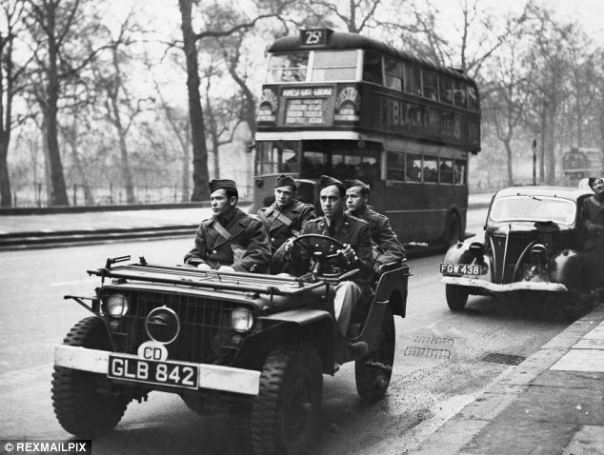
When was the last invasion by foreign troops into Great Britain? The Norman Conquest in 1066? Many people who lived during the Second World War might dispute that and say that 26th January 1942 saw the start of the last invasion by a foreign force with the arrival of the first American soldiers! We have all heard the phrase ‘overpaid, over sexed and over here’ used to refer to GI’s who arrived in England in preparation for D Day, and many people did find their arrival disconcerting – particularly the young British servicemen overseas who worried about their sweethearts, or the men who served at home in jobs essential to the war effort but who could not compete with the rich, brash new comers. The Americans had money, chocolate, stockings and other items which had not been seen in Britain for years; they were also strangely exotic, most people only having heard an American accent in the cinema. It was a difficult time for the British, but we should not forget the difficulties facing the young soldiers far away from home, in a foreign country for the first time, and facing the prospect of going into battle. It was equally difficult for them to adapt, and the American War Department published leaflets explaining the British culture and how the young GI’s should behave.

GI's in London
GI’s in London

In January 1942 Britain was a tired country. The British had been holding out against the Germans for over two years, an island of defiance which welcomed the support of the Americans with a mixture of relief and curiosity, and frustration that it had taken their Allies so long to get involved. But once the American’s began their preparations for the invasion of Europe there was no stopping them, and by the end of the war over 1.5 million US servicemen were stationed all over mainland Britain. Anticipating potential problems between the Americans and their British hosts servicemen were issued with a pamphlet entitle Instructions for American Servicemen in Britain explaining British history and culture and giving advice on how to get along with their hosts. As well as giving advice to the American serviceman the publication also gives some insights into what it was like in Britain during the war. So what did the American War Office have to say? Here are just a few of the points from the long pamphlet which I hope you will find interesting and, on occasion, amusing (summarised, quotes in italics).

The British are reserved, not unfriendly. Great Britain is a small crowded island, hardly bigger than Minnesota, so people do not invade each other’s privacy. If someone on a bus or train doesn’t speak to you they aren’t being unfriendly, they just don’t want to seem rude – but you can bet they are paying more attention to you than you think!

Watch your language. We have the same language but with differences which mean you could inadvertently cause offence. Don’t laugh at their quaint turns of phrase. Don’t say ‘bloody’ in mixed company as it is one of their worst swear words. Don’t say ‘I look like a bum’ because you are saying you look like your backside. Don’t call their monetary system ‘funny money’; pounds, shillings and pence are complicated but telling the British that our decimal system is better won’t go down well. British people work hard for their money, and get paid much less than you so they won’t like you making fun of their hard-earned cash.

Don’t be a show off. The British don’t like bragging and showing off. Don’t throw your money around. Be sensitive to the British ‘Tommy’ who gets paid much less than you and will be touchy about how much you get paid.

The British are tough. The people you meet might be polite and soft-spoken but don’t be misled. 60,000 British civilians – men women and children – have been killed by German bombs yet morale is high. A country can’t come through that without guts. Also, don’t try to lecture the British on ‘taking it’; they’re not interested in taking it anymore, but getting together with us and starting to dish it out to Hitler.

London during the blitz

Remember there’s a war on. Britain may look tired, worn and dirty but you aren’t seeing the country at its best. They’ve been at war since 1939. Houses haven’t been painted because factories are making planes not paint; cars look old because no new ones are being built; parks and gardens are unkempt because there is no one to look after them, or they have been turned over to growing vegetables. The British people will want you to know that their country in peacetime is much prettier, cleaner and neater.

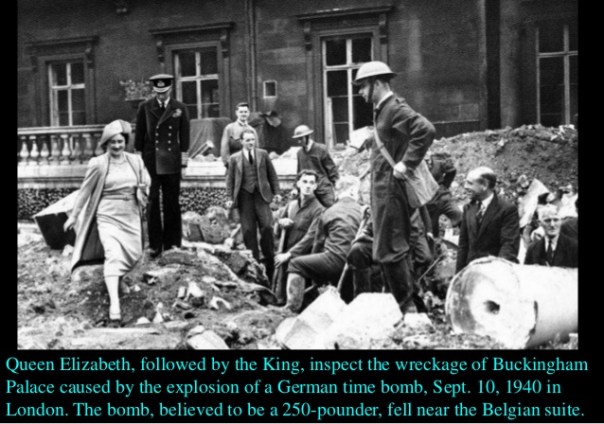
The monarchy. Britain is a great democracy, the King reigns but doesn’t govern and his people have a great deal of love for him. Criticizing the King would be like someone criticizing our country or flag. The King and Queen haven’t been evacuated from London, they have stayed during the blitz and their home has been bombed just like many other people. The British are proud of them. The National Anthem is played at the end of public gatherings like the cinema or theatre and you should stand to attention for it, if you don’t want to miss the last bus then leave before that anthem, that is OK.

gi-3

Sport. Take the opportunity to watch a match if you can – soccer, rugby or cricket – but remember the British reserve. If a fielder drops a catch in cricket the crowd will probably say ‘good try’ even if it was a bad fumble, back home the crowd would probably shout ‘take him out’, so be careful not to insult in the excitement of a game.

Indoor amusements. You will find theatres and movies (cinemas) in Britain, but the place most people go to relax is the pub – we would call it a tavern or bar. They drink warm ale, not like our cold German beers; you won’t get much whiskey now because war taxes have put the price up to around $4.50 a bottle. Don’t forget that the pub is a meeting place for the neighbourhood where people come to meet their friends not strangers. Don’t join groups of people or games like darts unless you are invited.

The British soldier. You will probably want to get to know the British Tommys. If you want to make friends don’t steal his girl or not appreciate what his army has faced since 1939; and don’t make a show of how much better paid you are than him.

Keep out of arguments. Don’t tell the British that ‘we came over and won the last one’. All countries played their part in the last war. We lost 60,000 men in action, don’t forget that the British lost almost a million of their youngest and best. (Note: by the time the Americans arrived in 1942 Britain had lost as many civilians to bombing in WW2 as the US did soldiers in WW1).  Don’t criticise them for their losses early in this war and say how we are going to change things. Remember how long they have been holding Hitler back without help from anyone. The British welcome you as friends and allies. But remember that crossing the ocean doesn’t automatically make you a hero. There are housewives in aprons and youngsters in knee pants in Britain who have lived through more high explosives in air raids than many soldiers saw in first class barrages in the last war.

London children
London children

Britain at war. Back home in the US you were in a country at war, you are now in a war zone. All lights are blacked out at night; all highway signposts have been taken down. For months the British have been bombed night after night. Everything is rationed from gasoline to soap, food most of all. Incomes are down because of the high war taxes. Try to understand the British situation which is something the US has never faced. Women are non-commissioned and commissioned officers in the armed forces, and men take orders from them. They have stuck to their posts near burning ammunition dumps, delivered messages afoot after their motorcycles have been blasted from under them.  They have pulled aviators from burning planes.  They have died at the gun posts and as they fell another girl has stepped directly into the position and “carried on.”  There is not a single record in this war of any British woman in uniformed service quitting her post or failing in her duty under fire. Now you understand why British soldiers respect the women in uniform.  They have won the right to the utmost respect. When you see a girl in khaki or air-force blue with a bit of ribbon on her tunic-remember she didn’t get it for knitting more socks than anyone else in Ipswich.

Female gun crew
Female gun crew

Important do’s and don’ts.

  • Be friendly.
  • Don’t be flash with your money.
  • Don’t show off.
  • If you are invited to eat with a family don’t eat too much even if they say there is plenty, you could eat most of the week’s ration.
  • Don’t make fun of speech or accents.
  • Don’t comment on politics or the British government.

Let this be your slogan: It is always impolite to criticize your hosts; it is militarily stupid to criticize your allies.

In my novel, Heronfield, Bobby is a GI who comes to the UK to prepare for the invasion of Europe. He, and his friends, embody the spirit of the GI’s – friendly, open, sharing what they have with the local children at Christmas. They were not easy times for the Americans or the British, but the conflict that brought two countries together in war also created friendships and loves to last a lifetime.

Recommended Read – Life After Life by Kate Atkinson

life-after-life-by-kate-atkinson

What if you had the chance to live your life again and again, until you finally got it right? During a snowstorm in England in 1910, a baby is born and dies before she can take her first breath. During a snowstorm in England in 1910, the same baby is born and lives to tell the tale. What if there were second chances? And third chances? In fact an infinite number of chances to live your life? Would you eventually be able to save the world from its own inevitable destiny? And would you even want to?

Life After Life’ is not the usual type of historical novel that I review. This is a fascinating story which explores the concept of life and time. What would happen if we lived the same life over and over again? Would it always be the same or would things change? Would we be able to guide our destiny to avoid the bad things which happen in life or to seek to achieve a goal which appears to be out of reach? Ms Atkinson uses the life/lives of Ursula to explore this theme.

Ursula is born one snowy day in 1910. She dies without taking her first breath but then is born again in the same situation with one minor difference which allows her to live. The novel continues to follow Ursula as she is born and dies, again and again. Each time her life is changed in some small way which leads to much larger changes as the years go by. Edward Lorenz asked, ‘Does the flap of a butterfly’s wings in Brazil set off a tornado in Texas?’ In this novel Ursula finds that her choices, as well as the decisions which people make all around her, do indeed lead to great changes – lives saved or lost, war or a chance for peace, all made possible through something as small as the proverbial flap of a butterfly’s wings.

Knowing, in part, what is going to happen to Ursula leaves you rooting for her, hoping that she will make a certain choice, speak to a certain person, avoid a certain action. In some of her incarnations you find yourself hoping that she survives and is happy, in others you hope that her death comes more quickly and she can start a new and better life. It is a strange novel in this sense, yet compulsive reading.

The reason I am recommending this book as historical fiction is the period in which it is set. Ursula lives during the turbulent years of both World Wars, and Ms Atkinson conveys these times in incredible detail. Her fictional accounts of the London blitz are some of the best I have read – both harrowing and inspiring. In another life Ursula lives in Germany during the Second World War. The descriptions of the changes from pre-war euphoria through nationalism to war and, finally, despair in Berlin during the last days of the Reich bear testimony to the depth of research which the author has carried out.

‘Life After Life’ is a unique novel in its structure. It is also a novel rich in historical detail and, in addition, a compelling portrait of Ursula and her family. Ms Atkinson’s writing cuts to the heart of human hopes and dreams, ambitions, loves and losses; the reader comes to love or hate the characters who are well drawn and believable, the kind of people you could meet almost anywhere.

The author writes with great skill, producing a novel which is thought provoking, moving and at times uncomfortable. It is the sort of book which leaves the reader reflecting on life, destiny and fate. What might be the consequences of our actions? Can we shape the future by a single word or deed or is it all pre-ordained? This is not a light read, but if you are looking for something entertaining and educational which leaves you asking questions and wanting more then I heartily recommend that you read ‘Life After Life’.

This novel won the 2013 COSTA Novel Award, and deservedly so.

‘Life After Life’ can be found on Amazon

Kate Atkinson’s website can be found here

More of my Recommended Reads can be found here.

‘Nuts’ – The Siege of Bastogne, Christmas 1944

‘Peace on earth and goodwill to all men’ is a perennial theme of Christmas. But throughout the years soldiers have spent Christmas in terrible conditions, far from their homes and loved ones. The Second World War lasted for six long years and some people didn’t see their loved ones during all that time. Christmas 1944 was one such time for American soldiers with the armies in northern Europe.

The Siege of Bastogne, part of the larger Battle of the Bulge, took place in December 1944 when German forces made a last desperate push towards the harbour at Antwerp. The seven major roads in the Ardennes area of Belgium all converged on Bastogne so Hitler saw control of this town as vital to his plans to divide and defeat the advancing Allies.

bastogne_map_december_19-23_1944

In the early hours of 16th December German infantry forces were ferried across the river Our; two hours later they began to advance under cover of artillery which knocked out the American lines of communication. The Germans had overwhelmingly superior numbers but were held up by a single company of Americans who fought fiercely, holding up the German plans to cross the Clef River for two days. On 19th December the American command post of the 28th Division moved to Bastogne where the Division put up a strong defence, but the 500 men were heavily outnumbered and forced to retreat by the evening.

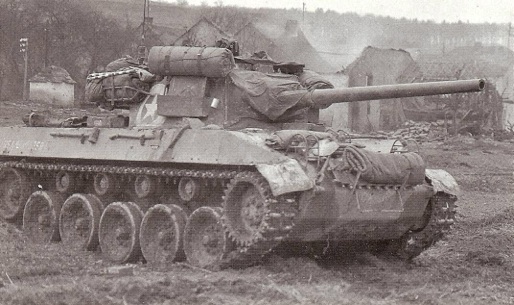
The German offensive had taken the Allies completely by surprise, and by the end of the second day the 28th Infantry was close to collapse. Reserves were hurriedly pushed forward and units diverted from their assigned targets in order to hold back this last ditch effort by the Germans to retake land lost since D Day and push the Allies back into France. But although the attack had been unexpected the Americans moved quickly, thanks in part to the fast moving M18 Hellcats, and a tank battle was soon in progress, inflicting heavy losses on the German armour.

American M18 Hellcat

The 101st Airborne formed a perimeter around Bastogne, and three artillery battalions, each with twelve 255mm howitzers, were able to provide firepower in all directions although they were limited by lack of ammunition. The force was enough, however, to worry General von Luttwitz who did not want to have such numbers to his rear so was forced to slow his advance towards Antwerp and encircle Bastogne. On the night of 20th the Germans began an attack which was stopped by the Americans, although all of the seven roads into Bastogne were finally cut by the German forces leaving the Americans totally cut off.

Outnumbered 5 to 1, lacking cold-weather equipment, short on ammunition, medical supplies and food, and with most of the senior officers elsewhere, the situation for the Americans looked desperate. Worse still, there was no chance of re-supplying the forces from the air due to the worst winter weather in living memory. This also made it impossible for the Americans to offer tactical air support. The men on the ground in Bastogne were forced to hunker down in freezing conditions and pray for an improvement in the weather. The situation looked hopeless.

General McAuliffe (on the left)

On 22nd December von Luttwitz sent a message to Brigadier General McAuliffe who was leading the defence of Bastogne;

To the U.S.A. Commander of the encircled town of Bastogne.

The fortune of war is changing. This time the U.S.A. forces in and near Bastogne have been encircled by strong German armored units. More German armored units have crossed the river Our near Ortheuville, have taken Marche and reached St. Hubert by passing through Hompre-Sibret-Tillet. Libramont is in German hands.

There is only one possibility to save the encircled U.S.A. troops from total annihilation: that is the honourable surrender of the encircled town. In order to think it over a term of two hours will be granted beginning with the presentation of this note.

If this proposal should be rejected one German Artillery Corps and six heavy A. A. Battalions are ready to annihilate the U.S.A. troops in and near Bastogne. The order for firing will be given immediately after this two hours term.

All the serious civilian losses caused by this artillery fire would not correspond with the well-known American humanity.

The German Commander.

McAuliffe’s reply is one of the most well know military communications of the Second World War:

To the German Commander.

NUTS!

The American Commander

After the response had been translated for von Luttwitz the attacking forces began preparations for their final assault. Bombers attacked during the night whilst panzers attacked from the west where the defences were penetrated at one point. German infantry poured through the breach but were halted by the Americans. Major attacks continued to take place all along the defensive lines, with no break in hostilities to celebrate Christmas Day.

American infantry near Bastogne

Patton’s Third Army finally arrived near Bastogne on Boxing Day. After fierce fighting communications with the besieged Americans were restored and supplies began to get through to the cold and hungry soldiers. The 101st expected to be relieved and sent back down the line after such a hard-fought defence but instead were ordered to resume the offensive against German forces. The wider Battle of the Bulge continued unabated into 1945.

Troops of the 101st Airborne Division watch C-47s drop supplies on Boxing Day 1944

One of the main characters in my novel, Heronfield, is caught up in the siege of Bastogne. I wrote about this battle as I wanted to portray the courage and fortitude of the men involved, men who fought against overwhelming odds – vastly superior numbers, cold and hunger – yet refused to give in. Their bravery helped to bring about one of the major turning points of the war. So whilst you enjoy your Christmas celebrations please spare a thought for these men, and all others who have fought and died on many Christmas Days in the past to preserve the liberty and freedoms we enjoy.

Members of C Company, 9th Engineers, conduct a memorial service for those killed during the siege, 22 January 1945.

Recommended Read – ‘A Fine Balance’ by Rohinton Mistry

a-fine-balance-by-rohinton-mistry‘A Fine Balance’ tells the story of the lives of four individuals who are brought together by circumstances. While we learn a lot about their background the main focus of the novel is the political and social situation in India in the 1970’s. Through their relationships with each other and interactions with other people Rohinton Mistry paints a compelling picture of poverty and prejudice in India. The levels of corruption and injustice portrayed in the novel give a sense of the hopelessness of life for many, yet the fact that the poorest characters can find a joy in their lives which evades those of a higher social standing is humbling.
This is a novel which tells the truth of the brutality if a government which could force sterilization on people in an effort to control the population; and the brutality of people who , by a  simple accident of birth, found themselves in a position of power. The title ‘A Fine Balance’ is well chosen as Mr Mistry balances this darkness with a  lightness and humour from both the characters and  their situations. As one who has lived in India for the last few years I found many of the descriptions incredible accurate – from the chaos of the courthouse and other official institutions to the busy streets, chaotic trains and remote village life.

Sadly, my experience tells me that although the caste system is now illegal in India it is still all pervading, and it would not be difficult to imagine aspects of this story happening today. Yet alongside this the humour, love and hope which Mr Mistry describes are still there and the road to change, which often seems too long and slow, is still progressing.

The only aspect of this novel which I found difficult was the number of coincidences which occurred, bringing minor characters into the story at frequent intervals which are unlikely to happen in life. Having said that, I recognise that these characters and their meetings are an essential part of the story which Mr Mistry is telling, so if you can set aside the coincidences and accept the truths that the characters bring to the story it will not spoil your enjoyment.

‘A Fine Balance’ is a well written novel with deeply nuanced characters, all the more real to me as I see in them much that reminds me of the Indians I know and love. It is well structured, invoking a sense of place so that we can almost feel the heat, smell the streets, taste the food, bathe in the dust or rain. This is a novel which shows the real India, where life can be hard for all but the most wealthy; it is therefore interesting that the character who has the easiest life, the best situation, finds it the most difficult to cope. As for the reader, I think we can all learn from the attitude of the main characters, and Indians in general – life is not easy, we all face difficulties challenges and heartaches; what defines us though is how we face what life throws at us, and move on.

‘A Fine Balance’ is up there as one of my favourite novels about India, alongside ‘A Suitable Boy’ by Vikram Seth. Anyone who wants to try to understand the complexities, mysteries and universal truths of India presented by an author with an exceptional command of language should read this novel.

Highly recommended.

A Fine Balance is available on Amazon

More of my Recommended Reads can be found here

Meet Humpty Dumpty

Do you ever wonder where nursery rhymes come from? Although they are simple songs to children today they are often based on difficult or unpleasant times in the past; for instance, ‘Ring a ring o’ roses’ is said to be about the Back Death which devastated the population of England in the Middle Ages. But what about Humpty Dumpty? Who was he, why was he sitting on a wall, and what made him fall?

The general consensus amongst historians is that this nursery rhyme originated during the English Civil War. By 1648 King Charles I had been captured by the Parliamentarians and was being held prisoner. In the hope of freeing him the Royalists planned an invasion of England by a Scottish army, those in England who supported the King were to rise up at the same time. But the Scottish invasion was delayed, the Royalist forces in the east of England were attacked by Lord-General Fairfax and retreated behind the walls of Colchester. Fairfax surrounded the city and a siege began.

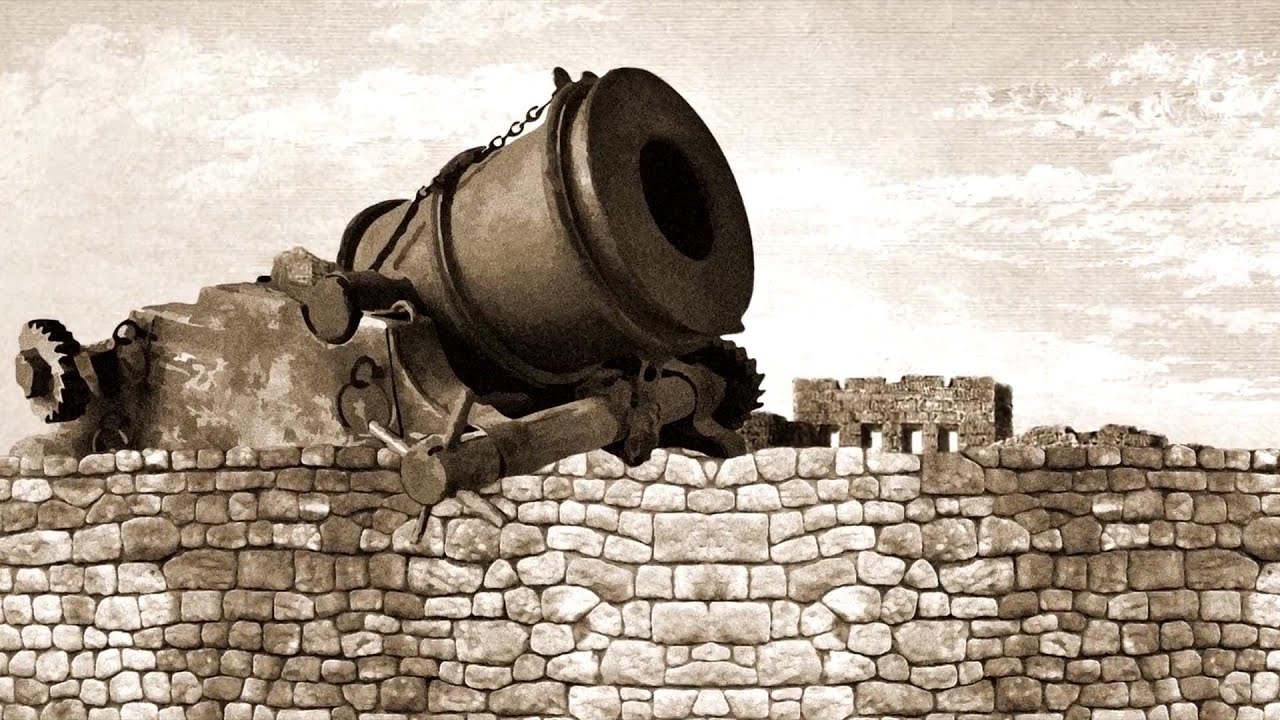
The siege lasted from 12th June to 28th August 1648. In defence of the city several artillery pieces were set up on the walls. The biggest gun was placed on the walls of St Mary’s Church. This gun was one of the largest at the time and so called Humpty Dumpty, which was a common nick-name for an overly large (or over weight) person.

A drawing of the real Humpty Dumpty on Colchester Wall.

On the night of 14th July 1648 Fairfax ordered an attack on the Royalists in Colchester; one focus of the attack was the guns on the walls, particularly Humpty Dumpty. By the end of the night the wall beneath the gun had crumbled, sending it crashing to the ground below. The Parliamentarian forces failed to take Colchester that night, but folklore has it that the failed attack was commemorated in a nursery rhyme about the big gun which was destroyed. The earliest versions of the rhyme differ from what we know today, but its meaning is still clear:

Humpty Dumpty sat on a wall,

Humpty Dumpty had a great fall.

Four-score men and four-score more

Could not make Humpty where he was before.

Despite the deplorable conditions for the people living inside the city walls – things were so bad that people had to resort to eating soap and tallow candles – Colchester continued to hold out until the end of August. The Scottish invasion had eventually come but the army was defeated by Cromwell on 19th August; news of the Parliamentary victory reached Fairfax on 24th August. On the morning of the 28th the defenders of Colchester finally laid down their arms and surrendered.

My novel ‘The Cavalier Historian’ tells the story of the siege of Colchester in detail; a tale of suffering and hardship, of lost hope and defeat. A pivotal moment in British history which few know about yet which is celebrated by English children every day in the nursery rhyme ‘Humpty Dumpty’.

Cover_Kindle_front cover

Book Review – ‘The Secret Wife’ by Gill Paul

the-secret-wifeA Russian grand duchess and an English journalist. Linked by one of the world’s greatest mysteries . . .

Love. Guilt. Heartbreak.

1914 Russia is on the brink of collapse, and the Romanov family faces a terrifyingly uncertain future. Grand Duchess Tatiana has fallen in love with cavalry officer Dmitri, but events take a catastrophic turn, placing their romance – and their lives – in danger . . .

2016 Kitty Fisher escapes to her great-grandfather’s remote cabin in America, after a devastating revelation makes her flee London. There, on the shores of Lake Akanabee, she discovers the spectacular jewelled pendant that will lead her to a long-buried family secret . . .Haunting, moving and beautifully written, The Secret Wife effortlessly crosses centuries, as past merges with present in an unforgettable story of love, loss and resilience.

 ‘The Secret Wife’ is an engrossing read which takes the reader back to the days of the Russian Revolution and on through the years of the 20th century. It follows the life and loves of Dmitri, an aristocrat who has to flee from the communist regime not knowing where the woman he loves is, or even if she is still alive. It is a tale of war, romance, lost love and redemption. The book also follows the troubled life of Kitty, Dmitri’s great-granddaughter, whose research into the life of her ancestor helps her to come to terms with problems in her own life and helps her to make a decision about what she wants for her future. The two stories are expertly woven together into a novel which I found difficult to put down.

Ms Paul has written a truly captivating novel with strong characters and a strong, believable story line. The history, particularly the turbulent times surrounding the lives of the Romanov’s, has been well researched and is presented in a style which is easy to read yet immerses the reader in the political intrigue and violence of revolution and the life of a political refugee. Ms Paul also expertly delves into the psychological impact that such events would have on an individual. It is easy to sympathise with Dmitri as he struggles to come to terms with his changed circumstances, with Tatiana as she copes with violence and loss, and with Kitty as she understands why she is the person she is and finds a new direction for here future.

Many of the characters in this novel are actual historical figures about whom we know quite a lot, but historical evidence for what happened to some of them disappears after 1916/17. We do know the fate of some (no spoilers!), but it would be nice to think that Ms Paul’s story could be true!

If you like historical fiction, sagas, intrigue, strong characters and a story which draws you in right from the start then please give this book a read. I will certainly be reading more of Ms Paul’s books in the future.

Ms Pauls website can be found here

The Secret Wife can be found on Amazon

You can find more of my Recommended Reads here


Are you a revolutionary?

If you had lived in the 17th century would you have backed King Charles I or Oliver Cromwell during the Civil War? For a bit of fun why not answer these questions and find out?

parliamentWhat is your view of politics?

A An elite should govern us

B Every-one should have an equal say in government


queenWhat is your view of the monarchy?

A The Queen should have much more power to set laws

B The Queen should be a figurehead only


archbishop-of-canterbury-justin-welbyWhat is your view of religion?

A People should follow a structured form of worship set by the state

B People should be free to worship in an informal way


Result

charles-i

Mostly A’s – You would have been a Royalist. You would have said that the King is a divine ruler appointed by God. He should be able to rule without Parliament, choosing what laws and taxes he wishes to impose without interference from a Parliament which represents the people. You would also have said that the King is the Head of the Church of England which should be the state religion; form and structure is required to worship God, informality shows a lack of respect.


220px-oliver_cromwell_by_samuel_cooper

Mostly B’s – You would have been a Parliamentarian. You would have said that the King should only be a figurehead for the people, he is not divinely appointed by God and so should rule according to the wishes of the people. You would also have said that it is the role of Parliament to set laws and taxes; members of Parliament should be elected by the people. You would have believed that worship should be simple and from the heart, arguing that Jesus criticised the religious leaders of his day for their insistence on form whilst ignoring the needs of the people.

Of course, it was not quite that simple! Although Parliamentarians wanted the people to have more of a say in government it was only a limited number of people from certain classes in society who had that right. There was no universal suffrage – no votes for women or for men who did not belong to the right social class. As for religion, it went without saying that you would have been a Christian. Also, both Parliamentarians and Royalists felt the need to impose their form of worship on everyone whereas people today would say that there should be much more freedom to choose, and acceptance of those who choose to worship differently or not at all.

So, now you know which side you would have been on why not read ‘The Cavalier Historian’ and see what might have happened to you if you had lived through the English Civil War!

Cover_Kindle_front cover

Today’s the day!

At last the day has arrived!

‘The Cavalier Historian’  is now available in e-book form.

Cover_Kindle_front cover

If you haven’t pre-ordered your copy you can buy it now on
Amazon for Kindle and Smashwords for all other e-book formats

Civil war. Witchcraft. Persecution. Injustice.

Can Rob right a past wrong and save his future?

Marston Manor is an old manor house in Oxfordshire which the new owner plans to turn into a ‘themed’ attraction based on the years of the English Civil War.  When historian Robert Hardwick joins the project he is delighted to discover a family link with Marston dating back to the time of King Charles I and the witch persecutions of the 17th century.

But right from the start disturbing events raise mistrust and fear on the estate.  Who, or what, is trying to halt the plans for the Manor?  Can the disruption and sabotage be linked to the traveller camp in the woods or to the more sinister appearances of a ghostly old woman?  And just who is Rebekah, and why does she have such a hold over Rob?

In his haunted dreams Rob finds himself living through the turbulent years of the English Civil War, experiencing it all through the eyes of his ancestor, Simon. Dreams which begin gently enough in the days leading up to war in 1642 but which become ever more frightening, ending with the terrifying events of the witch trials of 1651.

The Cavalier Historian is a novel which follows characters separated by more than three centuries, living in the 17th century yet somehow linked through time to present day events.  Over the centuries they live through war and peace, experience love and loss, suffer fear and persecution yet, at the very end, is it possible for them to find hope for the future?

First review in for ‘The Cavalier Historian’

Cover_Kindle_front coverI woke up this morning with just days to go before ‘The Cavalier Historian’ is published on kindle and feeling rather nervous. Now I have a big smile on my face after receiving my first pre-publication review by Romuald Dzemo writing for Readers’ Favorite. Romuald has given my new novel five stars, which is a wonderful achievement from such a large and respected review site. So, thank you, Romuald, for the review – and the consequent boost to my confidence!

Romuald’s review:
A story that begins with a man waking in the middle of the night, feeling cold and uneasy, to find an ugly woman lurking in his room and telling him she’d waited many years to face a certain Mr. Hardwycke is a good promise for an adventure. The Cavalier Historian by Dorinda Balchin is this story, a tale that features witchcraft, civil war, and a gruesome injustice.

Robert Hardwick has been entrusted with the task to help transform the legendary Marston Manor in Oxfordshire into a themed attraction on the English Civil War. But strange things begin to happen as he starts this exciting project. Someone seems to be working against him, making sure that he doesn’t make any progress. He doesn’t have to investigate because his dreams create the link for him, thrusting him back in time to relive the awful events that took place during the war, and the witch trials of 1651. A woman named Rebekah seems to be at the center of the mystery. Can Robert right the injustice she’d suffered back then?

Part historical and part paranormal, The Cavalier Historian is a story that allows the reader to relive the horrors of the Civil War and the persecution of witches, a story about one of the controversial events in English history. What is most astounding is the bridge the author creates between then and now, making the story read as though it was happening now. The descriptions are vivid and readers will enjoy how the settings and culture are portrayed through the masterful use of language. The plot is fast-paced and intriguing, and I enjoyed the suspense created around the ghostly woman. Dorinda Balchin is a good storyteller with the gift of making the supernatural feel as real as the rainbow and creating characters readers want to stick with. Brilliant. Loved it so much!