Category Archives: Articles

Experience An English Civil War Battle Near You!

In England we are lucky with the resources available to us if we want to learn about the civil war which tore our country apart during the 17th century. As well as countless books on the subject you can conduct research online or maybe visit the National Civil War Centre in Newark, but to get a real experience of what life was like when parliament rose up against the king we have a number of wonderful re-enactment societies.

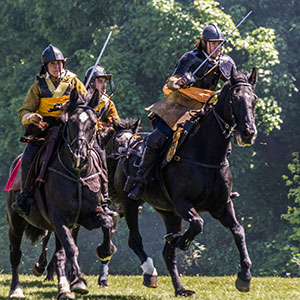
Cavalry (copyright Sealed Knot)

Both the Sealed Knot and the English Civil War Society provide authentic re-creations of both civilian and military life, and the information they provided was very helpful to me whilst I was conducting research for my novel ‘The Cavalier Historian’. You may think that re-enactment societies glorify war but that is far from the truth, and those who take part in these activities would say that their aim is to honour those who died in battle as well as to educate people about life in the 17th century. I can well remember the re-enactment of a battle which I attended at Faringdon in Oxfordshire some years ago with its guns and smoke, its sights and sounds of civil war. The battlefield commentary explained tactics and weaponry, and as I strolled around the campsite I was able to see authentic artefacts and clothing. I certainly felt that this was a great learning experience for the whole family.

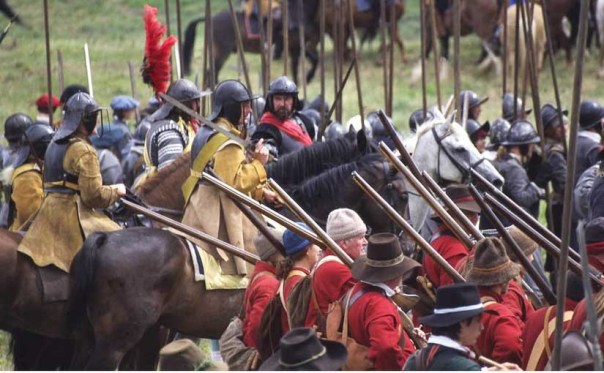
Musketeers (copyright Sealed Knot)

If you have never seen a re-enactment featuring Cavaliers and Roundheads I would heartily recommend it. Wherever you are in the country you should be able to get to an event hosted by either the Sealed Knot or the English Civil War Society. Maybe you will be lucky enough to see a full scale battle with hundreds of infantrymen on each side as well as artillery, cavalry, and a huge array of camp followers. Perhaps it will be the re-creation of a specific battle, or maybe just a fictional episode designed to demonstrate the art of 17th century warfare. If you are not able to get to a battle then maybe you can see a skirmish, which is much smaller and has a focus on infantry with only a few cannons or cavalry men.

Copyright English Civil War Society

Whatever event you are able to attend you should also have the opportunity to see what camp life was like during the civil war. Take the time to wander around the tented areas where you will see re-enactors dressed in authentic costumes and carrying out authentic trades. There may be blacksmiths and armourers, barber-surgeons and laundresses, as well as kitchen areas providing food for both the officers and ordinary soldiers.

Army camp (copyright English Civil War Society)

As well as re-enactments these two societies will also visit schools to give students a taste of 17th century life, or sometimes staff a whole house with a costumed population for a truly immersive experience (this is part of the premise of The Cavalier Historian). So, if you are interested in the English Civil War, or history in general, why not try to see a re-enactment this year? I’m pretty sure you won’t regret it!

Cannon (copyright Sealed Knot)

The Sealed Knot

The English Civil War Society

Lord Thomas Grey’s Regiment of Foote

Sir William Pennyman’s Regiment

National Civil War Centre

Upcoming events:

English Civil War Society Events

Sealed Knot Events

Horror in the beech forest – the liberation of Buchenwald, 11th April 1945

Would you like to visit somewhere called ‘Beech Forest’? It sounds idyllic, doesn’t it? But our impressions change immediately we find out the German for ‘Beech Forest’ – Buchenwald. Today marks the anniversary of the liberation of that infamous place.

The concentration camp at Buchenwald was built just 5 miles north of Weimar, on the slopes of Ettersberg mountain, and was the largest complex of its kind in Germany with a main camp as well as 139 subsidiary camps and extension units. Established before the Second Wold War began, most of the original inmates of the camp were criminals or political prisoners who arrived in July 1937. The number of prisoners rapidly increased during 1938 when ‘undesirables’ who opposed the Nazi ideal or were considered to be antisocial elements were incarcerated in Buchenwald. After the outbreak of war in 1939 the numbers of inmates increased dramatically when many Polish prisoners were interred. It is believed that around 239,000 prisoners from 30 countries passed through the hell of the Buchenwald camps during the eight years from 1937 to 1945. No-one knows exactly how many people died there as some of the records were incomplete, but estimates range from 43,000 to 56,000. The conditions in the camp were horrendous, many of the inmates died of disease or because of medical experimentation, and over 8,000 Soviet prisoners of war were shot in an area of the camp designed for that specific purpose. These estimates of the numbers who died don’t include the inmates who did not survive the death march from Buchenwald in April 1945, or the camps which they were moved to.

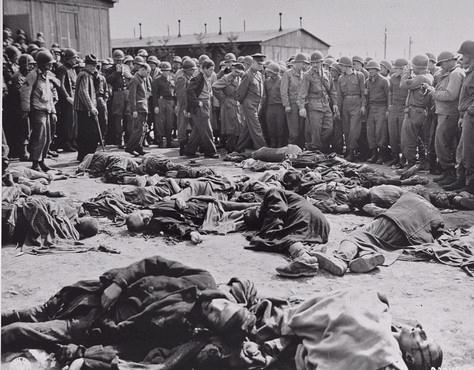
Prisoners during a roll call at the Buchenwald concentration camp.
— US Holocaust Memorial Museum

The prisoners held in Buchenwald were an amalgam of the kinds of people whom Hitler believed had no place in his Reich – Jews, the mentally and physically disabled, Roma gypsies, Freemasons, Jehovah’s witnesses, political prisoners, prisoners of war, homosexuals, criminals – but rather than simply killing them as happened in many of the other camps, these people were used as forced labour in local factories which were a part of the German war effort (mainly armament factories), or in the Buchenwald quarry. Like Auschwitz there was a slogan above the gates at Buchenwald; in Auschwitz the sign read Arbeit macht free which translates as ‘work sets you free’, in Buchenwald the message was Jedem das Seine, the literal translation of this phrase is ‘to each his own’ but the understood meaning in German is much more sinister – ‘everyone gets what they deserve’.

As World War Two was finally drawing to a close in the spring of 1945 the prisoners in Buchenwald began to hope that they might actually survive their ordeal. On 4th April the US 89th Infantry Division liberated the subcamp at Ohrdruf as they moved eastwards towards the Russian armies which were advancing from the opposite direction. By this time the Germans knew that they could not win the war and, with the Allies getting ever closer, the 6th April saw the start of the evacuation of over 28,000 prisoners from Buchenwald and the satellite camps in an effort to hide what had been happening there. Almost 8,000 of these prisoners died during the march to other camps further east. Some of the prisoners who remained in Buchenwald had built a secret short-wave transmitter and were able to send a Morse code message on 8th April saying ‘To the Allies. To the army of General Patton. This is the Buchenwald concentration camp. SOS. We request help. They want to evacuate us. The SS wants to destroy us.’ Only three minutes later they received a reply – ‘KZ Bu. Hold out. Rushing to your aid. Staff of Third Army.’  Most of the SS had already fled and, on receiving this message, the jubilant prisoners took control of the camp, effectively freeing around 21,000 of their fellow inmates.

At 3.15pm on 11th April 1945 four soldiers from the 6th Armoured Division of the US Army were the first Allies to reach Buchenwald where they were greeted as hero’s by the survivors, some of whom even found the strength to throw their liberators in the air in celebration. (The clock at the entrance gate of Buchenwald is now stopped at 3.15 as a memorial).

Although the prisoners were delighted at their liberation and able to celebrate for a short time, most of them were so ill that the Americans wondered if they would survive to enjoy their freedom. As Edward Murrow reported for CBS – ‘I asked to see one of the barracks. It happened to be occupied by Czechoslovaks. When I entered, men crowded around, tried to lift me to their shoulders. They were too weak. Many of them could not get out of bed. I was told that this building had once stabled 80 horses. There were 1,200 men in it, five to a bunk. The stink was beyond all description…As we walked out into the courtyard, a man fell dead. Two others, they must have been over 60, were crawling toward the latrine. I saw it, but will not describe it.’

Allied soldiers liberate Buchenwald

The American soldiers were hardened men who had fought hard all the way from the beaches of Normandy but Buchenwald was almost beyond their comprehension, when Eisenhower entered the camp he said that “Nothing has ever shocked me as much as that sight.” The American liberators described finding lampshades made out of human skin and being shown where the land had been fertilised with the ashes of the dead. These horrific sights influenced their attitude when they arrived in Weimar the next day. The civilians in the town, just five miles from the camp, said that they hadn’t known what was happening there even though they had seen thousands of trains arriving laden with prisoner and none leaving. Elie Wiesel, arguably the most famous survivor of Buchenwald, later said that some of the inmates took jeeps and drove into Weimar where the American GI’s stood by and watched as the newly liberated men looted homes, killed German civilians, and even raped some of the German women. After what they had seen the soldiers felt little inclination to intervene and stop the former prisoners from taking their revenge.

Sadly, the liberation on 11th April 1945 was not the end of Buchenwald as a concentration camp. Between then and 10th February 1950 it was a ‘special camp’ run by the Russian NKVD. Finally, in October 1950, the Russian authorities decided to demolish the camp although parts were retained as a reminder of the atrocities committed by the Nazis during the Second World War. Today those remains contain a memorial and museum to the memory of the thousands who died in one of the most notorious of all concentration camps.

The Buchenwald Memorial

During the Second World War Buchenwald was the destination for many spies and resistance fighters who were captured in occupied France. In my novel Heronfield Tony was a member of the SOE and, as such, would have been sent to Buchenwald. I found writing that particular section of the book harrowing although the words I wrote in no way reflect the true horrors that the prisoners endured. In my own simple way I hope that my work can be seen as a tribute to all those who were sent to Buchenwald and other concentration camps simply because of their race, politics, religious beliefs or disabilities.

Sources

Official Memorial Site, Buchenwald and Mittelbau-Dora Memorials Foundation.

Film footage from 1945 inside Buchenwald Concentration Camp, British Pathé.

Buchenwald, jewishgen.org.

Guide to the Concentration Camps Collection, Leo Baeck Institute, New York City 2013. Includes extensive reports on Buchenwald collected by the Allied forces shortly after liberating the camp in April 1945.

Holocaust Research Project

United States Holocaust Memorial Museum

Hitler’s guidebook – The Baedeker Raids

Have you ever used a Baedeker Guidebook when on holiday? The first of these travel guides was published in the 1820’s and were a ‘must have’ for travellers. But did you know that there was a series of air raids on England during the Second World War which got their name from these guidebooks? So why did the Germans use these books to target historic towns and cities in Britain during the spring of 1942?

guide-book

The intensive bombing of the German blitz ended in May 1941 when Hitler re-targeted his resources on his invasion of Russia; this meant that attacks on Britain were confined to hit-and-run raids on coastal towns. At the same time night bombing by the RAF was being scaled down as it was felt that the type of raids which targeted individual factories or military bases were ineffective. It was not until March 1942 that the RAF resumed their raids with new heavy bombers, improved navigation, new tactics, and a new commander, all of which helped to make these attacks much more devastating than those carried out earlier in the war. Instead of the previous attempts at precision bombing of factories and power stations the focus was now on area bombing. Planes would target a single area where there was not only the possibility of destroying military targets and factories but also affecting the morale of the civilian population. On 28th March 1942 the RAF bombed the city of Lűbeck in northern Germany. The historic centre of the city, known as the ‘Old Town’, consisted mostly of wooden buildings and was almost totally destroyed; over 1,000 people were killed.

Mass grave for the victims of the bombing of Lubeck

Nearby Rostock was bombed a month after the destruction of Lübeck. The two attacks shocked the Nazi leadership, and also the civilian population of Germany who had suffered little under previous RAF raids. The change of British tactics was very effective; Goebbels said that “the damage was really enormous” and “it is horrible… the English air raids have increased in scope and importance; if they can be continued for weeks on these lines, they might conceivably have a demoralizing effect on the population.” He described the raid on Rostock as more devastating than those before, saying “Community life there is practically at an end… the situation is in some sections catastrophic… seven tenths of the city have been destroyed… more than 100,000 people had to be evacuated… there was, in fact, panic.” Hitler was furious and determined that the Luftwaffe would retaliate in kind. On 14th April he ordered that “the air war against England be given a more aggressive stamp. Accordingly when targets are being selected, preference is to be given to those where attacks are likely to have the greatest possible effect on civilian life. Besides raids on ports and industry, terror attacks of a retaliatory nature are to be carried out on towns other than London.” Hitler’s aim was twofold, as well as revenge for the RAF raids he hoped that such attacks would break the morale of the British people and lead to a swifter end to the war.

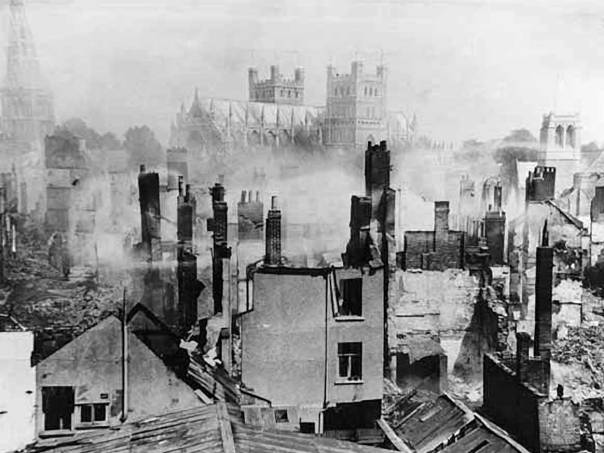
Exeter after the bombing

The first retaliatory raid took place on Exeter on 23rd April. Much of the city was damaged and around 80 people were killed and 55 wounded. The next day Baron von Sturm (a spokesman for the German Foreign Office) said “’We shall go out and bomb every building in Britain marked with three stars in the Baedeker Guide.” von Strum’s comments led to the raids being called the ‘Baedeker Raids’ by both the Germans and the Allies. Although Goebbels agreed with the tactic he was furious with von Strum for his thoughtless, off-the-cuff comment. Goebbels  had wanted to take the moral high ground, describing the British attacks as ‘terror bombing’, but now von Strum had effectively admitted that the Germans were deliberately targeting cultural and historical sites. Exeter was bombed again within hours of von  Strum’s statement. A third raid on Exeter took place on 3rd May when high explosives, incendiaries and parachute mines were dropped by 90 planes, devastating the city’s shopping centre. 163 people were killed and 131 seriously injured in the attacks on the town which was poorly prepared for such raids, as were the other locations chosen from the guidebook. (Intersetingly, Hitler forbade any bombing of the beautiful Blenheim Palace in Oxfordshire as it was the place where Churchill had been born; Hitler was determined to live  there after he had invaded and subdued the UK).

Goebbels in 1942
Goebbels in 1942

Each of the Baedeker raids involved between 30 and 40 bombers which flew two sorties each night. This meant that each raid would begin with a period of bombing lasting one and a half to two hours. There would then be a lull of two to three hours while the Germans returned to base to re-arm and re-fuel. Finally, another bombing run like the first.

Exeter was not the only city to be targeted. 400 people were killed in raids on Bath on two consecutive nights (25th + 26th April), during the raid the railway station was put out of action and communications severely affected. After the raids on Bath Goebbels reported that Hitler intended to “repeat these raids night after night until the English are sick and tired of terror attacks” and that he “shared [Goebbels’] opinion absolutely that cultural centres, health resorts and civilian centres must be attacked… there is no other way of bringing the English to their senses. They belong to a class of human beings with whom you can only talk after you have first knocked out their teeth.”

Bath after the raid
Bath after the raid

The 27th of April saw 90 tons of bombs dropped on Norwich; the city was attacked again on the 29th. In all, 222 people died during these raids on Norwich. It was the turn of York on 28th April when high explosive bombs and incendiaries caused a huge amount of damage, including the destruction of the medieval Guildhall. In May there were more raids on Cowes, Norwich, Hull, Poole, Grimsby and Canterbury. The RAF responded by sending 1,000 bombers in a massive raid on Cologne.

The German raids on historic cities in England during April and May 1942 were responsible for 1,637 civilian deaths and left another 1,760 injured. Over 50,000 homes were destroyed along with some important buildings such as the Bath Assembly Rooms and the Guildhall in York. But the raids did not cause as much damage as Hitler had hoped, and rather than breaking the morale of the British people it strengthened their resolve to defeat the enemy at all costs. German bomber losses were high and this, coupled with the need for Hitler to reinforce his troops in North Africa and Russia, resulted in a scaling back of attacks to hit-and-run raids on the coast. The Luftwaffe did occasionally raid towns and cities of historic and cultural importance in the months that followed (Ipswich, Poole, Norwich, Bristol, Swansea and Colchester), but these raids were much smaller (about 20 aircraft instead of 40+) and the damage was more limited; even so, by the end of the year over 3,230 people had been killed and 4,150 injured in German air raids on Britain. There were some attacks on towns of no military or strategic value in 1943, but by 1944 the Germans gave up their ‘Baedeker Raids’ as they were ineffective and the losses to the Luftwaffe were unsustainable. London once again became the target, along with the ports which Hitler believed would be used for the Allied invasion of Europe.

cologne
Cologne

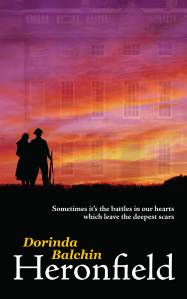
In my novel, Heronfield, Bath holds a special significance for two of the main characters, and it is through the eyes of Sarah that we see the significance of the bombings, and the resilience of the civilians whose resolve was strengthened rather than broken by the Baedeker Raids.

Heronfield

Grayling, A. C.  Among the dead cities

Price, A. Blitz on Britain 1939–1945

Terraine, John The Right of the Line

Call the midwife?- pregnacy and childbirth in the 17th century

Did women receive antenatal care during the 17th century? And if so, were men involved? These are questions I have been asked by people who have read my recent novel, The Cavalier Historian. It is a fascinating topic, and one which may cause you a few surprises!

Before the 17th century pregnancy and childbirth were the exclusive domain of women with male doctors only occasionally being called in to help with difficult deliveries. During the mid-17th century, however, some doctors began to take a more active role in childbirth although this was limited to the process of delivery with no real attempts at gynaecological surgery. It was not until the beginning of the 1700’s (50 years after the setting in my book) that forceps were introduced and, as the use of anything mechanical was seen as unsuitable for women, ‘man midwives’ began to appear. Initially they were called in to help with difficult deliveries, but by 1720 ‘man midwives’ and doctors were beginning to attend normal deliveries.1

Childbirth was a dangerous event during the 16th and 17th centuries and in Britain at that time the chances of a woman dying were about one in forty. In some countries, such as France, it was even higher. But, as Benjamin Roberts explains in his book Through the Keyhole: Dutch Child-rearing Practices in the 17th and 18th century, that does not mean that there was no antenatal care. As you would expect, there was a great difference in the experience of women depending on such factors as wealth and poverty, rural or urban residence, and the family being ‘enlightened’ or ‘unenlightened’. Care in pregnancy had certainly been a focus for some doctors in Germany as early as the period of the Reformation where male doctors were publishing books on the subject well before the civil war broke out in England. In 1513, for example, the German physician Eucharius Rosselin first published Rosengarten (The Rose Garden), which became the standard text for the more educated midwives who were able to read. Rosselin worked for Katherine, the wife of Henry IV, Duke of Brunswick-Luneburg, who wanted him to supervise the midwives in the city of Worms. His work led him to the conclusion that the high mortality rate in childbirth was due in no small part to careless and substandard work by midwives; his book was written to counter this. Rosengarten was an over-night success, and not just in Germany – by the mid-16th century it had been translated into all the major European languages with the English translation, The Birth of Mankind’ being published in 1540.

In addition to Rosselin the Lutheran preacher Johannes Coler was also publishing about pregnancy and childbirth. His work, Haussbuch, was published in six parts between 1591 and 1605. For Coler, the focus was on providing useful guidance for both mothers and fathers during pregnancy whilst Rosselin was more concerned with the final stages of pregnancy as well as with childbirth itself. Both authors offered advice on good diet for the pregnant woman.

For me, the most interesting book by an English author is ‘Observations in Midwifery’ by Percival Willughby, a doctor who wanted to improve the standards of midwifery and so save lives. In his book Willughby records the details of almost two hundred births he attended and where he criticises the ignorance and superstitious practices of many midwives (including placing the placenta on the baby’s head to prevent sore eyes). Willughby also describes situations where the death of a child, and maybe the mother as well, was as a direct result of the ignorance of the midwife. The first birth that Willughby wrote about could have resulted in such a disaster without his intervention. The incident took place in 1630 when he was asked by a country gentleman in Derbyshire to visit his wife. The local midwife apparently believed that the woman was already in labour and was trying to force the birth of the child. Willughby found that the woman’s waters had not yet broken so he gave her a calming drink (milk, camomile, sugar and egg yolk) to help her sleep. The pregnancy continued without further upset and the baby was born a month later.

Dr Willughby was definitely ahead of his time in the care of women during pregnancy, and also in improved care during childbirth. For some unknown reason ‘Observations in Midwifery’ was not published until after Willughby’s death when a number of hand-written copies were made, but the book was not actually published until 1863. There are two known hand-written copies still in existence, one of which is held by the Royal Society of Medicine, London.

Willughby was not unique amongst English doctors of that time for in his book he records a conversation which he had in 1642 with a Dr Harvey, a conversation in which they shared information about pregnancy and childbirth. So, to answer those questions about The Cavalier Historian: it was not the norm for women to receive antenatal care during pregnancy at the time of the English Civil War, but for a noble woman it would not have been unheard of. I like to imagine that the doctor in my book may have come into contact with Willughby or with the books of Rosselin and Coler, and that these had informed his care of a pregnant woman; and he would most certainly have been called in to assist with a difficult delivery when things went wrong.

In conclusion, pregnancy and childbirth were dangerous times for a woman in the 17th century. Ignorance and superstition were rife amongst the poor uneducated midwives, but if one were wealthy enough and of a high enough social standing it might have been possible to receive more enlightened antenatal care. Those women were the lucky ones.

References:  1 Royal College of Obstetricians and Gynaecologists;    Through the Keyhole: Dutch Child-rearing Practices in the 17th and 18th century by Benjamin Roberts

Observations in Midwifery by Percival Willughby

Thank you Whispering Stories for a lovely Author Interview

I’d like to thank Stacey for her lovely write up of our interview about my life and writing. I do hope  you can take a look and find out a little more about me and my writing.

As most of you know I now live back in the UK but the beautiful photo of ‘where I write’ is actually the view I had from my desk at Lakeside where most of ‘The Cavalier Historian’ was written. I was very lucky to have probably the best view in the world from an office!

140

The poisoned witches – a scientific explanation for witchcraft

What would you do if someone told you that there was a witch living in your town or village? Most people in the western world of the 21st century would smile and treat it as a joke at best, and at worst as someone trying to stir up trouble. But things would have been very different in the past.

During the Middle Ages witches were thought to be behind many illnesses from fevered nightmares to sick animals and dying children. This supposed interference in the natural order of things was known as bewitchment and struck at regular intervals, blighting the lives of thousands of people over hundreds of years.

During the period of the 15th to 17th centuries bewitchment reached epidemic proportions with over 40,000 men, women and children in Europe being executed as witches.  It was not only the poor who believed in witchcraft, even well-educated people of the time feared the supernatural and the Vatican sent out a decree warning people against bewitchment.  England was no different to the rest of Europe and many witch finders made it their life’s work to hunt down witches, one actually took 250 people before the courts in just two short years. Witches were greatly feared, and witchcraft was punishable by death.

220px-uk_warboys_sideaA well-known example happened at a manor house in the village of Warboys near Cambridge in 1589 when a mysterious illness struck down the five little daughters of the Throckmorton family and seven of their maidservants. The illness bore all the hallmarks of witchcraft, and fear spread throughout the village. The distraught family called in doctors and church leaders to try to diagnose what was wrong (at the time many doctors were willing to accept the idea of witchcraft after all other available explanations for an illness had failed).  The sick victims at Warboys had all the classic symptoms of bewitchment – hellish visions, often of wild animals (one said she saw a cat tearing her flesh off); the bodies of those affected went into violent fits and writhed in agony on their beds.  Once it was decided that witchcraft was the source of the problem someone had to be blamed and, as with most cases at the time, it was an innocent local misfit, Alice Samuel, who was singled out.  Standard practice was to torture a witch, who would often be branded or held under water; witchcraft was so feared that it didn’t matter how much the accused suffered as  any method used to see the curse of bewitchment lifted was deemed totally acceptable.  Many people believed that if you scratched a witch to draw blood it would help to relieve the suffering of the person who had been bewitched and so this was done to Alice on several occasions.  After a year of continuous pressure Alice Samuel finally confessed to being a witch. As punishment, and to keep the village safe in future, she was hanged, along with her husband and daughter.

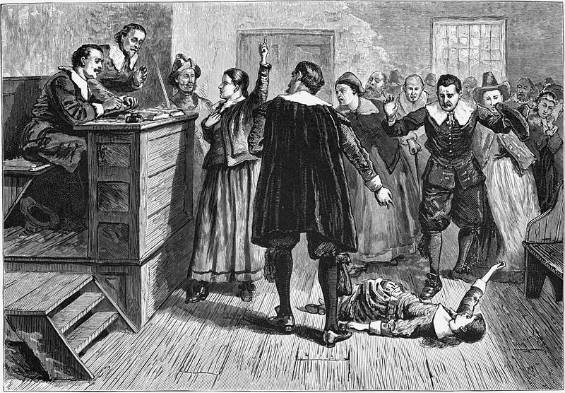
salemAnother well know incident of witchraft happened in Salem on the east coast of America.  The Salem Witch trials of 1692 played out in a very similar way to the Alice Samuel case, and Arthur Miller later wrote about what happened in his play The Crucible. In December1691 many settlers in Salem had been struck by a horrifying disease, similar in its symptoms to what happened in Warboys and, as in England, it was believed that the Devil was responsible. The town doctor was convinced that what was happening was the result of witchcraft, particularly as eight girls said that they had been bewitched; for the next year the young girls regularly testified in court against other town members. Based on the evidence of the children 152 people were imprisoned on charges of witchcraft, and although none of them confessed 19 men and women were found guilty and executed as witches.

Linnda Caporael
Linnda Caporael

So what was going on? Was there simply a widespread primitive belief in the devil and witchcraft, or was there something else behind these incidents? Professor Linnda Caporael is a Behavioural Psychologist who studied what happened at Salem. Many people believe that the girls had made it all up, but Linnda could think of no reason why they would have done that, or kept up the pretence for so long. The more she studied, the more she began to believe that most of what the girls had experienced had not been faked, particularly when they suffered from severe convulsions. Another factor which made her question accepted belief was that the girls were not the only ones to have experienced visions, many other men, women and  children in the village reported hallucinations to the doctors and clergymen. When Linnda re-read another account it made her think that the symptoms were very similar to those experienced by people who had taken LSD (acid) which is an hallucinogenic drug from the 1960’s. People who have taken LSD say that they experience hallucinations like living nightmares which are very similar to what the victims of witchcraft said in Salem.  This left Linnda with one big question – if the cause of witchcraft was LSD, where had the drug come from?

220px-albert_hofmann_oct_1993
Albert Hofmann

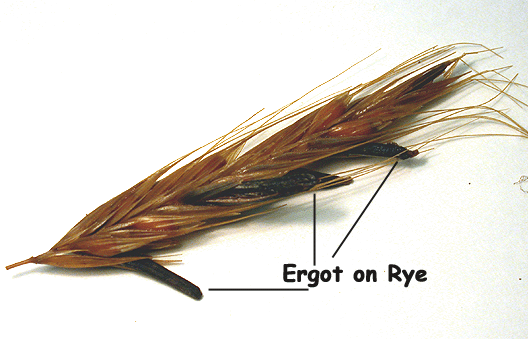
LSD did not exist in the 15th to 17th centuries, in fact it was not until 1943 that the Swiss neuro-physiologist Albert Hoffman experimented with a natural fungus called ergot whilst looking for medical applications for a drug.  As part of his experiments he made an extract from the ergot fungus, accidentally spilling some of it onto his hand.  Within hours he began to hallucinate. When he finally recovered from the horrific hallucinations he set to work and derived LSD from the extract.

Linnda Caporael began to look at ergot poisoning as a possible explanation for bewitchings.  The descriptions of the effects of the drug on people which she found in medical books matched the symptoms from Salem and she was convinced that she had found an explanation for witchcraft in nature.  The next question, then, was how the settlers had come into contact with the drug? As it was not only the settlers in Salem who were affected by witchcraft but their animals as well (cattle acted strangely and died of no natural causes) Linnda began to wonder if a food common to both humans and animals could be the source, so she began looking at grain.  The dominant crop in Salem was rye, so the question now was to find out how ergot could have got into the rye fields. To help her Linda looked at the work of fungal toxicologist, Professor Maurice Moss.

A fungus contaminates its host and gradually replaces the original seed with its own material so, Linnda surmised, if the rye in the fields was contaminated with ergot then the bread would have been contaminated too. This was important to her theory because the nerve toxins now contained in the bread would account for the hallucinations, pin pricking sensations, the feeling of insects crawling beneath the skin and the powerful fits which meant that the sick people could barely be held down by their friends and family.  Ergotamine (taken from the word ergot) is a drug used in Holland to treat migraines and has been shown to have constrictive powers which can lead to convulsions, and to the blood draining from the skin causing pricking sensations.

ergotonrye

Linnda then turned to look at the environment which, again, supported her theory. Ergot thrives in wet, damp soil, and in 1691 the Salem crops had been planted in low marshy ground.  For a mass infection of the harvest to take place it would have needed a warm wet spring and summer; the spring of 1691was stormy and wet and was followed by a wet summer, the crop grown in Salem was rye.  Most of the sickness was on one side of the village where the homes backed onto the western farms with swampy marshlands. Rye was also the staple diet in Europe in the Middle Ages which, if Linnda  Carpoael is correct, could explain the witch persecutions which took place so frequently; particularly as the poor peasant classes were hit most, and rye was their staple diet.

An historian by the name of Professor Mary Matossian has mapped outbreaks of witch trials which were localised in Britain – these were mainly, but not exclusively, in Essex and East Anglia – the surprising result is that the outbreaks coincided with the main rye growing regions.  As the weather conditions at the time were different to today, with wetter and warmer summers, the conditions were ideal for the formation of ergot on rye.

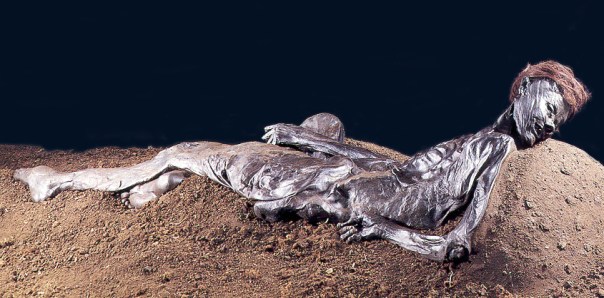
Grauballe man

Supporting scientific evidence for this theory about the causes of witchcraft comes from the ‘peat bog man of Grauballe’.  He was buried in a bog in Denmark during the Iron Age and found in 1952.  The man had been murdered with a knife and club then dumped naked into the bog – his throat had been cut from ear to ear and a blow to the right temple had fractured his skull.  Although this sounds brutal this ritual was often carried out if someone was thought to be possessed by demons, the fracturing of the skull would allow the demon to escape and the victim could rest in peace. A post mortem was carried out on the Grauballe man in 1952 and his stomach contents showed that his last meal had largely comprised of ergot.  Chemical tests on a gut sample showed that ergot alkaloids were present, therefore the man would have been hallucination, convulsing, vomiting etc. and would probably have been killed as a witch.

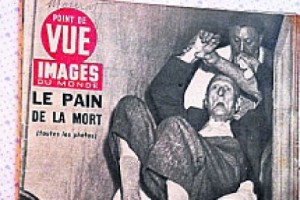
The most recent case of a mass poisoning happened in 1951 when an entire village in France had ergot poisoning caused by infected bread.  In Pont St Esprit (Provence) in August of that year 250 people were struck down, several were taken to hospitals and psychiatric asylums in the weeks which followed.  They were sick, had stomach cramps, couldn’t sleep, suffered from violent convulsions and terrifying hallucinations.  Many had to be strapped down to stop them jumping out of windows to escape their torment.  At least five people died during the outbreak and when ergot poisoning was finally found to be the cause many people did not believe the explanation.  The Bishop of Nimes was called in to exorcise the devil from the bakery which had been the source of the outbreak.  Interestingly, a dog which had been fed on scraps of the rye bread ran in circles and was biting at rocks until it broke its teeth on them and then died.  This was an exact parallel to what happened to the animals in Salem.

affaire-pain-rend-fou-avait-300x200

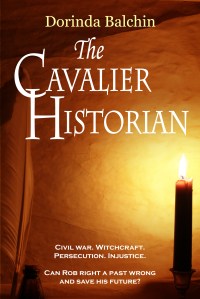
Cover_Kindle_front coverSo, was witchcraft really a problem in the past, or were bewitchments caused by ergot poisoning?

I am fascinated by the fact that scientific research is constantly revealing more about our past.  I have come to believe that the misinterpretation of ergot poisoning is responsible for reports of witchcraft over the centuries, and this is what lead me to write the conclusion to the story of Rebekah and Simon in my novel ‘The Cavalier Historian’.


The greatest defeat in British military history – the fall of Singapore 15th January 1942

Today is the 75th anniversary of one of the worst defeats in British military history, the fall of Singapore during the Second World War.

Japan in the 1930’s was a country looking to expand its influence in the Far East, and the Allies tried to halt Japanese campaigns in China by imposing sanctions. These actions were effective and oil reserves in the island Empire were soon rapidly depleting. With the situation becoming ever more serious the Japanese felt that they had to do something to secure their vital resources so plans were put in place to attack Great Britain and the United States. These attacks would open up the way for an invasion of the Dutch East Indies which were rich in oil.

singapore

At the southern end of the Malay Peninsula is the island of Singapore. Nicknamed the ‘Gibraltar of the Far East’ it was the key to British defence strategy in the Far East and it was believed that the island was impregnable. Britain’s possessions in Asia would have been vulnerable without a strategic military base to protect them, and this role fell to Singapore where the expensive defences were completed in 1938. Japan was seen as the only country which could possibly be a threat in the area, but the British believed that the Japanese army was inferior to their own and only capable of defeating the backward Chinese.

Japan did not believe that they were any way inferior to the West just because their culture was different. They refused to accept interference in their designs on China and so made almost simultaneous Japanese attacks on Pearl Harbor and in north Malaya and Thailand which led to Britain declaring war on the Empire on 8th December 1941.

PEARL HARBOR,HAWAII: The USS Shaw exploded after being struck during the attack on Pearl Harbor December 7, 1941.

The defences at Singapore were manned and the forces ready to repel an attack by sea so the British were taken completely by surprise when the Japanese attacked overland. The Allies believed that the Malayan jungles were impassable to a military force, but the Japanese were aware of this and so made their way through the jungles and mangrove swamps of the peninsula, taking no prisoners to slow their advance. Japanese aircraft attacked the airfields in Singapore, destroying almost all of the RAF’s frontline planes and leaving the island with no air defences. In an attempt to halt the Japanese, the battleship ‘Prince of Wales’ and the cruiser ‘Repulse’ put to sea from Singapore on the 8th December and headed north to the enemy landing sites. On the 10th both ships were sunk by Japanese torpedo bombers, delivering a crushing blow to British forces, and British morale back home. The east coast of Malaya was left exposed and the Japanese were able to continue their landings unopposed. Only the army could stop the invasion now.

hms-prince-of-wales

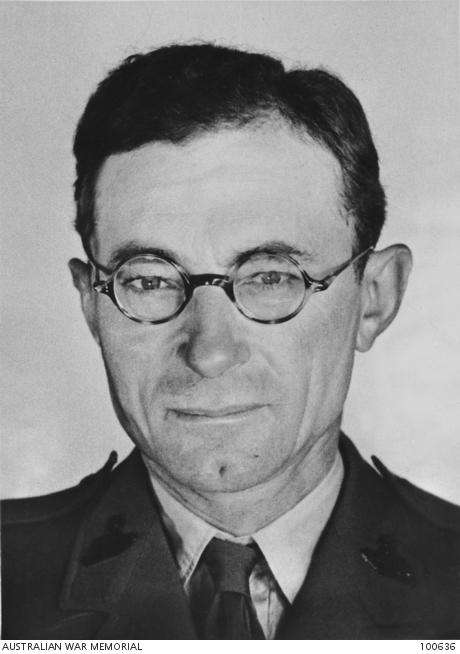
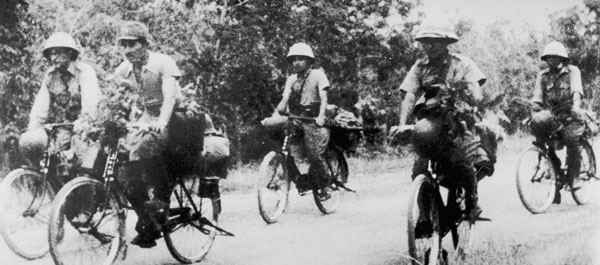
Lieutenant General Percival led the Allied forces of 90,000 men, the majority of whom had never seen combat. The Japanese forces, on the other hand, were led by General Yamashita; most of the 65,000 men he commanded were much more experienced than the Allies, having fought in Manchuria against the Chinese. Moving swiftly on foot and stolen bicycles the Japanese were ferocious, killing captured and wounded soldiers, torturing and killing Malays who had helped the Allies. The British forces were shocked by the brutality of the enemy and, after the fall of Jitra on 12th December 1941, retreated towards Singapore. Kuala Lumpur, the capital of Malaya, was captured by the enemy on 11th January 1942; the Allies continued to fight fiercely even though things were looking increasingly bleak for them. One example of the determination of the defenders happened at Bakri where Lieutenant Colonel Anderson fought the Japanese for five days (18th – 22nd January). It was only when his men ran out of ammunition that he was forced to retreat, leaving behind about 150 wounded Australian and Indian soldiers. These men were later all killed by the Japanese. Anderson was awarded the Victoria Cross for his leadership in the fighting and withdrawal.

Charles G W Anderson

The retreat forced the Allies into an ever smaller area of the peninsular until the British and Australian troops finally crossed the causeway which separated Singapore from Malaya and prepared to make their last stand on the island, destroying the causeway behind them. Churchill ordered that a strong defence should be put up and surrender was not to be considered until there had been ‘protracted fighting’ to try to save the city. The British believed that the Japanese would attack Singapore across the Johor Strait; unsure of just where the attack might come Percival decided to position his men so that they could defend the entire coastline, stretching to some 70 miles. He had overestimated the strength of the enemy and this spread his resources too thinly so that they could not adequately defend any one section of the line. When the attack came on the 8th February 1942 many of the defenders were too far away to influence the battle, and Percival was reluctant to move them closer in case the Japanese attacked on a second front. 23,000 Japanese attacked with surprising speed and ferocity, while the British continued to doggedly defend Singapore. On the evening of 10th February Churchill sent a cable to Wavell, saying: ‘I think you ought to realise the way we view the situation in Singapore. It was reported to Cabinet by the C.I.G.S. [Chief of the Imperial General Staff, General Alan Brooke] that Percival has over 100,000 men, of whom 33,000 are British and 17,000 Australian. It is doubtful whether the Japanese have as many in the whole Malay Peninsula … In these circumstances the defenders must greatly outnumber Japanese forces who have crossed the straits, and in a well-contested battle they should destroy them. There must at this stage be no thought of saving the troops or sparing the population. The battle must be fought to the bitter end at all costs. The 18th Division has a chance to make its name in history. Commanders and senior officers should die with their troops. The honour of the British Empire and of the British Army is at stake. I rely on you to show no mercy to weakness in any form.’  This was a forceful, no holds barred message which could not be ignored; even though the Allies had lost their food and fuel supplies to the enemy Wavell told Percival that the ground forces were to fight on to the bitter end, and that there should be no general surrender in Singapore.

Japanese troops on bicyclces
Japanese troops on bicycles

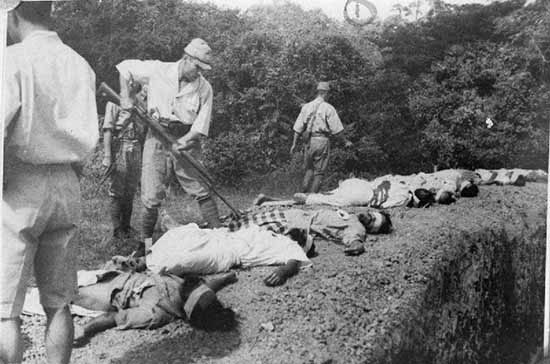
On 14th February the Japanese broke through part of the Allied defences and advanced towards the Alexandra Barracks Hospital. The staff there could see no hope of rescue and so decided to surrender, sending a British lieutenant with a white flag to talk to the Japanese; he was bayonetted to death. The Japanese troops then entered the hospital and immediately killed around 50 patients, some of whom were lying on the operating table; doctors and nurses were also murdered. The following day about 200 male staff members and patients (many of them walking wounded), were taken to a nearby industrial area where they were murdered. A small number of the men survived by playing dead and were able to report this atrocity at the end of the war.

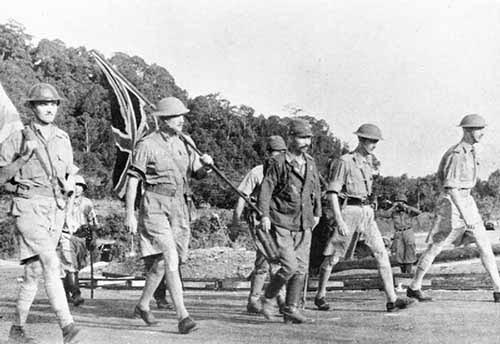
By the morning of the 15th the Allies were almost out of food and ammunition. There was a heated conference of the senior commanders who reluctantly agreed that there was no hope of victory and the garrison should capitulate. Percival formally surrendered at 17.15. This was the largest surrender of forces led by the British in history. 100,000 Allied men (British, Australian, and Indian) were taken prisoner when Singapore fell. A number of the prisoners were held in Changi Prison where many of them died, but the vast majority were shipped out to work as forced labour for the Japanese, some in Japan itself, some on the Sandakan airfield, and thousands on the infamous Burma railway (around 9,000, or 9% of those taken prisoner, died on the railway).

Surrender
Surrender

It was not only the Allies who suffered at the hands of the Japanese. A large percentage of the population of Singapore was of Chinese descent and many of these people were massacred by the victorious invaders. No one knows how many civilians were killed, the Chinese of Singapore said it was 50,000 although the Japanese said it was closer to 5,000 (historians believe this estimate to be too low, based on the actions of the Japanese in places like Nanking, and the true figure will never be known).

Japanese atrocities
Japanese atrocities

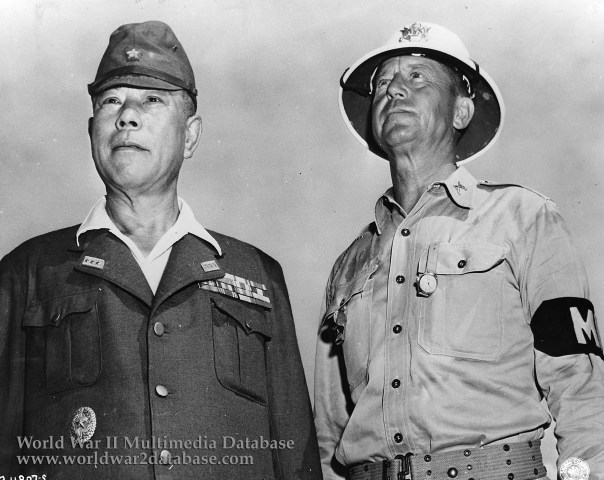
The shocking surrender of the British forces in Singapore showed the world that, despite expectations, the Japanese army would be a major player during the war. The conflict in the Far East continued after the war in Europe had been won and was only to end with the devastating attacks on Hiroshima and Nagasaki. British forces had planned to liberate Singapore in 1945 but the war ended before they could carry out their attack. The Japanese surrendered unconditionally in September 1945 and British, Indian, and Australian forces moved back into Malaya and Singapore. The Japanese commander, General Yamashita was tried by a US military commission for war crimes; he was convicted and hanged in the Philippines on 23 February 1946.

Lieutenant General Tomoyuki Yamashita, the "Tiger of Malaya," is arraigned before the War Crimes Commission in Manila, pleading not guilty. He will be confined at New Bilibid Prison until his trial, October 29, 1945, in Manila. Here, Major A. S. "Jack" Kenworthy, Military Police prison officer, delivers Gen. Yamashita to the residence of the Philippine High Commissioner, where Yamashita was held for arraignment in the first step of the war-crime trials to be held in the Pacific. The arraignment was open to the public. Yamashita was brought from his cell in New Bilibid Prison in an ambulance for security reasons. The legitimacy of the hasty trial has been called into question by many, as considerable evidence pointed to the fact that Yamashita was either not aware of the atrocities that were committed, or was unable to properly control his soldiers due to communication disruption caused by the U.S. Army during their offensive. One of the atrocities in Manila was even carried out by a unit that disobeyed his orders to retreat. Following the Supreme Court decision, an appeal for clemency was made to President Truman. The President, however, declined to act and thereby left the matter entirely in the hands of the military. In due time, General MacArthur announced that he had confirmed the sentence of the Commission and on February 23, 1946, at Los Banos Prison Camp, 30 miles south of Manila, Tomoyuki Yamashita was hanged.
Lieutenant General Tomoyuki Yamashita, the “Tiger of Malaya

There are few survivors of the fall of Singapore still alive today, 75 years later, but that doesn’t mean we should forget. Perhaps we can take a few moments today to remember all those who died or suffered life changing experiences either during the battle or in the three years of Japanese ruled which followed.

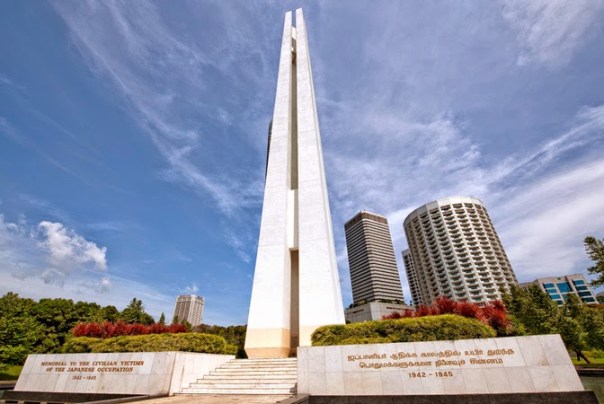
War memorial in memory of the civilian victims of the Japanese occupation of Singapore

An incorruptible crown – The Execution of Charles 1

Is it ever right to depose a ruler who has a legitimate right to rule? That is a question which  many people ask in the modern world where tyranny and democracy come face to face and conflict ensues. But this is not an exclusively modern problem.

charles-iCharles I was a monarch who believed in the divine right of kings, that God had placed him on the throne and so no mere mortal should be able to tell him what to do. This attitude meant that he was constantly at odds with Parliament who wanted a role in ruling the country, particularly when it came to setting taxes. Charles would not listen to them and constantly dismissed Parliament, only recalling it again when he wanted more money. To make matters worse, Charles was considered to be too close to the Catholics in his religious observances. Henry VIII had made himself Head of the Church of England, a position inherited by Charles, yet Charles married a Catholic princess and many people were afraid that he would take England back into the hands of the Pope. There was simmering tension throughout the country which eventually broke out into all-out war in 1642.

The English Civil War ebbed and flowed across the country. With The king losing ground in 1645 he surrendered to the Scots in the hope that this would help him, but instead his forces north of the border handed him over to the English Parliament and Charles was imprisoned. He refused to compromise and give up any of his powers, and escaped in November 1647. But his freedom was short lived; he was recaptured and imprisoned on the Isle of Wight. From his captivity Charles organised a Scottish invasion to coincide with uprisings of his supporters in England, but this attempt to regain power was unsuccessful and, by the end of 1648, the English Civil War was over.

Charles I was tried for treason in January 1649, still believing in his divine right of kingship and refusing to give up his powers to Parliament. He was found guilty and executed on 30th January 1649.

On 29th January Charles was able to say goodbye to two of his children who were under the control of Parliament. On the following morning he donned two shirts as the weather was cold and he did not want to shiver and make people think he was afraid. The execution took place in front of Banqueting House at Whitehall Palace. The most complete record of the only execution of an English king is an anonymous account which is quoted by all the major historians. I have used this account as the basis for the scene of the execution of Charles I in my novel, The Cavalier Historian.

Excerpt from ‘The Cavalier Historian’.

Simon shivered and pulled his cloak closer around himself. It kept out the bitter cold of January, but failed to warm his heart, or to banish the chill of a dread which reached deep to his bones. From their position at the top of a flight of steps leading to a shop, he and his father looked out over the silent crowd. No one moved. No one spoke. All eyes were focussed in one direction. Simon did not want to look, but could not help himself. His eyes turned slowly towards the raised scaffold with its block. He turned to look at his father. Sir Thomas stood straight and still, outwardly calm, although Simon could see the tension in his clenched jaw and the nervous twitching of one eye. Turning back towards the scaffold, the young man thought back to the time the King had visited Marston Manor. They had felt so sure of victory back then. No one could have predicted that things would end in this way.

The crowds thronging Whitehall stood silent and still around the black draped scaffold, come to see the execution of their King. Simon was glad that they had got there early and were close to the block. Not that he wanted to see what happened in detail, but he knew that his father wanted to be able to offer comfort and strength to the King, if at all possible. They had tried so hard to get to see him after sentence had been passed, but had not been allowed. Sir Thomas had ranted about the unholy actions of the Rump, called down all kinds of curses upon the heads of Cromwell and Ireton, threatened revenge for the cruel way the King had been treated. But as the hours passed he had calmed, accepting that what was now ordained was inevitable, wishing only to say goodbye and take an oath to his sovereign that he would continue to support the Stuart cause. Such a meeting would have been an equal comfort to himself as to the King. The denial of access had wounded him deeply.

There was a low murmur of anguished voices as all heads turned towards the Banqueting House. The execution party had arrived.

The King, wrapped warmly against the bitter January morning, was flanked by a bishop and his executioner. He said something in a quiet voice to the bishop, who nodded. The King stepped forward. Simon was unable to hear the first words the King spoke, and leant forward to listen more intently. Due to the soldiers who stood between him and the crowds, Charles’s voice did not carry far, but Simon and Sir Thomas were able to make out what he said.

‘For the people, truly I desire their liberty and freedom as much as anybody whomsoever. But I must tell you that their liberty and freedom consist in having of government, those laws by which their life and their goods may be most their own. It is not for having share in government, sirs; that is nothing pertaining to them. A subject and a sovereign are clear different things. And therefore until the people have the liberty of good government, as I say, certainly they will never enjoy themselves. Sirs, it was for this that now I am come here. If I would have given way to an arbitrary way, to have all laws changed according to the power of the sword, I need not to have come here. Therefore I tell you, and I pray God it be not laid to your charge, that I am the martyr of the people.’

Simon was impressed by the calm assurance of the King’s voice. As with his trial, there was no trace of the stammer which usually marked his speech. As he spoke in those final moments of life, he was truly a monarch to be proud of.

The condemned man turned to his executioner.

‘I shall say but very short prayers, and when I thrust out my hands…’ The executioner nodded, no further words were needed. Charles turned to the bishop and asked for his cap, which he placed on his head before turning back to the axeman. ‘Does my hair trouble you?’

‘It would be best, Sire, if you placed it all beneath the cap.’

The King nodded and proceeded to do so, aided by the bishop and executioner. Simon found it hard to believe that this was all real. The King behaved so calmly, spoke so calmly. The execution party was polite. The crowd restrained. It felt to him like play acting, as though the scene would soon be over to loud applause, and the actors leave the stage. But no. The reality continued as the King spoke again.

‘My Lord Bishop, I fear not. I have a good cause, and a gracious God on my side.’

‘There is but one stage more, Your Majesty, which, though turbulent and troublesome, yet is a very short one.’ Simon could hear the catch in the man’s voice, as though he struggled with the words. It was obvious that the man was not comfortable with his task and wanted to do all that he could to aid the King. ‘You may consider it will soon carry you a very great way; it will carry you from earth to heaven; and there you shall find to your great joy the prize you hasten to, a crown of glory.’

The King nodded. ‘I go from a corruptible to an incorruptible crown; where no disturbance can be, no disturbance in the world.’

‘Indeed, Your Majesty. You are exchanging a temporal for an eternal crown. A good exchange.’

Simon stole a look at his father. Sir Thomas stood calmly, his gaze sure as he kept his eyes on the King’s face. For a moment he caught the condemned man’s eye. There was recognition in Charles’s eyes, and gratitude for a faithful servant who had dared to come forward to offer his support. He inclined his head slightly in acknowledgement. Simon heard a deep intake of breath from his father as he fought to control his emotions, focussing on giving all of his strength to the King, who now turned back to his executioner.

‘Is my hair well?’ At a nod from the man he removed his cloak, which he handed to the bishop. His hand went to his neck, to the jewelled pendant of Saint George, symbol of the Order of the Garter. He held it in his fist for a moment, as though reliving in his mind past days of glory. Then he removed it and handed it to the bishop. Next came his doublet and waistcoat before he put the cloak back over the crisp white shirt, as though to lessen the impact of the bright flow of blood which must soon cover it. He breathed deeply and held his hands out in front of him.

‘When I put out my hands this way, then.’

The executioner nodded.

The King of England stood for a moment, his lips moving in silent supplication, his eyes lifted towards heaven. Then he knelt and laid his head on the block. After a moment in which he composed himself, the King held out his hands.

The heavily muscled executioner raised the axe above his head. It held for a moment at the apex before he brought it down with all his might. With one blow, the King’s head was severed from his shoulders.

Simon found himself trembling, his knees weak, his stomach wanting to disgorge his breakfast as the head fell to the wooden boards with a thud. Bright blood fountained from the neck and began to pool as the body slipped to the side, an arm still twitching. He looked at his father and took strength from the way he stood, unmoving, seemingly unaffected. Simon straightened and turned back to the block in time to see the executioner pick up the severed head and hold it for the crowds to see. There was no cheering. No sign that this execution was the will of the people. Instead a collective groan went up, like the sighing of the wind before a storm. Only the soldiers cheered, and this seemed to Simon to be more out of a sense of duty than from the heart.

Two soldiers stepped forward and lifted the King’s body, placing it in a coffin. The executioner placed the head with the body and the coffin was covered with black velvet. More soldiers stepped forward, lifted it to their shoulders and carried it solemnly back into Banqueting House.

Simon and his father stood unmoving. Unable to move. They watched as people came forward, soaking handkerchiefs and pieces of cloth in the King’s blood. No doubt some did so as tokens of their wish to see the King dead, but they were few. Simon could see by the reverent, tear-stained faces that most people took the blood to cherish it as the sacrifice of a martyr, as a blessing from a divinely appointed monarch who now wore his incorruptible crown.

England no longer had a king.
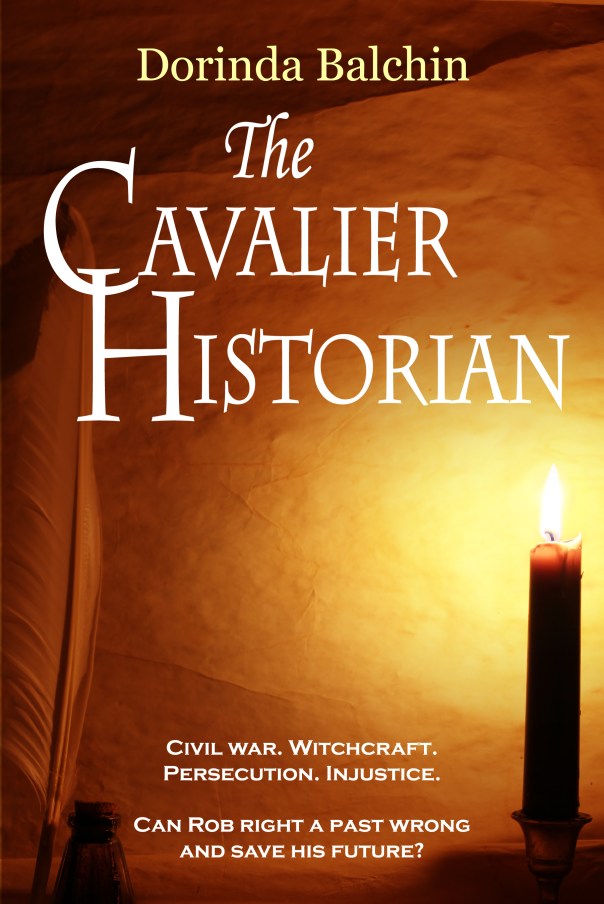
Cover_Kindle_front cover

The last invavsion of Great Britain – ‘overpaid, over sexed and over here’.

When was the last invasion by foreign troops into Great Britain? The Norman Conquest in 1066? Many people who lived during the Second World War might dispute that and say that 26th January 1942 saw the start of the last invasion by a foreign force with the arrival of the first American soldiers! We have all heard the phrase ‘overpaid, over sexed and over here’ used to refer to GI’s who arrived in England in preparation for D Day, and many people did find their arrival disconcerting – particularly the young British servicemen overseas who worried about their sweethearts, or the men who served at home in jobs essential to the war effort but who could not compete with the rich, brash new comers. The Americans had money, chocolate, stockings and other items which had not been seen in Britain for years; they were also strangely exotic, most people only having heard an American accent in the cinema. It was a difficult time for the British, but we should not forget the difficulties facing the young soldiers far away from home, in a foreign country for the first time, and facing the prospect of going into battle. It was equally difficult for them to adapt, and the American War Department published leaflets explaining the British culture and how the young GI’s should behave.

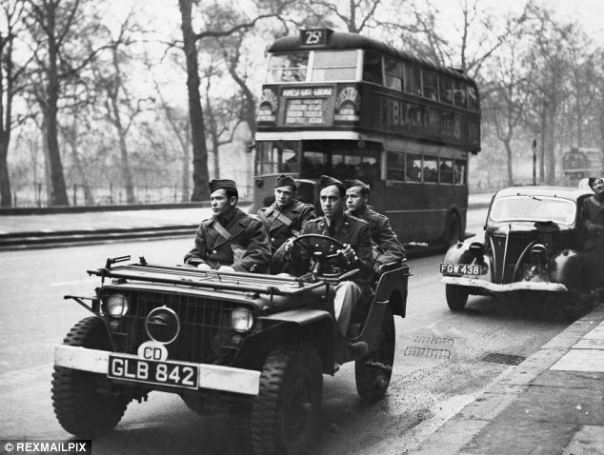
GI's in London
GI’s in London

In January 1942 Britain was a tired country. The British had been holding out against the Germans for over two years, an island of defiance which welcomed the support of the Americans with a mixture of relief and curiosity, and frustration that it had taken their Allies so long to get involved. But once the American’s began their preparations for the invasion of Europe there was no stopping them, and by the end of the war over 1.5 million US servicemen were stationed all over mainland Britain. Anticipating potential problems between the Americans and their British hosts servicemen were issued with a pamphlet entitle Instructions for American Servicemen in Britain explaining British history and culture and giving advice on how to get along with their hosts. As well as giving advice to the American serviceman the publication also gives some insights into what it was like in Britain during the war. So what did the American War Office have to say? Here are just a few of the points from the long pamphlet which I hope you will find interesting and, on occasion, amusing (summarised, quotes in italics).

The British are reserved, not unfriendly. Great Britain is a small crowded island, hardly bigger than Minnesota, so people do not invade each other’s privacy. If someone on a bus or train doesn’t speak to you they aren’t being unfriendly, they just don’t want to seem rude – but you can bet they are paying more attention to you than you think!

Watch your language. We have the same language but with differences which mean you could inadvertently cause offence. Don’t laugh at their quaint turns of phrase. Don’t say ‘bloody’ in mixed company as it is one of their worst swear words. Don’t say ‘I look like a bum’ because you are saying you look like your backside. Don’t call their monetary system ‘funny money’; pounds, shillings and pence are complicated but telling the British that our decimal system is better won’t go down well. British people work hard for their money, and get paid much less than you so they won’t like you making fun of their hard-earned cash.

Don’t be a show off. The British don’t like bragging and showing off. Don’t throw your money around. Be sensitive to the British ‘Tommy’ who gets paid much less than you and will be touchy about how much you get paid.

The British are tough. The people you meet might be polite and soft-spoken but don’t be misled. 60,000 British civilians – men women and children – have been killed by German bombs yet morale is high. A country can’t come through that without guts. Also, don’t try to lecture the British on ‘taking it’; they’re not interested in taking it anymore, but getting together with us and starting to dish it out to Hitler.

London during the blitz

Remember there’s a war on. Britain may look tired, worn and dirty but you aren’t seeing the country at its best. They’ve been at war since 1939. Houses haven’t been painted because factories are making planes not paint; cars look old because no new ones are being built; parks and gardens are unkempt because there is no one to look after them, or they have been turned over to growing vegetables. The British people will want you to know that their country in peacetime is much prettier, cleaner and neater.

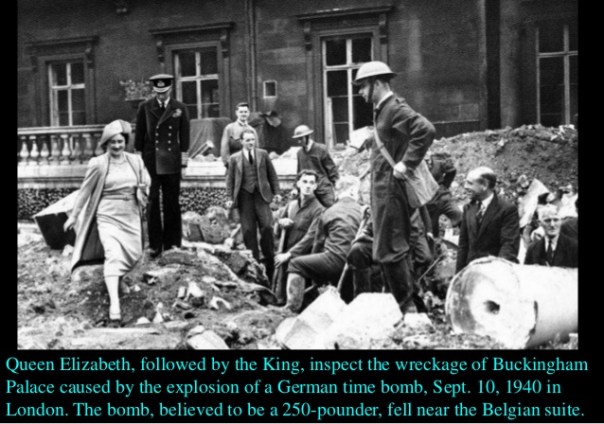
The monarchy. Britain is a great democracy, the King reigns but doesn’t govern and his people have a great deal of love for him. Criticizing the King would be like someone criticizing our country or flag. The King and Queen haven’t been evacuated from London, they have stayed during the blitz and their home has been bombed just like many other people. The British are proud of them. The National Anthem is played at the end of public gatherings like the cinema or theatre and you should stand to attention for it, if you don’t want to miss the last bus then leave before that anthem, that is OK.

gi-3

Sport. Take the opportunity to watch a match if you can – soccer, rugby or cricket – but remember the British reserve. If a fielder drops a catch in cricket the crowd will probably say ‘good try’ even if it was a bad fumble, back home the crowd would probably shout ‘take him out’, so be careful not to insult in the excitement of a game.

Indoor amusements. You will find theatres and movies (cinemas) in Britain, but the place most people go to relax is the pub – we would call it a tavern or bar. They drink warm ale, not like our cold German beers; you won’t get much whiskey now because war taxes have put the price up to around $4.50 a bottle. Don’t forget that the pub is a meeting place for the neighbourhood where people come to meet their friends not strangers. Don’t join groups of people or games like darts unless you are invited.

The British soldier. You will probably want to get to know the British Tommys. If you want to make friends don’t steal his girl or not appreciate what his army has faced since 1939; and don’t make a show of how much better paid you are than him.

Keep out of arguments. Don’t tell the British that ‘we came over and won the last one’. All countries played their part in the last war. We lost 60,000 men in action, don’t forget that the British lost almost a million of their youngest and best. (Note: by the time the Americans arrived in 1942 Britain had lost as many civilians to bombing in WW2 as the US did soldiers in WW1).  Don’t criticise them for their losses early in this war and say how we are going to change things. Remember how long they have been holding Hitler back without help from anyone. The British welcome you as friends and allies. But remember that crossing the ocean doesn’t automatically make you a hero. There are housewives in aprons and youngsters in knee pants in Britain who have lived through more high explosives in air raids than many soldiers saw in first class barrages in the last war.

London children
London children

Britain at war. Back home in the US you were in a country at war, you are now in a war zone. All lights are blacked out at night; all highway signposts have been taken down. For months the British have been bombed night after night. Everything is rationed from gasoline to soap, food most of all. Incomes are down because of the high war taxes. Try to understand the British situation which is something the US has never faced. Women are non-commissioned and commissioned officers in the armed forces, and men take orders from them. They have stuck to their posts near burning ammunition dumps, delivered messages afoot after their motorcycles have been blasted from under them.  They have pulled aviators from burning planes.  They have died at the gun posts and as they fell another girl has stepped directly into the position and “carried on.”  There is not a single record in this war of any British woman in uniformed service quitting her post or failing in her duty under fire. Now you understand why British soldiers respect the women in uniform.  They have won the right to the utmost respect. When you see a girl in khaki or air-force blue with a bit of ribbon on her tunic-remember she didn’t get it for knitting more socks than anyone else in Ipswich.

Female gun crew
Female gun crew

Important do’s and don’ts.

  • Be friendly.
  • Don’t be flash with your money.
  • Don’t show off.
  • If you are invited to eat with a family don’t eat too much even if they say there is plenty, you could eat most of the week’s ration.
  • Don’t make fun of speech or accents.
  • Don’t comment on politics or the British government.

Let this be your slogan: It is always impolite to criticize your hosts; it is militarily stupid to criticize your allies.

In my novel, Heronfield, Bobby is a GI who comes to the UK to prepare for the invasion of Europe. He, and his friends, embody the spirit of the GI’s – friendly, open, sharing what they have with the local children at Christmas. They were not easy times for the Americans or the British, but the conflict that brought two countries together in war also created friendships and loves to last a lifetime.

Clare Hollingworth, 10th October 1911 – 10th January 2017

clare-hollingworth

Today I would like to pay tribute to one of the women who has inspired my writing and who died today, aged 105.

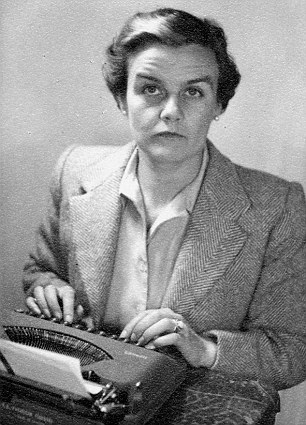
Clare Hollingworth was one of the most respected war correspondents of the 20th century. Born in Knighton in Leicestershire on 10th October 1911, Clare’s father worked in the shoe trade. Clare had a fairly ordinary life as a youngster, and by 1939 she had married and was living in Poland with her husband. She was horrified by what she saw of the Nazi treatment of many groups of people and decided to help, rescuing around 3,000 refugees from Sudetenland (part of Czechoslovakia which had been annexed by Hitler). For some reason the British government was not happy with what she was doing and MI6 persuaded her employer to ‘let her go’. Clare returned to England and decided that she wanted to be a journalist, partly due to stories told to her by her friend Trilby Ewer. Trilby wrote for the Daily Telegraph and arranged an interview there for Clare. She was hired on the spot as a ‘stringer’ (a freelance journalist) working with Hugh Carleton Greene, who was the Telegraph’s correspondent in Berlin.

With her nose for a story Clare headed for Katowice where she borrowed a car from the British consul-general and drove towards the Polish border. The road was full of motorcycle despatch riders who seemed to be incredibly busy, and as she drove Clare passed a long hessian screen which had been put up to stop people looking down into the valley below. With the luck which seemed to follow Clare at times a random gust of wind caught the screen and pulled it back, revealing hundreds of German tanks and other vehicles lined up and ready to invade Poland. 29th August 1939 was only Clare’s third day as a journalist, but she already had her first headline in a national newspaper when the Telegraph printed her story as the Page One lead.

On 1st September Clare was woken by anti-aircraft guns as German planes crossed the border into Poland. She immediately telephoned Greene who notified the Polish foreign minister – who didn’t believe him. Clare then phoned officials in the British embassy in Warsaw, who also didn’t believe that war had broken out as Germany and Poland were still negotiating. To prove her point Clare held the phone out of the window so that the embassy official could hear the guns himself!

Clare Hollingworth went on to report throughout the Second World War and other conflicts of the last century including Palestine, China, Algeria and Vietnam. She also broke the story that the British intelligence officer Kim Philby was spying for the Russians. Clare Hollingworth was awarded the OBE in 1982 and as the 1980’s progressed she decided to semi-retire, but retirement never stopped her from following up a story. In 1989, approaching her 80’s, Clare was in Tiananmen Square where she wrote about the Chinese government crack-down on protesters – watching the unfolding story from a lamppost which she had climbed to get a better view!

Clare Hollingworth was a trail blazer for female war correspondents, a woman of drive and ambition whose life is the inspiration for the main character featured in my new series of books. Today is a day to remember a remarkable woman who lived life to the full and will be long remembered.