Jean Paget is just twenty years old and working in Malaya when the Japanese invasion begins. When she is captured she joins a group of other European women and children whom the Japanese force to march for miles through the jungle – an experience that leads to the deaths of many. Due to her courageous spirit and ability to speak Malay, Jean takes on the role of leader of the sorry gaggle of prisoners and many end up owing their lives to her indomitable spirit. While on the march, the group run into some Australian prisoners, one of whom, Joe Harman, helps them steal some food, and is horrifically punished by the Japanese as a result.
‘A Town Like Alice’ is a classic which loses none of its appeal with the passage of time. The description of life for the English women and children who are unwanted prisoners of the Japanese, forced to march for months on end by Japanese officers who refuse to take responsibility for them, is harrowing. You would be forgiven for saying that something as inhumane as that could never have happened – but it did, though in Sumatra not Malaya. Mr Shute met with one of those women after the war, and this novel is a tribute to her strength and endurance and that of those who were held with her, and those who died during their long captivity.
You may also be forgiven for thinking that the story must be depressing, it is not. This is a novel of hope not despair. Mr Shute uses his characters to show us the good in humanity, the willingness to help others despite personal cost – Joe, the Australian soldier, who stole to feed the women, with tragic consequences; Jean’s struggles as she tries to cope with the ‘normality’ of England after the war, unable to begin life again because of a burden of guilt she carries from her time as a prisoner; the kindness and support show to Jean by her solicitor, Noel. Mr Shute skilfully weaves a believable plotline which takes Jean back to Malaya and on to Australia, searching for answers and for a purpose in life. Can she re-build her life in a new country in ‘a town like Alice (Springs)’ which Joe told her so much about?
This is a well-researched and well written novel in which Mr Shute immerses the reader in life in three very different locations – war-torn Malaya, bombed out London and the developing outback – with the effortlessness of a master wordsmith. This is a story of ordinary people with an extraordinary tale to tell; a timeless tale of love and loss, of romance and redemption. ‘A Town Like Alice’ is one of the books I’ve read more than once and always enjoy coming back to. If you have never read this modern classic you really must give it a go.
Today is the 75th anniversary of one of the worst defeats in British military history, the fall of Singapore during the Second World War.
Japan in the 1930’s was a country looking to expand its influence in the Far East, and the Allies tried to halt Japanese campaigns in China by imposing sanctions. These actions were effective and oil reserves in the island Empire were soon rapidly depleting. With the situation becoming ever more serious the Japanese felt that they had to do something to secure their vital resources so plans were put in place to attack Great Britain and the United States. These attacks would open up the way for an invasion of the Dutch East Indies which were rich in oil.
At the southern end of the Malay Peninsula is the island of Singapore. Nicknamed the ‘Gibraltar of the Far East’ it was the key to British defence strategy in the Far East and it was believed that the island was impregnable. Britain’s possessions in Asia would have been vulnerable without a strategic military base to protect them, and this role fell to Singapore where the expensive defences were completed in 1938. Japan was seen as the only country which could possibly be a threat in the area, but the British believed that the Japanese army was inferior to their own and only capable of defeating the backward Chinese.
Japan did not believe that they were any way inferior to the West just because their culture was different. They refused to accept interference in their designs on China and so made almost simultaneous Japanese attacks on Pearl Harbor and in north Malaya and Thailand which led to Britain declaring war on the Empire on 8th December 1941.
PEARL HARBOR,HAWAII: The USS Shaw exploded after being struck during the attack on Pearl Harbor December 7, 1941.
The defences at Singapore were manned and the forces ready to repel an attack by sea so the British were taken completely by surprise when the Japanese attacked overland. The Allies believed that the Malayan jungles were impassable to a military force, but the Japanese were aware of this and so made their way through the jungles and mangrove swamps of the peninsula, taking no prisoners to slow their advance. Japanese aircraft attacked the airfields in Singapore, destroying almost all of the RAF’s frontline planes and leaving the island with no air defences. In an attempt to halt the Japanese, the battleship ‘Prince of Wales’ and the cruiser ‘Repulse’ put to sea from Singapore on the 8th December and headed north to the enemy landing sites. On the 10th both ships were sunk by Japanese torpedo bombers, delivering a crushing blow to British forces, and British morale back home. The east coast of Malaya was left exposed and the Japanese were able to continue their landings unopposed. Only the army could stop the invasion now.
Lieutenant General Percival led the Allied forces of 90,000 men, the majority of whom had never seen combat. The Japanese forces, on the other hand, were led by General Yamashita; most of the 65,000 men he commanded were much more experienced than the Allies, having fought in Manchuria against the Chinese. Moving swiftly on foot and stolen bicycles the Japanese were ferocious, killing captured and wounded soldiers, torturing and killing Malays who had helped the Allies. The British forces were shocked by the brutality of the enemy and, after the fall of Jitra on 12th December 1941, retreated towards Singapore. Kuala Lumpur, the capital of Malaya, was captured by the enemy on 11th January 1942; the Allies continued to fight fiercely even though things were looking increasingly bleak for them. One example of the determination of the defenders happened at Bakri where Lieutenant Colonel Anderson fought the Japanese for five days (18th – 22nd January). It was only when his men ran out of ammunition that he was forced to retreat, leaving behind about 150 wounded Australian and Indian soldiers. These men were later all killed by the Japanese. Anderson was awarded the Victoria Cross for his leadership in the fighting and withdrawal.
Charles G W Anderson
The retreat forced the Allies into an ever smaller area of the peninsular until the British and Australian troops finally crossed the causeway which separated Singapore from Malaya and prepared to make their last stand on the island, destroying the causeway behind them. Churchill ordered that a strong defence should be put up and surrender was not to be considered until there had been ‘protracted fighting’ to try to save the city. The British believed that the Japanese would attack Singapore across the Johor Strait; unsure of just where the attack might come Percival decided to position his men so that they could defend the entire coastline, stretching to some 70 miles. He had overestimated the strength of the enemy and this spread his resources too thinly so that they could not adequately defend any one section of the line. When the attack came on the 8th February 1942 many of the defenders were too far away to influence the battle, and Percival was reluctant to move them closer in case the Japanese attacked on a second front. 23,000 Japanese attacked with surprising speed and ferocity, while the British continued to doggedly defend Singapore. On the evening of 10th February Churchill sent a cable to Wavell, saying: ‘I think you ought to realise the way we view the situation in Singapore. It was reported to Cabinet by the C.I.G.S. [Chief of the Imperial General Staff, General Alan Brooke] that Percival has over 100,000 men, of whom 33,000 are British and 17,000 Australian. It is doubtful whether the Japanese have as many in the whole Malay Peninsula … In these circumstances the defenders must greatly outnumber Japanese forces who have crossed the straits, and in a well-contested battle they should destroy them. There must at this stage be no thought of saving the troops or sparing the population. The battle must be fought to the bitter end at all costs. The 18th Division has a chance to make its name in history. Commanders and senior officers should die with their troops. The honour of the British Empire and of the British Army is at stake. I rely on you to show no mercy to weakness in any form.’ This was a forceful, no holds barred message which could not be ignored; even though the Allies had lost their food and fuel supplies to the enemy Wavell told Percival that the ground forces were to fight on to the bitter end, and that there should be no general surrender in Singapore.
Japanese troops on bicycles
On 14th February the Japanese broke through part of the Allied defences and advanced towards the Alexandra Barracks Hospital. The staff there could see no hope of rescue and so decided to surrender, sending a British lieutenant with a white flag to talk to the Japanese; he was bayonetted to death. The Japanese troops then entered the hospital and immediately killed around 50 patients, some of whom were lying on the operating table; doctors and nurses were also murdered. The following day about 200 male staff members and patients (many of them walking wounded), were taken to a nearby industrial area where they were murdered. A small number of the men survived by playing dead and were able to report this atrocity at the end of the war.
By the morning of the 15th the Allies were almost out of food and ammunition. There was a heated conference of the senior commanders who reluctantly agreed that there was no hope of victory and the garrison should capitulate. Percival formally surrendered at 17.15. This was the largest surrender of forces led by the British in history. 100,000 Allied men (British, Australian, and Indian) were taken prisoner when Singapore fell. A number of the prisoners were held in Changi Prison where many of them died, but the vast majority were shipped out to work as forced labour for the Japanese, some in Japan itself, some on the Sandakan airfield, and thousands on the infamous Burma railway (around 9,000, or 9% of those taken prisoner, died on the railway).
Surrender
It was not only the Allies who suffered at the hands of the Japanese. A large percentage of the population of Singapore was of Chinese descent and many of these people were massacred by the victorious invaders. No one knows how many civilians were killed, the Chinese of Singapore said it was 50,000 although the Japanese said it was closer to 5,000 (historians believe this estimate to be too low, based on the actions of the Japanese in places like Nanking, and the true figure will never be known).
Japanese atrocities
The shocking surrender of the British forces in Singapore showed the world that, despite expectations, the Japanese army would be a major player during the war. The conflict in the Far East continued after the war in Europe had been won and was only to end with the devastating attacks on Hiroshima and Nagasaki. British forces had planned to liberate Singapore in 1945 but the war ended before they could carry out their attack. The Japanese surrendered unconditionally in September 1945 and British, Indian, and Australian forces moved back into Malaya and Singapore. The Japanese commander, General Yamashita was tried by a US military commission for war crimes; he was convicted and hanged in the Philippines on 23 February 1946.
Lieutenant General Tomoyuki Yamashita, the “Tiger of Malaya
There are few survivors of the fall of Singapore still alive today, 75 years later, but that doesn’t mean we should forget. Perhaps we can take a few moments today to remember all those who died or suffered life changing experiences either during the battle or in the three years of Japanese ruled which followed.
War memorial in memory of the civilian victims of the Japanese occupation of Singapore
Penang, 1939. Sixteen-year-old Philip Hutton is a loner. Half English, half Chinese and feeling neither, he discovers a sense of belonging in an unexpected friendship with Hayato Endo, a Japanese diplomat. Philip shows his new friend around his adored island of Penang, and in return Endo trains him in the art and discipline of aikido.
But such knowledge comes at a terrible price. The enigmatic Endo is bound by disciplines of his own and when the Japanese invade Malaya, threatening to destroy Philip s family and everything he loves, he realises that his trusted sensei to whom he owes absolute loyalty has been harbouring a devastating secret. Philip must risk everything in an attempt to save those he has placed in mortal danger and discover who and what he really is.
With masterful and gorgeous narrative, replete with exotic and captivating images, sounds and aromas of rain swept beaches, magical mountain temples, pungent spice warehouses, opulent colonial ballrooms and fetid and forbidding rainforests Tan Twan Eng weaves a haunting and unforgettable story of betrayal, barbaric cruelty, steadfast courage and enduring love.
In ‘the Gift Of Rain’ the reader is immersed in life in Malaya during the 1940’s. Tan Twan Eng writes some of the best prose I have read in a long time, and it pays to take the time to read slowly and savour this poetic and evocative language. Whether he is describing the beauty of Malaya or the brutality of occupation the author places the reader there, in the midst of the action, in such a way that it easy to become lost in this book. Supporting the lyrical descriptions is a cast of characters who are multi-faceted and totally believable. It is easy to sympathise with Philip in his search to find out where he belongs; even when he makes choices which we might not agree with we can understand his reasons and fervently hope that he will find the love, acceptance and peace that he is searching for.
This book is written in two distinct sections. The first, set in Penang in 1939, moves at a gentle pace as Philip meets a Japanese aikijitsu master, and through his lessons with Endo develops a physical, intellectual and spiritual awareness which remains with him for the rest of his life. There is a strange bond between the two which seems to transcend time and space, and the playing out of this relationship is the pivot of the whole book. The second part of the book takes place after the Japanese invasion and is faster paced, dramatic and hard hitting. Philip finds that life puts him in a position which challenges his ethics and morals; does his loyalty lie with his family or with Hayato Endo? Or does he have a much broarder loyalty to the people of Malaya? And where does his sense of self fit within this conflict?
‘The Gift Of Rain’ evokes a real sense of time and place, giving the reader insights not only into the history of Malaya but also of Japan and China. The way that the Second World War impacted on the different ethnic groups and their relationships with each other is the cloth of which this story is woven; it is a testament to the thorough research which Tan Twan Eng has made of the history of these countries, and of the colonial impact which played a part in shaping events. Why does history seem to see British occupation of Malaya as acceptable, unlike the Japanese occupation which is seen as criminal? What responsibility did the colonial power have to the people of Malaya, and they to it? There are no easy answers to this, and the questions raised are played out through Philip’s own personal search for identity.
Tan Twan Eng has created a book which looks at the darker side of life yet which holds an incredible balance. One could almost describe the whole novel as an evocation of the ying and yang of life, the balance of duty and loyalty, the image of a civilised and refined Japan which can be selfish and brutal at the same time. It is a book which is incredibly difficult to categorise. Part historical fiction and part martial arts treatise, part philosophy and part a coming of age story, it is a book which draws the reader in from the very first words and doesn’t let go, even after the last page has been turned. I have read this book a number of times and come back to it again and again, learning something new each time. I heartily recommend ‘The Gift Of Rain’ as one of those few books which will leave a lasting impression on you for some time to come.
The Gift of Rain is available on Amazon
Tan Twan Eng has a website here
You can find more of my book reviews here
When was the last invasion by foreign troops into Great Britain? The Norman Conquest in 1066? Many people who lived during the Second World War might dispute that and say that 26th January 1942 saw the start of the last invasion by a foreign force with the arrival of the first American soldiers! We have all heard the phrase ‘overpaid, over sexed and over here’ used to refer to GI’s who arrived in England in preparation for D Day, and many people did find their arrival disconcerting – particularly the young British servicemen overseas who worried about their sweethearts, or the men who served at home in jobs essential to the war effort but who could not compete with the rich, brash new comers. The Americans had money, chocolate, stockings and other items which had not been seen in Britain for years; they were also strangely exotic, most people only having heard an American accent in the cinema. It was a difficult time for the British, but we should not forget the difficulties facing the young soldiers far away from home, in a foreign country for the first time, and facing the prospect of going into battle. It was equally difficult for them to adapt, and the American War Department published leaflets explaining the British culture and how the young GI’s should behave.
GI’s in London
In January 1942 Britain was a tired country. The British had been holding out against the Germans for over two years, an island of defiance which welcomed the support of the Americans with a mixture of relief and curiosity, and frustration that it had taken their Allies so long to get involved. But once the American’s began their preparations for the invasion of Europe there was no stopping them, and by the end of the war over 1.5 million US servicemen were stationed all over mainland Britain. Anticipating potential problems between the Americans and their British hosts servicemen were issued with a pamphlet entitle Instructions for American Servicemen in Britain explaining British history and culture and giving advice on how to get along with their hosts. As well as giving advice to the American serviceman the publication also gives some insights into what it was like in Britain during the war. So what did the American War Office have to say? Here are just a few of the points from the long pamphlet which I hope you will find interesting and, on occasion, amusing (summarised, quotes in italics).
The British are reserved, not unfriendly. Great Britain is a small crowded island, hardly bigger than Minnesota, so people do not invade each other’s privacy. If someone on a bus or train doesn’t speak to you they aren’t being unfriendly, they just don’t want to seem rude – but you can bet they are paying more attention to you than you think!
Watch your language. We have the same language but with differences which mean you could inadvertently cause offence. Don’t laugh at their quaint turns of phrase. Don’t say ‘bloody’ in mixed company as it is one of their worst swear words. Don’t say ‘I look like a bum’ because you are saying you look like your backside. Don’t call their monetary system ‘funny money’; pounds, shillings and pence are complicated but telling the British that our decimal system is better won’t go down well. British people work hard for their money, and get paid much less than you so they won’t like you making fun of their hard-earned cash.
Don’t be a show off. The British don’t like bragging and showing off. Don’t throw your money around. Be sensitive to the British ‘Tommy’ who gets paid much less than you and will be touchy about how much you get paid.
The British are tough. The people you meet might be polite and soft-spoken but don’t be misled. 60,000 British civilians – men women and children – have been killed by German bombs yet morale is high. A country can’t come through that without guts. Also, don’t try to lecture the British on ‘taking it’; they’re not interested in taking it anymore, but getting together with us and starting to dish it out to Hitler.
London during the blitz
Remember there’s a war on. Britain may look tired, worn and dirty but you aren’t seeing the country at its best. They’ve been at war since 1939. Houses haven’t been painted because factories are making planes not paint; cars look old because no new ones are being built; parks and gardens are unkempt because there is no one to look after them, or they have been turned over to growing vegetables. The British people will want you to know that their country in peacetime is much prettier, cleaner and neater.
The monarchy. Britain is a great democracy, the King reigns but doesn’t govern and his people have a great deal of love for him. Criticizing the King would be like someone criticizing our country or flag. The King and Queen haven’t been evacuated from London, they have stayed during the blitz and their home has been bombed just like many other people. The British are proud of them. The National Anthem is played at the end of public gatherings like the cinema or theatre and you should stand to attention for it, if you don’t want to miss the last bus then leave before that anthem, that is OK.
Sport. Take the opportunity to watch a match if you can – soccer, rugby or cricket – but remember the British reserve. If a fielder drops a catch in cricket the crowd will probably say ‘good try’ even if it was a bad fumble, back home the crowd would probably shout ‘take him out’, so be careful not to insult in the excitement of a game.
Indoor amusements. You will find theatres and movies (cinemas) in Britain, but the place most people go to relax is the pub – we would call it a tavern or bar. They drink warm ale, not like our cold German beers; you won’t get much whiskey now because war taxes have put the price up to around $4.50 a bottle. Don’t forget that the pub is a meeting place for the neighbourhood where people come to meet their friends not strangers. Don’t join groups of people or games like darts unless you are invited.
The British soldier. You will probably want to get to know the British Tommys. If you want to make friends don’t steal his girl or not appreciate what his army has faced since 1939; and don’t make a show of how much better paid you are than him.
Keep out of arguments. Don’t tell the British that ‘we came over and won the last one’. All countries played their part in the last war. We lost 60,000 men in action, don’t forget that the British lost almost a million of their youngest and best. (Note: by the time the Americans arrived in 1942 Britain had lost as many civilians to bombing in WW2 as the US did soldiers in WW1). Don’t criticise them for their losses early in this war and say how we are going to change things. Remember how long they have been holding Hitler back without help from anyone. The British welcome you as friends and allies. But remember that crossing the ocean doesn’t automatically make you a hero. There are housewives in aprons and youngsters in knee pants in Britain who have lived through more high explosives in air raids than many soldiers saw in first class barrages in the last war.
London children
Britain at war. Back home in the US you were in a country at war, you are now in a war zone. All lights are blacked out at night; all highway signposts have been taken down. For months the British have been bombed night after night. Everything is rationed from gasoline to soap, food most of all. Incomes are down because of the high war taxes. Try to understand the British situation which is something the US has never faced. Women are non-commissioned and commissioned officers in the armed forces, and men take orders from them. They have stuck to their posts near burning ammunition dumps, delivered messages afoot after their motorcycles have been blasted from under them. They have pulled aviators from burning planes. They have died at the gun posts and as they fell another girl has stepped directly into the position and “carried on.” There is not a single record in this war of any British woman in uniformed service quitting her post or failing in her duty under fire. Now you understand why British soldiers respect the women in uniform. They have won the right to the utmost respect. When you see a girl in khaki or air-force blue with a bit of ribbon on her tunic-remember she didn’t get it for knitting more socks than anyone else in Ipswich.
Female gun crew
Important do’s and don’ts.
Be friendly.
Don’t be flash with your money.
Don’t show off.
If you are invited to eat with a family don’t eat too much even if they say there is plenty, you could eat most of the week’s ration.
Don’t make fun of speech or accents.
Don’t comment on politics or the British government.
Let this be your slogan:It is always impolite to criticize your hosts; it is militarily stupid to criticize your allies.
In my novel, Heronfield, Bobby is a GI who comes to the UK to prepare for the invasion of Europe. He, and his friends, embody the spirit of the GI’s – friendly, open, sharing what they have with the local children at Christmas. They were not easy times for the Americans or the British, but the conflict that brought two countries together in war also created friendships and loves to last a lifetime.
Today I would like to pay tribute to one of the women who has inspired my writing and who died today, aged 105.
Clare Hollingworth was one of the most respected war correspondents of the 20th century. Born in Knighton in Leicestershire on 10th October 1911, Clare’s father worked in the shoe trade. Clare had a fairly ordinary life as a youngster, and by 1939 she had married and was living in Poland with her husband. She was horrified by what she saw of the Nazi treatment of many groups of people and decided to help, rescuing around 3,000 refugees from Sudetenland (part of Czechoslovakia which had been annexed by Hitler). For some reason the British government was not happy with what she was doing and MI6 persuaded her employer to ‘let her go’. Clare returned to England and decided that she wanted to be a journalist, partly due to stories told to her by her friend Trilby Ewer. Trilby wrote for the Daily Telegraph and arranged an interview there for Clare. She was hired on the spot as a ‘stringer’ (a freelance journalist) working with Hugh Carleton Greene, who was the Telegraph’s correspondent in Berlin.
With her nose for a story Clare headed for Katowice where she borrowed a car from the British consul-general and drove towards the Polish border. The road was full of motorcycle despatch riders who seemed to be incredibly busy, and as she drove Clare passed a long hessian screen which had been put up to stop people looking down into the valley below. With the luck which seemed to follow Clare at times a random gust of wind caught the screen and pulled it back, revealing hundreds of German tanks and other vehicles lined up and ready to invade Poland. 29th August 1939 was only Clare’s third day as a journalist, but she already had her first headline in a national newspaper when the Telegraph printed her story as the Page One lead.
On 1st September Clare was woken by anti-aircraft guns as German planes crossed the border into Poland. She immediately telephoned Greene who notified the Polish foreign minister – who didn’t believe him. Clare then phoned officials in the British embassy in Warsaw, who also didn’t believe that war had broken out as Germany and Poland were still negotiating. To prove her point Clare held the phone out of the window so that the embassy official could hear the guns himself!
Clare Hollingworth went on to report throughout the Second World War and other conflicts of the last century including Palestine, China, Algeria and Vietnam. She also broke the story that the British intelligence officer Kim Philby was spying for the Russians. Clare Hollingworth was awarded the OBE in 1982 and as the 1980’s progressed she decided to semi-retire, but retirement never stopped her from following up a story. In 1989, approaching her 80’s, Clare was in Tiananmen Square where she wrote about the Chinese government crack-down on protesters – watching the unfolding story from a lamppost which she had climbed to get a better view!
Clare Hollingworth was a trail blazer for female war correspondents, a woman of drive and ambition whose life is the inspiration for the main character featured in my new series of books. Today is a day to remember a remarkable woman who lived life to the full and will be long remembered.
‘Peace on earth and goodwill to all men’ is a perennial theme of Christmas. But throughout the years soldiers have spent Christmas in terrible conditions, far from their homes and loved ones. The Second World War lasted for six long years and some people didn’t see their loved ones during all that time. Christmas 1944 was one such time for American soldiers with the armies in northern Europe.
The Siege of Bastogne, part of the larger Battle of the Bulge, took place in December 1944 when German forces made a last desperate push towards the harbour at Antwerp. The seven major roads in the Ardennes area of Belgium all converged on Bastogne so Hitler saw control of this town as vital to his plans to divide and defeat the advancing Allies.
In the early hours of 16th December German infantry forces were ferried across the river Our; two hours later they began to advance under cover of artillery which knocked out the American lines of communication. The Germans had overwhelmingly superior numbers but were held up by a single company of Americans who fought fiercely, holding up the German plans to cross the Clef River for two days. On 19th December the American command post of the 28th Division moved to Bastogne where the Division put up a strong defence, but the 500 men were heavily outnumbered and forced to retreat by the evening.
The German offensive had taken the Allies completely by surprise, and by the end of the second day the 28th Infantry was close to collapse. Reserves were hurriedly pushed forward and units diverted from their assigned targets in order to hold back this last ditch effort by the Germans to retake land lost since D Day and push the Allies back into France. But although the attack had been unexpected the Americans moved quickly, thanks in part to the fast moving M18 Hellcats, and a tank battle was soon in progress, inflicting heavy losses on the German armour.
American M18 Hellcat
The 101st Airborne formed a perimeter around Bastogne, and three artillery battalions, each with twelve 255mm howitzers, were able to provide firepower in all directions although they were limited by lack of ammunition. The force was enough, however, to worry General von Luttwitz who did not want to have such numbers to his rear so was forced to slow his advance towards Antwerp and encircle Bastogne. On the night of 20th the Germans began an attack which was stopped by the Americans, although all of the seven roads into Bastogne were finally cut by the German forces leaving the Americans totally cut off.
Outnumbered 5 to 1, lacking cold-weather equipment, short on ammunition, medical supplies and food, and with most of the senior officers elsewhere, the situation for the Americans looked desperate. Worse still, there was no chance of re-supplying the forces from the air due to the worst winter weather in living memory. This also made it impossible for the Americans to offer tactical air support. The men on the ground in Bastogne were forced to hunker down in freezing conditions and pray for an improvement in the weather. The situation looked hopeless.
General McAuliffe (on the left)
On 22nd December von Luttwitz sent a message to Brigadier General McAuliffe who was leading the defence of Bastogne;
To the U.S.A. Commander of the encircled town of Bastogne.
The fortune of war is changing. This time the U.S.A. forces in and near Bastogne have been encircled by strong German armored units. More German armored units have crossed the river Our near Ortheuville, have taken Marche and reached St. Hubert by passing through Hompre-Sibret-Tillet. Libramont is in German hands.
There is only one possibility to save the encircled U.S.A. troops from total annihilation: that is the honourable surrender of the encircled town. In order to think it over a term of two hours will be granted beginning with the presentation of this note.
If this proposal should be rejected one German Artillery Corps and six heavy A. A. Battalions are ready to annihilate the U.S.A. troops in and near Bastogne. The order for firing will be given immediately after this two hours term.
All the serious civilian losses caused by this artillery fire would not correspond with the well-known American humanity.
The German Commander.
McAuliffe’s reply is one of the most well know military communications of the Second World War:
To the German Commander.
NUTS!
The American Commander
After the response had been translated for von Luttwitz the attacking forces began preparations for their final assault. Bombers attacked during the night whilst panzers attacked from the west where the defences were penetrated at one point. German infantry poured through the breach but were halted by the Americans. Major attacks continued to take place all along the defensive lines, with no break in hostilities to celebrate Christmas Day.
American infantry near Bastogne
Patton’s Third Army finally arrived near Bastogne on Boxing Day. After fierce fighting communications with the besieged Americans were restored and supplies began to get through to the cold and hungry soldiers. The 101st expected to be relieved and sent back down the line after such a hard-fought defence but instead were ordered to resume the offensive against German forces. The wider Battle of the Bulge continued unabated into 1945.
Troops of the 101st Airborne Division watch C-47s drop supplies on Boxing Day 1944
One of the main characters in my novel, Heronfield, is caught up in the siege of Bastogne. I wrote about this battle as I wanted to portray the courage and fortitude of the men involved, men who fought against overwhelming odds – vastly superior numbers, cold and hunger – yet refused to give in. Their bravery helped to bring about one of the major turning points of the war. So whilst you enjoy your Christmas celebrations please spare a thought for these men, and all others who have fought and died on many Christmas Days in the past to preserve the liberty and freedoms we enjoy.
Members of C Company, 9th Engineers, conduct a memorial service for those killed during the siege, 22 January 1945.
We have just marked Remembrance Day, honouring those in the armed forces who have made the ultimate sacrifice for their country. But we should never forget the civilians who gave their blood, sweat and tears during past wars. The people of Coventry loom large amongst those who should be remembered.
Ruins of Coventry Cathedral
As darkness fell on 14th November 1940 the citizens of Coventry wrapped themselves against the biting cold. There was a full moon and the usual autumnal fog had not materialised, leaving clear skies dotted with bright twinkling stars. A beautiful evening. Until the bombs began to fall.
Even before the Second World War Coventry had been an important engineering and manufacturing city; with the outbreak of hostilities that role was massively increased as the factories played an important part in supplying the military in preparation for an expected German invasion. The civilians who worked in the factories lived close to their places of work, leaving them vulnerable if the factories were attacked. Yet despite the importance of its industry Coventry was poorly defended, with less than forty anti-aircraft guns and only about fifty barrage balloons.
It was early evening, 7.10pm, when the first sirens began to sound and the German Pathfinder planes began to drop parachute flares. The bright lights floating down were beautiful but with a deadly purpose – to mark the target for the wave after wave of bombers which were not far behind. The first bombers dropped their cargo of incendiary bombs, creating over 200 fires which lit the night sky, making any more flares unnecessary. In one long night 400 enemy planes attacked Coventry in four massive waves, flying east to west then making a return run west to east, trailing endless lines of bombs behind them. The fires were so fierce that they could be seen from 100 miles away. Guided by the destruction below them the enemy planes passed over again and again, dropping land mines and high explosives. In all 30,000 incendiaries and 500 tons of bombs and land mines were dropped, nearly 50,000 houses damaged and 20,000 rendered totally uninhabitable. Three quarters of the city’s industry was put out of action; telephone, water, electricity and gas supplies were all totally disrupted. The tram system was unusable and 156 out of 181 buses were out of action. During the attempts to bring the chaos under control 26 firemen were killed and over 200 injured; almost 1,000 civilians were seriously injured, more than 550 killed. Only one German bomber was shot down despite the thousands of anti-aircraft rounds which were fired. The raid on Coventry reached such a new, previously unimagined, level of destruction that Joseph Goebbels later used the term “coventriert” (“coventried”) when he described other mass raids which caused similar levels of destruction toenemy towns and cities.
The morning after
Although the target of the attack on Coventry was the war industry, Hitler also wanted to try to break the moral of the British people. Very few of those on the ground were in the armed forces – mainly those who manned the ack ack guns and other air defences – the majority of people involved in the rescue operations during that night, and the days which followed, were members of the Home Guard and voluntary agencies. The victims overwhelmingly civilians. In my novel, ‘Heronfield’, I pay tribute to the civilians who were caught up in that terrible night of 14th November 1940; their courage and sacrifice, their endurance and strength should not be forgotten.
Mass grave after the Coventry bombing
Excerpt fromHeronfield
An introduction to the characters: Sarah Porter is an auxiliary nurse who is home on leave and staying with her mother, Alice. They share an Anderson shelter with their neighbours, the Cooks and the Normans. Sarah’s boyfriend, Joe, is a member of the Home Guard…
Joe met up with Bob Dean at seven o’clock. They made their way to the roof of the factory which was their spotting position for the night. Bob rubbed his hands together briskly.
“It’s going to be a cold one tonight.”
Joe nodded as he picked up the binoculars and slowly scanned the sky for enemy planes. “It’s just the sort of night when I’d prefer to be snuggled up close with a pretty girl to keep me warm!”
“And we all know which pretty girl that would be!” Bob laughed.
Joe smiled ruefully. “It wouldn’t be so bad if I could see her more often, but she’s hardly ever here.”
Bob’s reply was lost in the wailing of the siren at the other end of the roof. The two men covered their ears with their hands until the deafening sound ceased. Even then their ears still rang, and they felt the echo of the siren roll around inside their heads. Joe shook his head to clear it, then pointed out over the city.
“My God, Bob! Look at that!”
Away to their left the sky was full of planes, like clouds of midges in the air above a still pond on a hot summer’s day. But these midges grew and grew until the shape of the enemy bombers could be see ndistinctly in the clear, moonlit sky.
“How many do you think there are?” Bob had to raise his voice as the awesome roar of the plane’s engines reached their still smarting ears.
Joe shrugged. “I don’t know. At least seventy or eighty, I would think.”
In fact there were a hundred, closely followed by three waves of equal number. The two members of the Home Guard watched the leading planes drop flares attached to parachutes, to light the targets for those who followed. Then the bombs began to fall.
Joe saw the ack ack open up, sending what looked like little puffs of cotton wool into the air, and the shells seemed to have no more effect than cotton wool on the armada of aircraft above them. The roar and thump of falling bombs was still distant, but as the planes drew closer Joe felt the vulnerability of their position.
“I don’t think we’ll be much use up here spotting tonight,” he called over his shoulder to Bob, as he ran towards the roof door that led to the stairs. “Let’s get down to ground level and see if we can be any help there.”
“Don’t worry! I’m right behind you!”
Within moments they were running out into the street and away from the tank factory, which must surely be a target for the enemy aircraft. There was a high-pitched screaming sound as a bomb hurtled down close by. The two young men dived into the relative safety of a doorway just as the bomb struck. It destroyed the end house of a terrace and left the adjoining one only half standing. As they left the doorway and ran through the clouds of dust, Bob saw the first flickering flames of fire spread along the fallen roof timbers.
“Quick! Let’s put that out before it spreads!”
It was easier said than done. The two men ran to the area of devastation that had once been a kitchen, and began carrying water from a ruptured pipe in two bowls they found lying nearby. It was hard, hot work, running backwards and forwards across the heaps of broken bricks, tables, chairs and pictures. At last they had the flames under control and, finally, they were out. All the time, Joe had been aware of the roar and thunder of the planes, the echoing explosion of bombs, the thump thump thump of the ack ack and the wailing of sirens. Now he stopped for a moment to look around him and stood rigid with horror. The factory where they had been on watch was situated high on a hill, and the whole of Coventry was spread before him like a map. The air was alight with searchlight beams, and full of aircraft raining down bombs in an endless stream. On all sides he could see the yellow glow of fires started by incendiary bombs. He saw that the raid was not confined to Coventry’s factories alone. Fires were burning in all areas of the city.
“There’s no point trying to make it back to HQ through this lot,” he muttered. “Let’s just get down there and see what we can do.”
As the two men made their way down the street a woman ran round the corner ahead of them, screaming as she came.
“My baby! My baby!”
Joe ran to her. “What’s wrong?”
“My baby was asleep so I didn’t go to the shelter. My house is gone! Where’s my baby?”
She turned and ran back around the corner. Joe followed close behind. A whole row of houses had been flattened by a stick of bombs, leaving little recognisable behind. The woman ran to the rubble and began to dig with her bare hands.
“She’s here somewhere! I know she is!”
Joe pulled her gently away.
“Wait in the street, love. Bob and I will see what we can do.”
Over to his right a ruptured pipe spurted flaming gas into the air. Somewhere behind a weakened wall toppled, and fell with a crashing of bricks as the two men carefully began to remove the rubble. It was not long before their bodies were soaked with sweat, their hands bruised and bleeding. After almost half an hour they found the family’s pet dog, a mongrel whose skull had been crushed by falling masonry. Joe looked at Bob, but said nothing. They both knew that the chances of a child remaining alive in this were remote. They dug on, slowly clearing an area of the more moveable debris. Then Joe stopped, his head to one side as though listening to something.
“What is it?”
Joe held up his hand, and Bob fell silent. Then Joe began to dig frantically, a little to the right of where they had been before.
“I’m sure I heard a baby cry,” he whispered as he removed part of a roof timber. Sure enough there was the edge of a white lace shawl, covered in red brick-dust. They were close to the child. Joe began to move more carefully now. A door had fallen against a partially demolished wall, leaving a small triangular space at its base. Joe reached carefully inside. To his immense relief his hand made contact with a warm, moving bundle. Gently he eased the child from its sanctuary and handed it up to Bob.
“She must be the luckiest baby alive. There isn’t even a scratch on her. That door saved her life.”
Bob made his way carefully across the rubble. He handed the baby to her sobbing mother.
“There you are, love. Now you get yourself and your little girl to a shelter. Fast.”
She smiled up at him through her tears.
“Thank you.”
Bob turned and called to Joe. “Come on. Let’s see what else we can do to help.”
The hours passed quickly. Sometimes the two men helped to dig in the rubble for survivors, though they lifted out more than one for whom the raid had spelt death. At other times they helped fight the fires which raged throughout the city, a task made increasingly difficult now that the water supply was totally unreliable. Clouds of choking black smoke hung in the air obliterating the stars, and also the waves enemy planes, but the drone of their engines could still be heard, along with the explosions of their bombs. Joe lost all sense of direction and had no idea where he was. The scale of destruction was so awesome that he was lost in the city which had been home to him all his life. Midnight came and went with no slackening of the raid. Dirty and exhausted, Joe thrust his face into a bucket of water for a moment, then shook it to send drops of water flying in all directions. Feeling only a little revived by the icy water, he surveyed the carnage surrounding him, and prayed that Sarah and her mother were safe.
***
There was a shocked silence in the Anderson shelter as the first bombs fell. Then Alice spoke.
“Well, it looks like this is going to be the real one we’ve all been waiting for.”
“How far away are the bombs, Mummy?”
Mary smiled reassuringly at Tommy.
“Don’t worry, love. We’re quite safe here.”
“Can Daddy hear the bombs?”
Mary shook her head.
“I shouldn’t think so, he’s in the army now. Remember?”
Tommy nodded.
“He’s a long way from home, so a few bombs here won’t worry him.”
There was the sound of more explosions, seeming to be closer, and Sarah felt a tingling in her feet, as though the very earth was trying to tell her of its pain.
“How long will this go on for?”
Alice looked at Mrs. Cook and shrugged. There was no answer.
For a time they listened to the droning aircraft and the crash of bombs, at a loss for words. Then they heard the screaming sound of a bomb tearing through the air close by. It landed not far away with a terrific explosion. This time Sarah did feel the earth shudder. Moments later, debris rained down on the shelter, the thumps and bangs waking little Lucy who began to cry fearfully. Mary lifted her down from the top bunk and held her close.
“There, there, darling. There’s nothing to be afraid of.”
The strange noises, and obviously nervous adults, filled the child with fear, and she continued to cry, despite her mother’s best attempts to quieten her. For a time the child’s sobbing was the only accompaniment to the awful cacophony from outside. Then a small, frightened whisper came from the top bunk.
“I’m scared, Mummy.”
Mary’s hands were full with little Lucy. She looked pleadingly at Sarah, who nodded reassuringly. She got up from the lower bunk and climbed up next to the little boy, having to lie down so she did not hit her head on the curved roof.
“It’s all right, Tommy. We’re quite safe here.”
The six year old looked at her with frightened eyes.
“Really?”
“Really. Would you like me to tell you a story?”
The small boy nodded and snuggled close to Sarah as she began to tell him the tale of Goldilocks and the Three Bears.
***
The whole city seemed to be ablaze. Streets were blocked by rubble, hampering the fire engines and ambulances in their work. Even if the vehicles were able to get through, there were far too few to make the slightest impact on the devastation. Joe and Bob attached themselves to a fire-fighting team and their whole world shrank to the size of the small road where they were working. It was a world of heat and flames, roiling black smoke, screams and cries, the shouts of men trying to bring order to the chaos. All the time the planes droned overhead. The barrels of the anti-aircraft guns followed them through the sky until, locked in the cross beams of the searchlights, they fired at the monsters which were spewing so much death and destruction on what had so recently been a calm, ordered world.
Joe was exhausted after a day of working in the aircraft factory and half a night lost in the confusion of the air raid. Working under the orders of the senior fireman on the scene, he moved from one task to another like an automaton. The carnage no longer broke through the barrier his mind had erected to carry him through the night. The sight of a doll, its head crushed by a falling brick, touched him with a tinge of sadness, but as he helped yet another injured person from the ruins of her home and bandaged her wounds, the pain and blood moved him not at all. Joe wondered at this total detachment. He could only see it as a mental escape valve to enable him to preserve his diminishing energy.
The dark night was moving slowly and inexorably towards dawn when the ‘Raiders Past’ signal finally sounded at nineteen minutes past six, almost twelve hours since the first bomb dropped on the unsuspecting city. For a moment the rescue workers paused and raised their weary eyes in relief. The sky was now empty of planes, but they did not halt for long. The raid might be over, but the task of clearing the devastation would take days, probably weeks, of continued backbreaking effort.
Joe and Bob were directed into a house with part of the roof and wall missing. Their instructions were to search for survivors. Initially there seemed to be little damage. Dust hung in the air like a midsummer haze, but it did little to impede their view. The front room was undisturbed. The embers of a fire glowed in the hearth, a mug of cold tea stood on the table. As the two men moved out into the hall they heard a sound, perhaps a groan, coming from the direction of the partially demolished staircase.
“Is there anybody there?
Joe listened to the silence for a moment, then the groan came again. Within seconds Bob and Joe were at the staircase, carefully removing the shattered remnants of the banisters. They had soon uncovered part of a torso, a man, and Joe began clearing towards the head. The injured man was old and frail. A blow to the head had rendered him unconscious, but Joe did not think he was seriously hurt. A sudden intake of breath from where Bob was uncovering the man’s legs caused Joe to turn and look.
“What is it? Are his legs badly hurt?”
Bob shook his head. “No. They’re just trapped under the thing that made such a bloody great hole in his roof, and demolished this staircase.”
Joe felt his throat go dry and his hands clammy. He licked his lips.
“You don’t mean…?”
“Yes.” Bob nodded. “A damned great German bomb. I doubt it was brought all the way over here just to make a hole in a roof, so I guess that it’s liable to explode at any moment.”
“Then we’ve got to get this old fellow out.”
Bob sucked in his lower lip thoughtfully, then nodded.
“I think we can do it. The bomb’s resting on a pile of timbers and tiles and is trapping the leg against the wall. If I prop it up with a few more timbers, we should be able to ease him out.”
Joe nodded. “The poor old fellow must have been sheltering under the stairs.”
“That bomb certainly seems to have had his name on it.” Bob gently eased the timbers aside, his forehead beaded with sweat, his brow furrowed with concentration. Joe watched, unable to offer more help than to hold the man’s shoulders and keep him still. The seconds ticked by, each one seeming an hour, each minute a day. At last Bob looked up.
“I think we can get him out now.”
Joe released his breath. He had not realised he was holding it. Gradually he dragged the old man clear. One of his legs was lying at an awkward angle, obviously broken, and Joe was relieved that the unconscious man could feel no pain.
“Come on then, Bob. Let’s get out of here.”
“That could be a bit of a problem.”
Joe looked across at his companion, who spoke fearfully through gritted teeth.
“The timbers have slipped. The bomb is only supported by me now. I’m afraid that if I move it will go off.” He licked his dry lips. “Get the old fellow out of here. Then send someone in to prop up this bomb.”
Joe hoisted the man over his shoulder. “I’ll be back before you can say Jack Robinson.”
“You don’t have to come back, Joe.”
“I do. You’re my mate. Now just hang on a minute.”
Joe began to make his way along the hall. His burden was light, for the old man was frail, and it only took him a few seconds to reach the front door. The blast took him there, throwing him and the old man through the door with the force of the explosion, leaving them lying there on the pavement like two discarded rag dolls.
***
After what seemed an endless night. Sarah looked at the watch Joe had given to her the previous Christmas. 6.16. As she gazed at the watch her thoughts were centred on Joe. Where had he been through the long, dark night? Was he safe? For a moment her anxiety for him held her frozen. All night long she had prayed for the air raid to end, and now that it had she was afraid to leave the shelter to face the unknown. None of the others moved. Eventually it was Tommy who broke the tense silence.
“Can’t we go now, Mummy? I’m hungry.”
His mother smiled indulgently
“Of course. Come on, my dears.”
She picked up little Lucy, still sleepy and clinging tightly to her mother. Tommy climbed down from the top bunk and took her free hand. Alice rose stiffly to her feet as Sarah opened the door of the Anderson shelter. The early morning air was cold, and she shivered. It should have been dark, it was still over an hour before dawn, but an eldritch orange glow streaked the night sky lighting it so brightly that Sarah could see her surroundings clearly. Her home still stood, though the force of an explosion had blown some of the windows in. On one side Mary Norman’s house was intact, but on the other, where the Cooks lived, some of the walls were cracked and all the windows were shattered. The house next to the Cooks’ had no roof left, and the walls leaned at dangerous angles. One of the bombs that had landed close by, probably the one that had shaken the very foundations of their shelter, had scored a direct hit further down the street. It had demolished three houses and badly damaged four more.In others curtains billowed out from shattered windows. For a moment the small group of people stood in silence; then Sarah spoke.
“If it’s like this here, what will it be like in the city centre?”
Alice shivered. “Worse no doubt. Let’s get our place cleaned up first, before we go to look.”
Sarah shook her head. “No. You should stay here. The fewer people wandering about the better. But I must go. I have a feeling my training is going to be needed.”
Alice looked long and hard at her daughter. She feared for her safety, yet knew she was right. Finally she nodded.
“Just be careful.” Without waiting for a reply she turned to the old couple, who were staring speechlessly at their damaged home. “Come on, Mr. and Mrs. Cook, there’s plenty of room for you in my house.”
Sarah watched the small group split up, Mary Norman taking her two children home while the elderly couple gratefully followed her mother up the garden path and through the kitchen door. Sarah turned and made her way towards the centre of the city.
There was death and destruction everywhere. Houses lay in ruins. Shops and factories burned furiously and there were not enough people to put out the raging fires. People wandered injured and shocked through the streets, and Sarah felt she had awoken in hell. She was stunned and walked aimlessly through the destruction, not knowing where to go or what to do. Then she saw two ambulance men carrying a stretcher towards a bombed house and ran towards them.
“Wait!” she called. The two men stopped and turned towards her.
“If you’re looking for someone, I’m afraid we can’t help you. We’re very busy.”
The young men looked exhausted. Sarah guessed they had been working all night.
“No, you don’t understand. I’m an auxiliary nurse at home on leave. What can I do to help?”
The young man smiled gratefully. “Thanks, love. We could do with all the help we can get. Injured people are being taken to the local schools. Do you know where the nearest one is?”
Sarah nodded.
“Good. Go there. I’m sure they could use your help.”
Sarah watched the two ambulance men making their way towards the bombed house, and wondered if Joe was as tired and dispirited as them. That was if he was still alive of course. As Sarah made her way towards the school buildings her fears for Joe increased, and she was tempted to try to find him. But where should she look? Where could she start? His job of spotting would have been over as the first wave of planes came in. What had he done for the rest of the night? Sarah looked around her at the destruction, which stretched away in all directions. She realised that to search for him would be a waste of time and energy. If he had survived Joe would go to her house. She hoped and prayed that would be the case.
As Sarah rounded the next corner, she saw the local school. Part of the classroom block was destroyed, but the hall was still standing. She was in a state of mild shock as she made her way across the piles of rubble and through the open door where she stopped, stunned by the sight which greeted her eyes. Those not too seriously injured were seated on children’s chairs, waiting patiently. A doctor and four nurses laboured incessantly amongst the more seriously injured, who were stretched out on tables that had recently held nothing more gruesome than school dinners. After a moment’s hesitation, Sarah made her way over to the doctor. He was completing the amputation of the leg of a teenage girl. It was a mercy she was unconscious for Sarah could see no anaesthetics and precious few other medical supplies. The doctor spoke without looking up.
“Wait with the others please.”
Sarah did not want to spoil his concentration but knew that she must speak. “I’m a nursing auxiliary. What can I do to help?”
This time the doctor did look up. His face was haggard but determined, and there was a look of intense gratification in his eyes.
“Thank God. Do you think you could deal with some of the less seriously wounded, while we do the operating?”
“Of course.”
Sarah picked up a nearby first aid kit and made her way towards the injured. Most had superficial cuts which she could deal with, and she set to work. The number needing her attention seemed endless, and she worked long and hard, the needs of those around her driving all fears for Joe from her mind.
Sarah worked unceasingly throughout the day and on into the night. Long before the injured ceased to make their way to the makeshift hospital, they had run out of everything – dressings, sutures, disinfectant, bandages, painkillers, antiseptics. The list was as endless as their needs. Able-bodied people who had brought their relatives for treatment were sent home to search for any first aid supplies they could find. Clean sheets were brought in and torn up for bandages, then sterilised in an old tin bath of boiling water placed over a fire made from roof timbers. Water was collected from broken pipes, which dripped incessantly. There was no electricity, so light was provided by a few candles scavenged from nearby houses, but their light was barely sufficient. The windows were broken allowing the chill November wind to sweep in, and the hands of the doctor and nurses were numb from the cold. Some of those who were uninjured came to offer their aid. The blankets they brought were gratefully received, some being used to cover the windows, while the rest were distributed to the patients. There seemed little chance of evacuating any of the wounded to a proper hospital. So far there had been no communication with anyone in authority, and the destruction was so great that it seemed unlikely that there would be any improvement in communications for some time. An able-bodied young man in his twenties was sent to the Town Hall, in the hope that someone there could tell them what was happening and send them some aid. But as the day wore on they were still awaiting his return.
With facilities so limited, all those not seriously injured had been sent home, including those with broken limbs, but that still left almost fifty seriously wounded people laid on the school tables: a baby with a fractured skull and severe internal injuries, the teenage amputee, a mother who had given birth in the debris of her home and almost died from loss of blood, a man with a broken back, an old woman suffering severe shock and pneumonia. The list was endless. By late evening, more than twenty-four hours after the bombing had begun, there had been six deaths, two of them during emergency operations. The bodies were removed to a small classroom to await identification and burial.
The night drew on. Sarah had been working in the school for sixteen hours when she looked up to find that no one else was waiting for treatment. She straightened up slowly, her back aching from so many hours bending, her fingers numb with the cold, her head aching with a pounding, throbbing pain that had been going on for hours. As she rubbed her tired eyes, she looked around her at the people whose lives had been so dramatically changed in the space of just one day, but she could find no tears for them. She did not know why. Perhaps she was too exhausted, maybe she was in shock. She did know, however, that her family had been remarkably lucky, and for this she was extremely grateful. Mixed with this gratitude was a gnawing fear about what had happened to Joe. There had been so much death and destruction. Everyone who came into the school had their stories of bombed houses and shelters, raging fires, rescuers injured by booby trapped bombs and land mines. Her fears for Joe’s safety increased.
As she rubbed her freezing hands together, Sarah was approached by the doctor she had spoken to when she first arrived. He looked exhausted, his face haggard and grey, his clothes covered with his patients’ blood.
“I’m sorry, but I don’t even know your name.” His voice was weak and shook with exhaustion. Sarah guessed he was little more than thirty, but the day’s experiences had aged him immeasurably. She wondered if she looked as bad as he did; perhaps that was why she could find no tears for the suffering around her.
“My name’s Sarah Porter. I’m based at Heronfield House near Marlborough. I was home on leave last night.”
The doctor took a deep breath. “I’m Charles Bailey. I’m just an ordinary G.P., but somebody had to do this.” He looked around him. “God knows how long it’s going to take to make some sort of order out of this mess. If we don’t get some of these people to a proper hospital soon, they’re going to die.”
“Have you heard anything from the messenger you sent to the Town Hall?”
Bailey shook his head. “I doubt if he’ll be back before morning. I told him not to come back until he had some firm news.”
“I’ll stay on as long as you need me.”
Bailey smiled weakly for the first time. “Thanks, I don’t know what I would have done without your help, or that of the other nurses who came here. They all live locally. I suppose you do too?”
Sarah nodded.
“Is your house damaged?”
She shook her head. “No. We were lucky.”
“Then I suggest you go home and get some sleep. I’ve sent two of the nurses home too, the other two will stay and help me tonight. Perhaps you can come back in the morning to relieve them?”
Sarah smiled weakly. “Thanks. I don’t mind admitting I’m exhausted.” She looked around at the patients. Some were unconscious, many more sleeping, others lay groaning in unrelieved pain. “I’ll see if I can get hold of some food when I come back.”
Bailey’s eyes lit up. “That would be fantastic. These people must eat if they’re going to survive.” He smiled warmly at her. “Now get off home. I’ll see you again in the morning. Goodnight.”
“Goodnight, Doctor Bailey.”
Sarah wrapped her coat tightly around her against the cold night air, and made her way over the mounds of rubble in the school playground. When she reached the road, she walked down the middle where there was less rubble to impede her progress, though still enough to prevent motor vehicles from knocking her down in the blackout, though the blackout was in no way complete. Fires still burned where houses, shops and factories had once stood. Rescue teams still worked amongst the rubble, although with diminishing hope. Work parties were beginning to clear some of the rubble from the roads. Sarah could not believe that these were the streets where she had played as a child, where she had shopped with her mother and walked with Joe. Coventry was unrecognisable. She had an empty feeling deep inside when she thought of how long it would take to get things back to normal. As she turned into her own road she saw for the first time just how bad the damage from the bomb had been. Six houses were totally demolished, while the Cooks’ next door to her mother’s was in very poor condition. The damage to her own home was superficial, and she was glad that her mother still had somewhere to live.
As she walked tiredly through the front door Alice came out of the kitchen.
“Sarah! Where’ve you been? I’ve been so worried about you!”
Sarah hung up her coat and made her weary way to the kitchen. She slumped down at the table.
“I’ve been at the local school, they’re using it as a makeshift hospital.” She looked across at her mother, who was filling the kettle. “It was awful, Mum. There are so many people injured and nothing much we can do to help.”
Alice took her hand and helped her up from the table. “I’ll have to boil the kettle over the parlour fire, there’s no gas. Come on, love.”
The two women made their way to the front room, where they sat in front of the fire as the kettle began to heat.
“Have you heard anything from Joe?”
Alice shook her head.
“Sorry love, I’ve heard nothing. But don’t worry, I’m sure he’s out there helping to sort things out. We’ve been busy here today, first clearing out the glass and boarding up the windows, then helping to clear the road. Mr. and Mrs. Cook are upstairs asleep at the moment.” She smiled encouragingly. “Your Joe is a good man. He’ll know you’re worried, but he’ll put his duty to help others first. He’ll be back, when things begin to get sorted out. Wait and see.”
Sarah nodded. “I’m sure you’re right, Mum. I suppose I’m just tired.” She tried to bury her fears deep inside as she began to tell Alice of all she had experienced during the day. The death and destruction, the pain and suffering, the feeling of helplessness. The tears began to flow at last, partly for Joe but mostly for Coventry, her home; for its people, for what they had been and what they had become.
How would you feel if your country was invaded, your homeland occupied and your government capitulated? Would you give in or would you fight to free your country? Citizens of France, like people in many other countries, had to face this dilema during the Second World War. For many people the thought of living under German rule was intolerable and so they chose to fight.
There was not just one resistance movement in France, different groups of like-minded people – from communists to Catholics, anarchists to aristocrats – came together to do what they could to oppose the Nazis. The German Blitzkrieg had overwhelmed France in 1940 and left a country divided with the north occupied by the Germans and the south run by the puppet Vichy government. Desperately unhappy and determined to drive out the conquerors many French joined the resistance; their initial aim was to attack the Germans wherever possible but over time they also developed intelligence networks which gathered information for the Allies, and also helped downed airman to escape. At first these resistance fighters worked in individual groups and had no contact with like-minded people but, over time, networks were set up which enabled better co-ordination and greater success. Soon postal workers were intercepting messages and telephone workers destroying lines, the railway workers blew up bridges and rails as well as diverting and derailing trains. There were other groups (notably the PAT line and Comet line) which helped downed American and British airmen get back to England, travelling through France and over the Pyrenees to neutral Spain before being sent back to England.
Escaping over the Pyrenees
A tank corps officer who had escaped from France just before the surrender set up an official resistance in England with the help of the British Government. His name was Charles de Gaulle. On 18th June 1940 the BBC broadcast his call to the French people to start a resistance movement. His words were a call to arms: ‘Is the last word said? Has all hope gone? Is the defeat definitive? No. Believe me, I tell you that nothing is lost for France. This war is not limited to the unfortunate territory of our country. This war is a world war. I invite all French officers and soldiers who are in Britain or who may find themselves there, with their arms or without, to get in touch with me. Whatever happens, the flame of French resistance must not die and will not die.’ Churchill publicly recognised de Gaulle as the leader of the ‘Free French’ and denounced the Vichy government which held a court-martial and sentenced de Gaulle to death in his absence.
Charles de Gaulle calls the French to arms via the BBC
To make the resistance more effective Jean Moulin convinced de Gaulle to unite all of the disparate resistance groups into one great army of resistance to give the Allies a better chance of defeating Nazi Germany. de Gaulle asked Moulin to set up a National Resistance Council which promised resistance fighters that they would get arms and money from the British if they agreed to fight together, which they eventually did in early 1943. Moulin was later betrayed and arrested.
Jean Moulin
Many people think that de Gaulle and the Free French were the only resistance in France, but that is incorrect. Some resistance movements took their orders directly from de Gaulle, others from the SOE (Special Operations Executive set up by the British to train and operate agents in occupied countries), there were regional groups, and groups which consisted of specific racial or political members such as communists or Jews. Over time people began to realise that this disorganised resistance was not as effective as it could be and, in June 1941, all communist groups joined together to improve their ability to fight the enemy. The Communist resistance fighters were not fighting for France to return to the way it had been before the war, their loyalty lay with international Communism and to Russia which was fighting with the British against Germany, their objective – to set up a communist government in France which would owe allegiance to the Soviet Union. These communist resistance fighters were renowned for capturing and killing German army officers; not unexpectedly this led to swift and brutal reprisals, sometimes as many as 50 hostages were shot in retaliation for the death of one German officer.
The SOE in France
One of the best know resistance groups is the Maquis which was a group of guerrilla fighters who operated independently and fought in the rural areas of France, especially the high mountain regions. These ruthless fighters were experts at hiding out in the bushes which lined the roads then ambushing Germans, so they took their name from the maquis bushes that grow alongside country roads. In preparation for D Day the British dropped arms and money to the Maquis who were able to use the resources to prevent German reinforcements reaching the beaches of Normandy. German reprisals became evermore extreme, including the destruction of Oradour-sur-Glane in June 1944.
Oradour-sur-Glane
Jewish resistance fighters often felt that they had more reason than anyone to fight the Germans. One example was Andre Scheinmann who was a German Jew who fled to France with his parents after the infamous Kristallnacht. Andre joined the French army at the outbreak of war, was captured and then escaped before pretending to be a collaborator and getting the job of running the railways in Brittany. In reality Andre was a member of the French resistance and was second in command of a complex network of almost 300 spies which reported German troop movements to the British. With this excellent information the British were able to bomb troop transports from the air whilst the group also blew up trains on the ground. Andre Scheinmann’s luck eventually ran out. Captured by the Gestapo he spent almost a year in a French prison before being sent to a concentration camp, finally ending up in Dachau where he survived to be released by the Americans. Andre was one of the lucky ones, it is estimated that there around 56,000 French resistance fighters were captured by the Nazis and sent to concentration camps during the occupation, half of them paid the ultimate price and never returned to their homes.
Jewish resistance
The provinces of Alsace and Lorraine were annexed by the Germans and so de Gaulle chose the Cross of Lorraine as the symbol for the Free French and encouraged people to fight under this banner, particularly after D Day when the Allies asked that all resistance fighters wore armbands showing the cross to make them easily identifiable. These brave French fighters played a vital role in the early days of the invasion.
Cross of Lorraine
Of course, there were more ways to resist the Germans than by sabotage or guerrilla warfare. The coal miners of France bravely went on strike and so slowed the delivery of coal which was much needed for the war effort in Germany. Some groups produced clandestine newspapers which encouraged all kinds of resistance, from asking doctors to only approve known collaborators as fit to be sent to Germany on forced labour to letting farmers know how they could get food to resistance fighters. By far the greatest contribution, however, came from those who worked to gather intelligence for the Allies which was vital in the planning stages for the invasion of Europe. By early 1944, sixty intelligence cells were working flat out, in the month of May alone they sent almost four thousand reports to the Allies.
It was not only men who played their part. During the early years of resistance, when supplies were limited, many laboratories were set up to make explosives. France Bloch-Serazin was a scientist who made explosives in her apartment for the communist resistance; she also made cyanide capsules for the fighters so that they could avoid torture if they were ever captured. Bloch-Serazin was arrested and tortured in February 1942 before being sent to Hamburg where she was eventually executed by guillotine a year later. Then there was Madame Lauro who destroyed food supplies intended for the Germans by pouring nitric acid and hydrochloric acid onto the food in freight trains. The most famous resistance network, the Alliance Réseau, was led by another woman, Marie-Madeleine Fourcade. The Alliance worked with the SOE gathering information on German plans and military strength. Madame Fourcade gave animal code names to her network (she herself was called Hedgehog) and so the Alliance became known as Noah’s Ark. Madame Fourcade was captured but escaped and joined the Maquis; she fought with them until the end of the war when she was able to return home.
Marie-Madeleine Foucarde
It is difficult to estimate the value of the work carried out by the resistance in France, but Eisenhower said that the resistance had made a contribution equal to ten to fifteen divisions (one division would have around ten thousand soldiers). It is also hard to gauge how effective these resistance fighters were, but it is known that 10,000 German troops were held back to deal with the Maquis du Vercors and so could not be moved to the front line immediately after D Day. It is impossible to say how many were involved in the resistance although the post-war government put the figure at around 220,000 men and women. And the casualties amongst the resistance? No-one really knows although estimates have been put at 8,000 killed in action, 25,000 wounded and around 56,000 sent to concentration camps, 27,000 are believed to have died there. As many as 5,000 aircraft men and possibly 1,500 POW’s escaped via the ‘lines’ thanks to the resistance; casualties amongst the French were high with possibly as many as one death for each escapee who reached safety.
Georges Blind smiles as he faces a German firing squad
It took a special kind of bravery to live in occupied territory for years, hiding your true feelings, acting in the dark to fight the oppressor, living in fear for yourself and your families. My novel, Heronfield, pays tribute to the French men and women who fought so hard for their freedom during those dark days of the Second World War.
‘Winter Of The World’ is the second part of Ken Follett’s trilogy about the twentieth century. It is an ambitious novel, taking readers from 1933 through the Second World War to 1949. The plotting is complex with characters in the US, England, Germany and Russia who experience some of the key points of this period of history – the rise of Hitler, the Nazi euthanasia programme, the war in Europe, Pearl Harbour, war in the Pacific, the development of the atom bomb, the aftermath of war in Germany – the list could go on and on. The raft of characters and wide ranging storylines does mean that some important parts of this period of history are missed or skimmed over, but that is perfectly understandable.
The historical information in this book creates a believable backdrop for the lives and loves of the fictional characters, and is testament to the in depth research which Mr Follett must have carried out. The characters are quite well rounded and believable of themselves, although the fact that they are almost all upper class or wealthy does give a certain bias to the book; even the family which comes from a Welsh mining village is involved in politics and has MP’s amongst them. I realise that Mr Follett does this to move the plot on, but I would have preferred to read about a few more ‘ordinary’ people.
Mr Follett has a way with words which brings scenes to life; he also writes in a way which keeps the story moving at a good pace and so draws the reader into his world. The first novel in the series, ‘Fall of Giants’, which deals with the first thirty years of the last century, should be read before this novel to give an understanding of who the main characters are and where they came from, but as that is an equally well researched and well written novel reading it will be no hardship!
‘Winter Of The World’ is a novel which will be enjoyed by people with an interest in twentieth century history, and also fans of Mr Follett’s previous books. I heartily recommend it.
Do you enjoy watching films about the Second World War? There is such a wide variety out there from action packed battle scenes to sagas on the Home Front, and many give us an insight into what it was like for civilians living in England – the bombings, the shortages, the evacuation of children – the list could go on and on. But what do we know about life for civilians on the other side of the Channel during World War 2? What would it have been like to live under Nazi occupation? Northern France is just a short ferry ride from the south coast of England, but life there was more complex and more difficult for ordinary people, people like you and me, who lived the unimaginable.
The biggest psychological issue for the French was to see their towns and villages patrolled by German soldiers, the swastika flying above the Hotel de Ville and at the top of the Eiffel Tower. The disassociation of seeing the unfamiliar in familiar places, of no longer seeing the French flag or feeling at home in the towns and villages where they had lived all their lives must have been an incredibly shock.
The other psychological problem for French civilians was not knowing what was happening in the rest of the world as the Nazis had a stranglehold on the media. The Paris daily newspaper, Pariser Zeitung, was written in German and contained around ten pages of news; this was usually summarised in a single page translated into French so real news was scarce and only what the Nazi regime wanted to tell people. This was the only news available, including heavily edited ‘news’ from the Vichy press. Pariser Zeitung was anti-communist, ant-semitic and anti-British; there was even a daily propoganda cartoon with an anti-British theme. Yet this was the only newspaper available to people in Occupied France.
As well as having to cope with enemy soldiers in their towns and villages, everyday life was also constrained by a curfew lasting from 10pm until 5am. No one was allowed out at night without an Ausweis, a German pass. The curfew combined with the blackout created a situation where, as dusk fell, people found themselves confined at home, curtains drawn, with no entertainment as their radios had been seized; it must have filled many people with despair.
Added to these problems was the endemic shortages which the French people suffered from almost the first day of the Occupation. The armistice which France signed with Germany meant that the French were responsible for the costs of the occupying German army of around 300,000 men; a cost of 20 million Reichsmarks every single day for the duration of the Occupation. As it was the Germans who set the exchange rate, obviously in their favour, this meant that there was little money to buy food. There was also little coal or petrol, which disrupted transport and meant that it was difficult to get food supplies from the villages to the large towns and cities. Imports were no-existant because of the Allied blockades, and labour was short on the farms because so many prisoners of war were being held in Germnay, as well as other able men being sent there to work in labour forces, so there were not enough people to work the land.
Many French families were divided by the occupation, either because some members lived in the Vichy controlled area whilst others were in the occupied zone, or because they lived many miles away from each other. An Ausweis was needed to cross the ‘border’ between the zones, and these were very difficult to acquire. The only correspondence allowed was between family members for which pre-printed cards were provided and people had to tick whatever applied to them (something like the postcards provided for prisoners of war). Little could be communicated with these if you could only tick words such as ‘prisoner’, ‘dead’ ‘in good health’ etc.
Of course, good health was something which was lacking as the food shortages increased. A huge amount of French food production went to the Germans, a situation which was exacerbated by a fall of about 50% in food production due to the lack of labour, fertilizer and fuel. Despite these problems with production the Germans seized about 20% of all crops and dairy produce, 50% of meat and a huge 80% of the champagne production. Such problems of supply and demand inevitably led to rationing with coupons issued to be exchanged for bread, butter, cooking oil and meat. Even so, the rationing only allowed civilians around 1,300 or fewer calories a day so home grown vegetables, home raised rabbits and chickens, and black market produce became key to survival. As hunger increased, particularly for young people in urban areas, queues outside shops became longer with no guarantee that there would be anything left to buy once you reached the front of the queue. Only those who could afford the ridiculously high prices could benefit from buying food on the black market, or buy the counterfeit food coupons which were often available. If a person was lucky enough to live in the countryside they could get more food by bartering cigarettes or skills although, as with most things, this was forbidden with confiscation of the food and imposition of fines if you were caught.
The Germans, to their credit, realised that this poor diet was bad for the youth of France and issued children and teenagers with vitamin tablets or biscuits through the schools. For most people, though, the only way to get some products was by substitution. Ersatz produce (ersatz being the German word for substitute or replacement) became the norm – coffee was replaced by toasted barley mixed with chicory, saccharin replaced sugar, wood replaced leather for the soles of shoes and wood gas generators on trucks and cars burned wood pellets or charcoal as a substitute for petrol. There was also a shortage of textiles so that clothes were often made from curtains or old blankets. Life for French civilians was, in a word, grim.
Allied bombing of Caen (Normandy, France) in 1944 Date: 1944
The population of France, bowed, hungry and desperate, was also subject to periodic bombing by the Allies which intensified as the Allied invasion approached. 550,000 tons of bombs were dropped and almost 75,000 civilians killed by Allied bombing during the war. In the weeks and months leading up to D Day the Allies targeted French railways, rail yards and railway bridges in particular, hoping to disrupt German troop movements immediately after the landings. On just one night, 26th May 1944, five cities in south-eastern France were hi,t with over 2,500 civilian deaths.
We often think of how difficult life was for civilians on the ‘home front’ back in England but forget their counterparts in France. The main characters in my novel ‘Heronfield’ see life on both sides of the channel, from the bombing of Coventry and rationing in England to life in the city of Saint Nazaire and the surrounding countryside. It is my tribute to those who were not in the armed forces but who suffered greatly during the dark days of the Second World War.


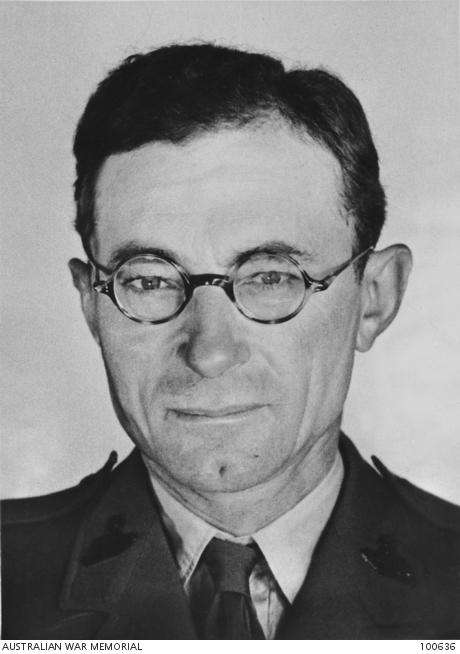
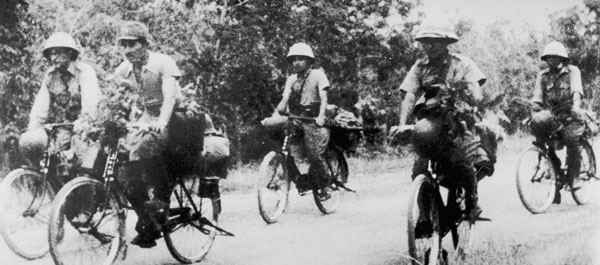
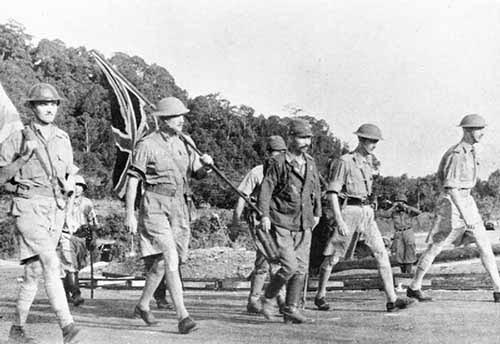
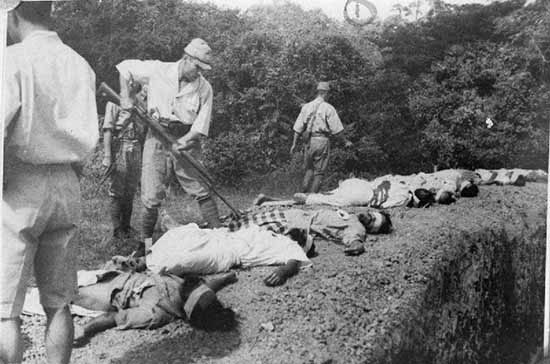
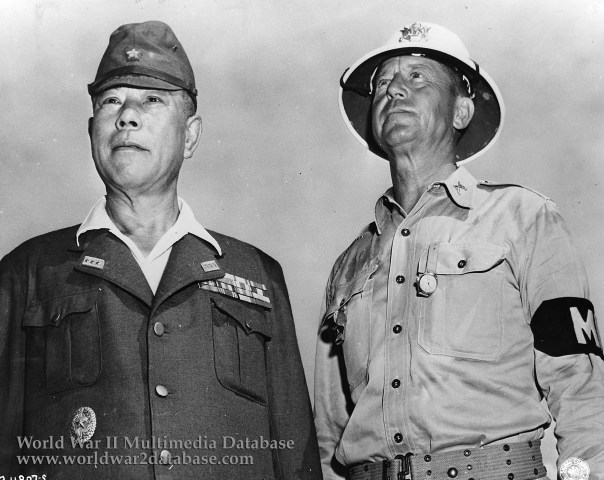
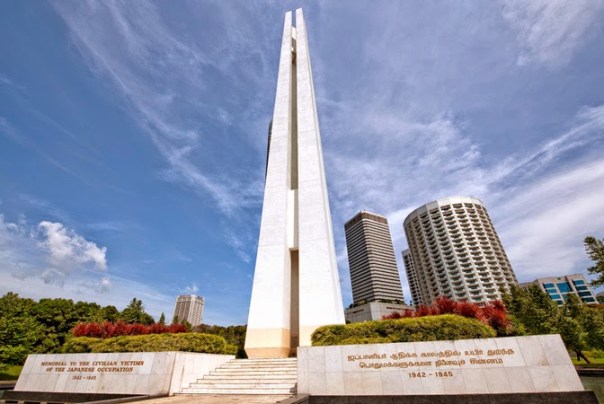
 Penang, 1939. Sixteen-year-old Philip Hutton is a loner. Half English, half Chinese and feeling neither, he discovers a sense of belonging in an unexpected friendship with Hayato Endo, a Japanese diplomat. Philip shows his new friend around his adored island of Penang, and in return Endo trains him in the art and discipline of aikido.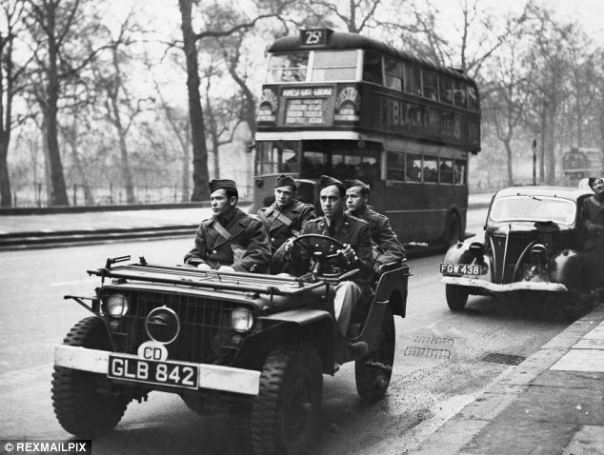

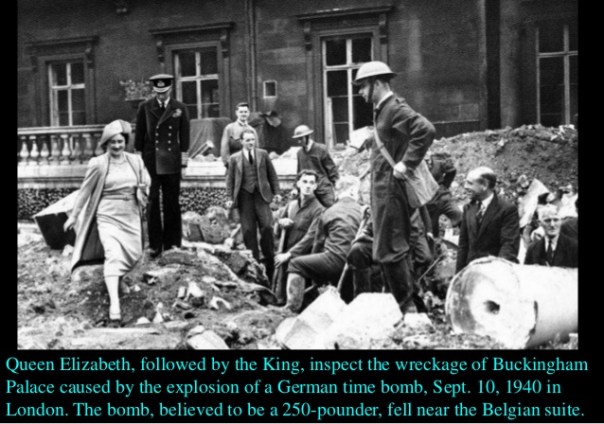


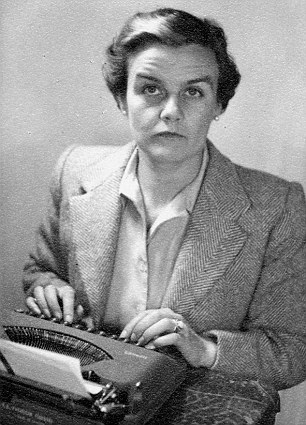

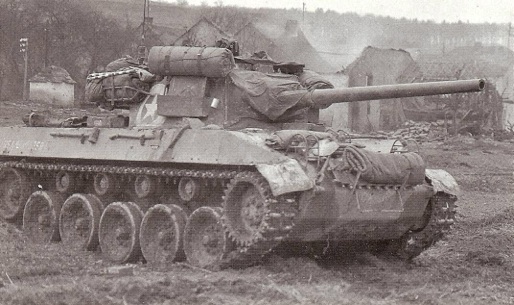


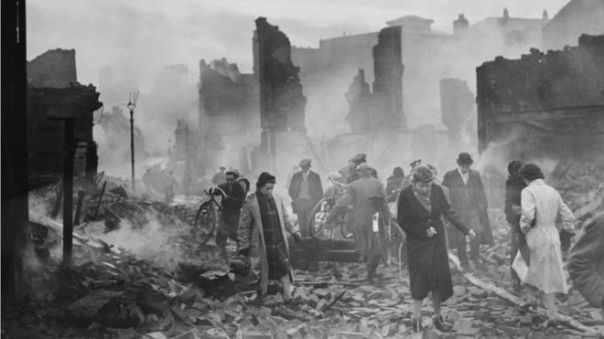
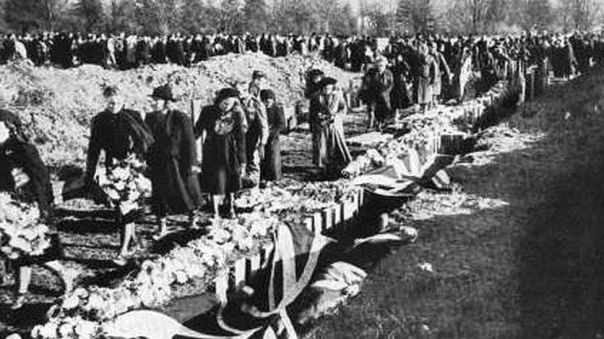


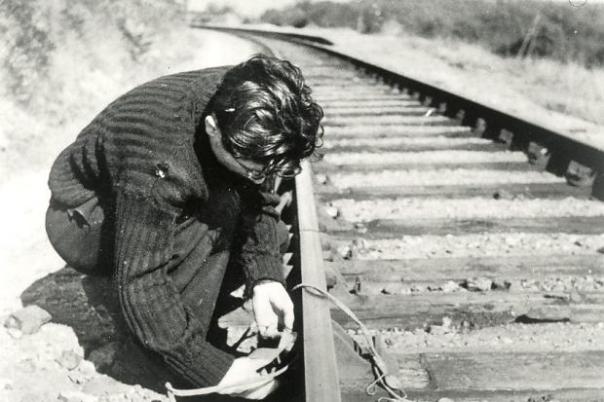


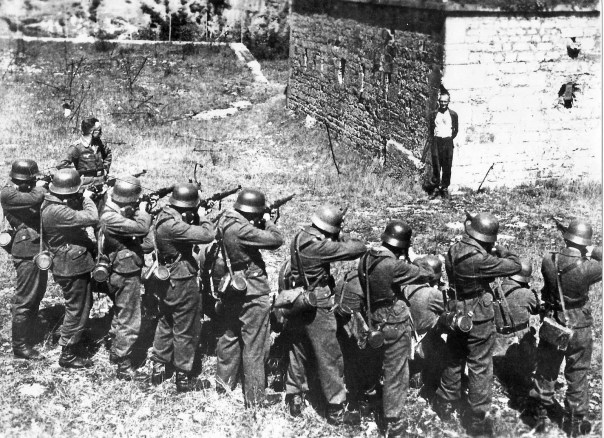
 ‘Winter Of The World’ is the second part of Ken Follett’s trilogy about the twentieth century. It is an ambitious novel, taking readers from 1933 through the Second World War to 1949. The plotting is complex with characters in the US, England, Germany and Russia who experience some of the key points of this period of history – the rise of Hitler, the Nazi euthanasia programme, the war in Europe, Pearl Harbour, war in the Pacific, the development of the atom bomb, the aftermath of war in Germany – the list could go on and on. The raft of characters and wide ranging storylines does mean that some important parts of this period of history are missed or skimmed over, but that is perfectly understandable.

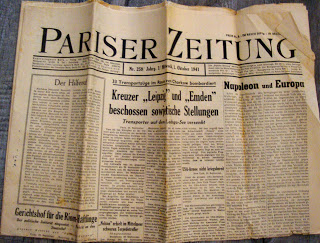



 Dorinda Balchin - Author