The cavalry charge at Krojanty on the first day of the Second World War is widely described as the last cavalry charge in modern warfare. The story goes that the Poles came across advancing German tanks and bravely charged them, pennants flying, sun shining on their swords and lances; an out of date and backward country taking on the mechanical might of a modern army. In The Rise and Fall of the Third Reich William L Shirer even described the charge as ‘Horses against tanks! The cavalryman’s long lance against the tank’s long canon! Brave and valiant and foolhardy though they were, the Poles were simply overwhelmed by the German onslaught’; it is an evocative image of the Polish upper class, a well-educated fighting elite, sacrificing themselves in the defence of their homeland against Nazi Germany to the west and the Soviet Union to the east. But is it really true?

Many may be surprised to know that horses, which had always played an important role in warfare, continued to do so during the Second World War. The German Army still had around 500,000 in 1939, and almost 2.7 million in service by the end of the war; in two months during the winter of 1941-2 179,000 horses died of exhaustion and cold on the Eastern Front. The majority of these horses were used for logistical purposes, but cavalry had not disappeared altogether. Some cavalry units still used lances and sabres, but most were now mounted infantry able to get quickly from one place to another where they would dismount to use more modern weapons such as machine guns, anti-tank rifles, and mortars. There were cavalry units attached to a number of armies – the French, British (particularly the Sikh sowars who led the last British sabre charge of the war on the Burma Frontier), Americans, Hungarians, Russians, Rumanians, and Italians, as well as the Germans and Poles.
In 1939 Poland had 11 cavalry brigades which made up 10% of the army and were intended to be used as mobile reserves, and far from Krojanty being the last cavalry charge there were at least 14 such engagements by the Poles during the first month of the war,* most of them successful. So why is the Krojanty charge so famous and so misrepresented?
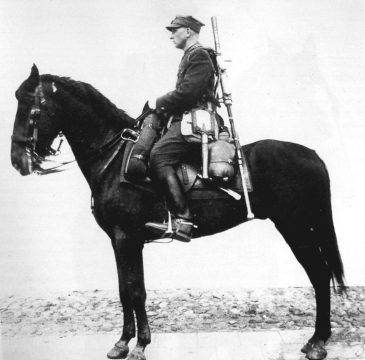

The action, which was part of the wider Battle of Tuchola Forest, took place near the village of Krojanty on the evening of 1st September 1939. A group of German infantry were resting in the forest and Colonel Kazimierz Mastalerz (who had fought in the cavalry during the First World War and knew from experience that the element of surprise would be vital in any attack) ordered Commander Eugeniusz Świeściak of the Pomeranian Uhlans to initiate a charge in one of the very first engagements of the Second World War. The Germans were unprepared and taken completely by surprise, quickly retreating before the Polish cavalry. But the attacker’s upper-hand was short lived as German armoured reconnaissance vehicles deployed from the forest road and opened fire; as the horsemen retreated Świeściak and a third of his 250 men were killed, Colonel Mastalerz was killed trying to save them. The charge had been successful though in that it slowed the German advance and allowed other units of the Polish army to make an orderly retreat in front of the advancing Germans.

The following day a number of German and Italian reporters visited the battlefield where tanks had now arrived and were deployed near the dead Polish cavalrymen and their mounts. An Italian Journalist named Indro Montanelli jumped to conclusions and sent a report saying that the Poles had been cut down whilst attacking the German tanks. It would have been easy enough for the Germans to deny this, but they quickly saw the propaganda value of the story and ran an article in Die Wehrmacht, a propaganda magazine in Germany, implying that the charge demonstrated how strong and sophisticated the new German army was and how weak and ill-prepared were her enemies. At the end of the war the story was reinforced by the Soviets to show how the poor Polish peasants had been failed by a decadent aristocratic class. As Germany and Italy had the only reporters to visit the site this propaganda myth continued to be perpetuated even up to the 1990’s.
There seems to have been only one instance of the Polish cavalry charging German tanks, and this happened entirely by accident at Mokra. In the middle of the confusion and smoke of battle Captain Hollak suddenly found himself and his unit riding directly at the flank of a German column, with little choice and before the enemy had time to react he led his men at the gallop through the German tanks and seized the high ground. Two days later Mokra was lost to the advancing Germans.
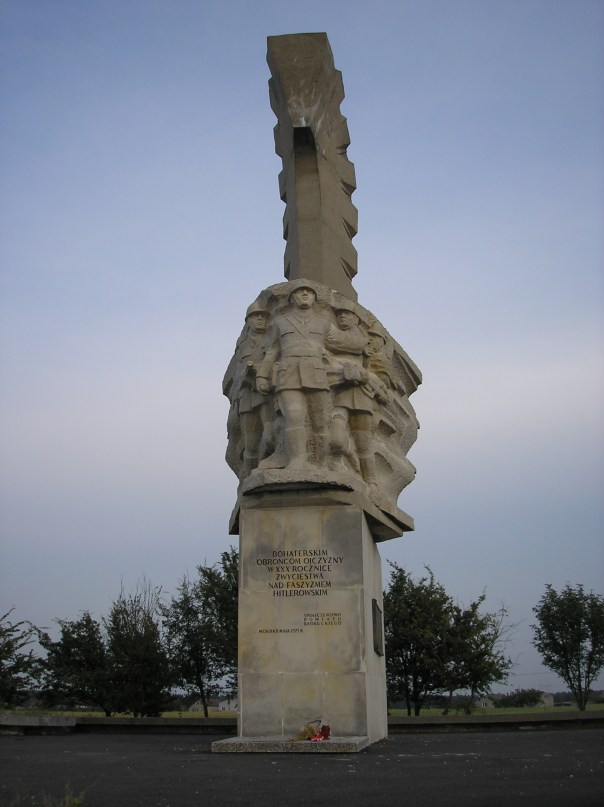
There were a number of other small cavalry charges in different theatres of the war during World War 2 whilst Zimbabwe (then Rhodesia) and Mozambique used cavalry into the 1970’s; the Americans used horses in Afghanistan during Operation Enduring Freedom in 2001, and the 61st Cavalry unit is still a part of the Indian Army today.** So the importance of the horse during warfare continues, and the Charge of Krojanty rather than showing a last brave cavalry charge as the past gave way to modern warfare should probably be seen more as an enduring testimony to the power of propaganda.
**(I believe this is the only non-ceremonial cavalry unit in a modern army but would be interested if anyone can tell me otherwise).
*Polish cavalry charges during the first month of the Second World War:
- 1st September 1939 – the battle of Krojanty
- 1st September 1939 – against a small group of the 4th Panzer Division in Mokra
- 1st September 1939 – Polish and German cavalry met at Janów
- 2nd September 1939 – Polish and German cavalry met at Borowa Góra
- 11th September 1939 – Polish cavalry attacked German infantry at Osuchowo
- 11th – 12th September 1939 – Polish cavalry recaptured the village of Kaluszyn
- 13th September 1939 – Polish cavalry were repelled at Mińsk Mazwiecki
- 13th September 1939 – A second charge retook Mińsk Mazwiecki
- 15th September 1939 – A polish charge at Brochów
- 19th September 1939 – Polish cavalry cleared the way for the army to retreat from Wólka Weglowa
- 21st September 1939 – A Polish charge halted a German assault at Łomianki
- 23rd September 1939 – Polish cavalry retook Krasnobród (German cavalry was also involved)
- 24th September 1939 – A Polish cavalry charge initially halted a soviet advance at Husynne before being stopped by tanks
- 26th September 1939 – 2 Polish charges forced the Germans to withdraw from Morańce
 The Words in My Hand is the reimagined true story of Helena Jans, a Dutch maid in 17th century Amsterdam working for an English bookseller. One day a mysterious and reclusive lodger arrives – the Monsieur – who turns out to be René Descartes.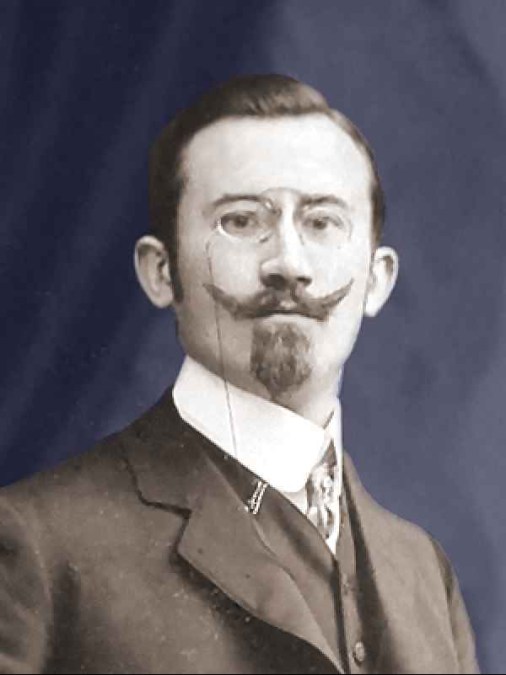

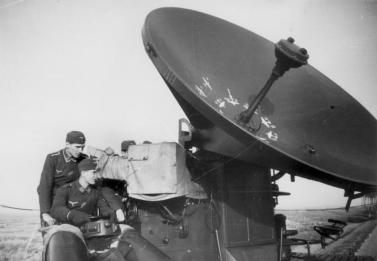
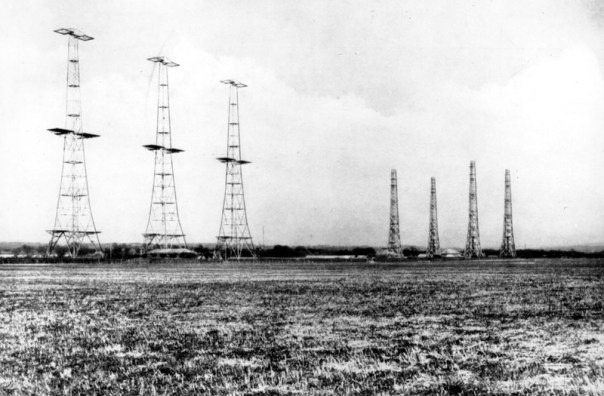
 Women in the WAAF worked in these radar centres. When a signal was received from approaching aircraft it was displayed on a green cathode ray tube. This showed the pulse sent out by the transmitter moving in from the edge of the screen with the target aircraft positioned in the centre. The screen could be calibrated for anything up to 200 miles which enabled the operator to ‘zoom in’ on the approaching craft. The radar operator would move a cursor over the position of the aircraft and the information was automatically sent to a calculating machine along with further information which enabled it to work out the plane’s height as well as position. This information was then sent to the mapping room with a large table on which the planes were positioned, a visual aid which made it easier for non-technical officers to direct the defending planes.
 It is 1953 in Canvey Island. Len and Violet are at a dance. Violet’s husband George sits and watches them sway and glide across the dance floor, his mind far away, trapped by a war that ended nearly ten years ago. Meanwhile, at home, a storm rages and Len’s wife Lily and his young son Martin fight for their lives in the raging black torrent. The night ends in a tragedy that will reverberate through their lives. This poignant novel follows the family’s fortunes from the austerity of the post-war years to Churchill’s funeral, from Greenham Common to the onset of Thatcherism and beyond, eloquently capturing the very essence of a transforming England in the decades after the war. It is a triumph of understated emotion, a novel about growing up and growing old, about love, hope and reconciliation.
 We have all seen photos of Winston Churchill giving his famous ‘V for Victory’ sign during the Second World War, but we actually have Belgian tennis star Victor de Laveleye to thank for this iconic sign. de Laveleye competed in the 1920 and 1924 Olympic Games for Belgium, but he was also a politician who served as Minister of Justice in 1937. As the Germans pushed west in 1940 de Laveleye fled to Britain where he was put in charge of the BBC’s broadcasts to occupied Belgium and soon became the symbol of free Belgians everywhere. On 14th January 1941 Laveleye asked all Belgians to use the letter ‘V’ as a symbol of resistance and a rallying cry to fight the invaders because, he said, ‘V is the first letter of Victoire (victory) in French and Vrijheid (freedom) in Flemish, like the Walloons and the Flemish who today walk hand in hand, two things that are consequences of each other, Victory will give you Freedom’. He went on to say that “the occupier, by seeing this sign, always the same, infinitely repeated, [will] understand that he is surrounded, encircled by an immense crowd of citizens eagerly awaiting his first moment of weakness, watching for his first failure.” The Belgian people willingly adopted the sign and the letter immediately began to appear daubed on walls in Belgium, the Netherlands, Northern France, and other parts of Europe, a symbolic act of defiance against the Nazis.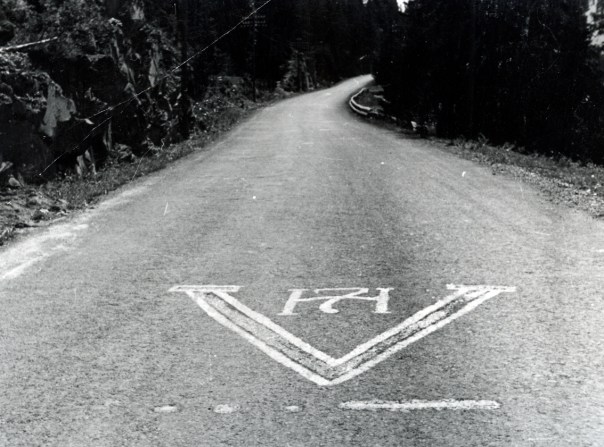
 Winston Churchill realised how successful this symbol was in uniting people against Hitler’s regime and decided to use it during a speech in July 1941 when he said that ‘The V sign is the symbol of the unconquerable will of the occupied territories and a portent of the fate awaiting Nazi tyranny. So long as the people continue to refuse all collaboration with the invader it is sure that his cause will perish and that Europe will be liberated.” Churchill continued to use the sign as his ‘signature gesture’ for the remainder of the war.


 Longlisted for the baileys women’s prize for fiction 2017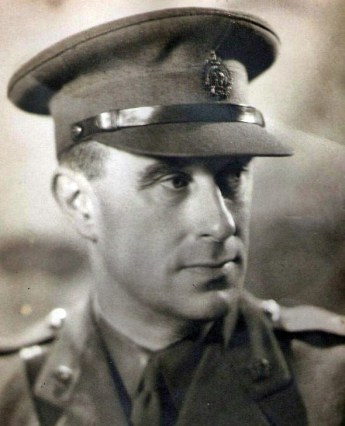
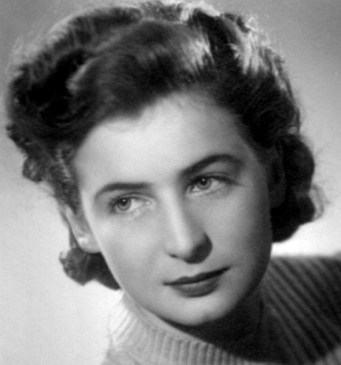

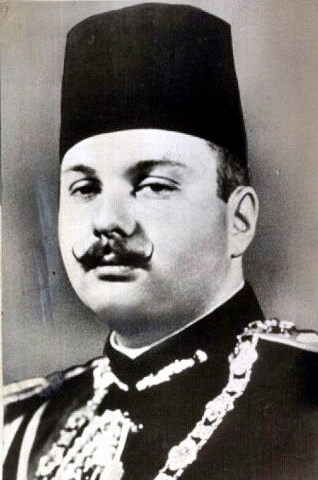

 epic historical novel about Lawrence of Arabia, one of the most compelling characters in British history.


 As we commemorate the ending of the First World War it is fitting that we remember all those who paid the ultimate price. We are all aware of cemeteries around the world which contain the graves of soldiers who died far from home, and if you have ever visited one you will have been impressed by the standard of care which is taken to keep these places of remembrance at their best. This work is carried out by The Commonwealth War Graves Commission (CWGC) which was the brainchild of Sir Fabian Ware. The CWGC builds and maintains cemeteries and memorials in more than 150 countries and territories and also creates and preserves archives with extensive records of the fallen. Ware was 45 when war broke out and so too old to fight but he was determined to play his part so became the commander of a mobile unit in the British Red Cross. Arriving in France in 1914 he was appalled and saddened at the huge loss of life he saw, and also by the fact that there was no official way of documenting and recording the graves. Determined that none of the fallen would be forgotten he organised for his unit to begin recording and caring for all the graves they could find. Municipal cemeteries were soon full and Ware negotiated for France to grant land in perpetuity to Britain which would become responsible for the management and maintenance of the graves there. People heard about Ware’s work and he began to get letters from people asking for photographs of the graves of their loved ones. By 1917 17,000 photos had been sent. At the same time graves were being recorded in Egypt, Greece and Mesopotamia as well as France.