Tag Archives: historical fiction

Recommended Read – First Of The Tudors by Joanna Hickson

Jasper Tudor, son of Queen Catherine and her second husband, Owen Tudor, has grown up far from the intrigue of the royal court. But after he and his brother Edmund are summoned to London, their half-brother, King Henry VI, takes a keen interest in their future.
Bestowing Earldoms on them both, Henry also gives them the wardship of the young heiress Margaret Beaufort. Although she is still a child, Jasper becomes devoted to her and is devastated when Henry arranges her betrothal to Edmund.
He seeks solace in his estates and in the arms of Jane Hywel, a young Welsh woman who offers him something more meaningful than a dynastic marriage. But passion turns to jeopardy for them both as the Wars of the Roses wreak havoc on the realm. Loyal brother to a fragile king and his domineering queen, Marguerite of Anjou, Jasper must draw on all his guile and courage to preserve their throne − and the Tudor destiny…

First Of The Tudors’ is a sequel to two novels about Catherine of Valois by Joanna Hickson (‘The Agincourt Bride’ and ‘The Tudor Bride’), but you do not have to have read these to enjoy ‘First Of The Tudors’ which can be read as a stand-alone novel. The author cleverly interweaves the backstory of Jasper Tudor and his family into this captivating and exciting novel to give a full understanding of previous events without slowing the pace of the story.

As with all good historical fiction this book weaves together historical figures and fictional characters to give a rich tapestry of life in another time and place. Ms Hickson accomplishes this by the clever use of two narrators – Jasper Tudor and his mistress Jane Hywel. Although Jane is a fictional character it is known that Jasper had children and so the creation of a mistress who cares for the young Henry Tudor is not unbelievable. In introducing Jane into her novel the author brings a balance between court life and intrigue, the domestic life and childhood of the young boy who was to grow up to be Henry VII, and how the events which led to the Wars of the Roses impacted on both spheres of Jasper’s  life.

Ms Hickson  peoples her novel with many historical figures from Jasper Tudor, the little known figure behind the rise of one of the greatest dynasties in British history, to Margaret Beaufort who enters the novel as an innocent and vulnerable girl yet grows to be a strong and influential individual capable of clever political manipulation to protect her beloved son, Henry. Henry VII is often overshadowed by his son Henry VIII and granddaughter Elizabeth I so it is interesting to see how, as a boy, he was shaped by his situation, his mother, and his uncle into a young  man who would be able to go on to found a dynasty; I look forward to finding out more about his life in the sequel to ‘First Of The Tudors’, which is due to be published next year.

First Of The Tudors’ is a character driven novel which paints a totally believable picture of life in the fifteenth century thanks to the meticulous research of the author. Her language is free-flowing and emotive, and her descriptions of place clearly recognisable to anyone who has visited any of the locations mentioned (Pembroke Castle, for example). It is the mark of a good writer of historical fiction that Ms Hickson is able to present a totally believable interpretation of a known historical story by the inclusion of fictional characters and speech without detracting from the facts as they are known. I found it interesting that the author chose to present this story through the eyes of the enigmatic figure of Jasper Tudor, a man who is rarely studied yet played such an incredibly important role when he became protector of his young nephew Henry VII at a time of incredible danger for the Lancastrians, and continued to lend advice and support for many years to come.

If you enjoy a multi-faceted view of history which brings to life people and places which have, for many years, been left in the shadows, then ‘First Of The Tudors’ is the book for you.

First Of The Tudors is available on Amazon

You can find out more about Joanna Hickson here

You can find more of my Recommended Reads here


A British Game Of Thrones

Imagine the scenario:
There was once a king of a northern country who had a distant claim to the throne of a country in the south. When the ruler of the southern land died childless the King of the North also became King of the South, and although there was one king to rule them both the two realms remained separate and continued with their longstanding enmities. When the king died his son came to sit on the thrones of both countries but the lords of the southern lands were not happy with how he ruled and so went to war against him. The land in the north supported the southern nobles for a time, then their support moved to the king, then shifted back to the nobles once more. Power ebbed and flowed until the king was finally captured and executed. What would happen now? Who would rule? Would the lands be united at last or continue divided and at war?

Sounds like the plot to a book in the style of A Game Of Thrones, doesn’t it? Yet this is real history. The history of Scotland and England. It is a history I had to grasp to enable me to write my novel ‘The Cavalier Historian’, and it is a part of the story which many people find fascinating. So, what was the situation between the two nations in the seventeenth century and how did that impact on the English Civil War?

James I

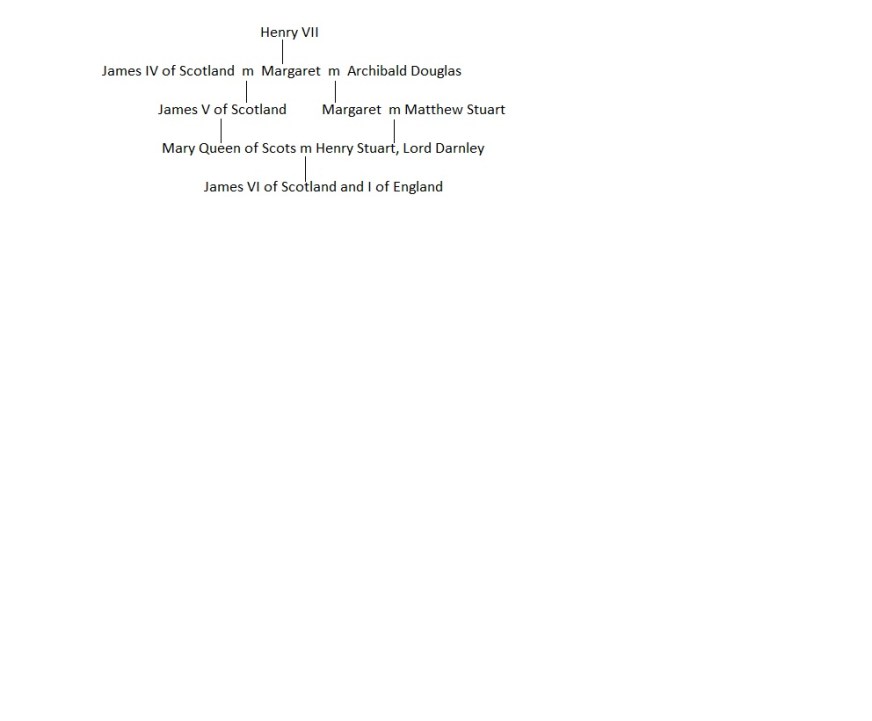
Queen Elizabeth I, daughter of Henry VIII and granddaughter of Henry VII, died childless. The next in line to the throne was James VI of Scotland, son of Mary Queen of Scots and great great grandson of Henry VII. James VI and I (as he is sometimes known) moved from Edinburgh to London; England and Scotland were now united under one monarch BUT this was a dynastic union only, the Stuarts reigned over two separate and distinct countries even though King James wanted them to be united as one.

Part of the problem which James I faced was that the Scottish Church would not accept the High Anglican Church of England. When his son, Charles I, succeeded him he introduced a Scottish version of the English Prayer Book in 1637. The Scots responded with anger and rioting, culminating in a meeting of the National Covenant in 1638 which overwhelmingly objected to the prayer book; and when the General Assembly met in November 1638 all bishops were expelled from the Scottish Church which became fully Presbyterian. Charles put together a military force to bring the Scottish to heel, but didn’t like using soldiers from his southern kingdom to invade his northern one, so a settlement was reached under the ‘Pacification of Berwick’. The peace didn’t last for long, hostilities broke out again and Charles’s English forces were defeated by the Scots at the Battle of Newburn.

Charles I

This was how Charles I found himself to be the king of two kingdoms with a history of dislike for each other and widely differing views on religion. Once civil war broke out in England, with parliament looking to exercise more control over the king, his taxes, and the religion of the country, things got even more complicated. The English Parliament entered into a ‘Solemn League And Covenant’ with the Scottish Church and Scottish troops played an important role in the defeat of Charles I, constantly playing one side against the other from the outbreak of war:

22nd August 1643 Charles I raised his standard in Nottingham, formally declaring war on Parliament.

August 1643 The Solemn League And Covenant promised to preserve the Scottish Church and reform religion in England and Ireland in return for Scottish help against the king.

6th May 1646 Charles I surrendered to the Scots in the hope that they would support him as their king against the old enemy, England. At the same time he was trying to negotiate with the English Parliament – unaware that the Scots were doing the same!

30th January 1647 The Scots handed Charles over to the English Parliament and he was imprisoned at Holdenby House in Northamptonshire.

November 1647 The king escaped but was soon re-captured. From his prison Charles I carried out secret negotiations with the Scots, hoping for uprisings in England to coincide with an invasion from Scotland which would free him and put him back on the throne.

28th December 1647 An ‘Engagement’ was signed, with the Scots agreeing to support the king as long as he imposed the Presbyterian Church on England for three years.

Spring 1648 The uprising began in Wales and England, but the Scottish forces were delayed which enabled Cromwell to put down the Royalist forces throughout most of the country although the king’s forces held out under a long siege in Colchester. When the Scots finally invaded they were defeated at the Battle of Preston on 17th – 19th August 1649. This effectively brought the Second English Civil War to an end.

Charles I was in prison in England throughout this second war, and at the defeat of his forces was put on trial for treason, and executed. With the death of Charles I Cromwell invaded Scotland and brought it into his Commonwealth, but after his death Charles II became king and Scotland became an independent country once more. It wasn’t until 1707, during the reign of Queen Anne, that the ‘Acts of Union’ were signed in England and Scotland in which the two separate states with their different legislatures but with the same ruling monarch were ‘United into One Kingdom by the Name of Great Britain’.

Union Flag

With such complex relationships between Scotland and England, as well as divisive politics and religion within England itself, it was perhaps inevitable that there would be conflict under Charles I. It is a period of history which makes for a great story and I thoroughly enjoyed the research I conducted for my novel ‘The Cavalier Historian’. I hope my readers will find the novel equally enjoyable!

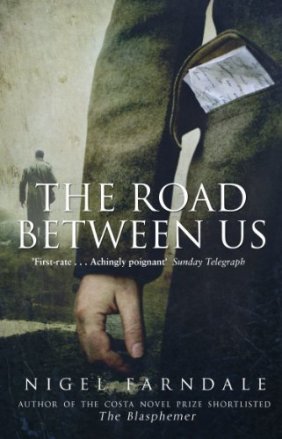
The Road Between Us by Nigel Farndale

1939: In a hotel room overlooking Piccadilly Circus, two young men are arrested. Charles is court-martialled for ‘conduct unbecoming’; Anselm is deported home to Germany for ‘re-education’ in a brutal labour camp. Separated by the outbreak of war, and a social order that rejects their love, they must each make a difficult choice, and then live with the consequences.
2012: Edward, a diplomat held hostage for eleven years in an Afghan cave, returns to London to find his wife is dead, and in her place is an unnerving double – his daughter, now grown up. Numb with grief, he attempts to re-build his life and answer the questions that are troubling him. Was his wife’s death an accident? Who paid his ransom? And how was his release linked to Charles, his father?

As dark and nuanced as it is powerful and moving, The Road Between Us is a novel about survival, redemption and forbidden love. Its moral complexities will haunt the reader for days after the final page has been turned.

‘The Road Between Us’ is a thought provoking novel which touches on subject matter which can make it uncomfortable reading at times. Following the stories of a father and son (one during the Second World War and the other set in the present day) Mr Farndale weaves a picture of love and loss, of discrimination and cruelty, yet also of loyalty and hope. During the war Charles loses his commission for ‘conduct unbecoming’ and spends the rest of the conflict searching for and attempting to rescue his lover, Anselm, who had been deported to Germany for ‘re-education.’ In the present Charles’s son, Edward, is released after eleven years in captivity and is also searching for love and hope, both of which he has buried deeply in order to survive his long period of isolation and deprivation.

Mr Farndale has approached the difficult subjects in his novel with respect and sensitivity. His descriptions of place and character are vivid, making the reader feel as though they are there and drawing them into the story. Even though some of the subject matter is difficult I found myself wanting to read more, to discover what made these characters tick and how they came to terms with aspects of their lives which were so troubling at times. It is the mark of a great novel to keep you reading under such circumstances, the key here being the believable characters who are drawn so sympathetically.

The historical context of ‘The Road Between Us’ has been well researched which gives a depth of plausibility to the story – the ‘re-education’ workcamps, the treatment of homosexuals etc. The dialogue has an authentic ring which brings the characters to life, dialogue which reflects the authors understanding of human psychology and encourages the reader to look deeper into themselves. All in all, this is a very moving story and compelling reading; it has a great narrative, the feel of both thriller and love story, intelligent and literary writing.

If you like historical novels which explore the human condition with depth and sensitivity then I heartily recommend ‘The Road Between Us’ to you.

(I have deliberately avoided going into details of this story as it would be difficult to do so without spoiling it for you!)

‘The Road Between Us’ can be found on Amazon

You can find out more about Nigel Farndale on his website 

You can read more of my Recommended Reads here

Recommended read – ‘A Town Like Alice’ by Nevil Shute

a-town-like-alice

Jean Paget is just twenty years old and working in Malaya when the Japanese invasion begins. When she is captured she joins a group of other European women and children whom the Japanese force to march for miles through the jungle – an experience that leads to the deaths of many. Due to her courageous spirit and ability to speak Malay, Jean takes on the role of leader of the sorry gaggle of prisoners and many end up owing their lives to her indomitable spirit. While on the march, the group run into some Australian prisoners, one of whom, Joe Harman, helps them steal some food, and is horrifically punished by the Japanese as a result.

‘A Town Like Alice’ is a classic which loses none of its appeal with the passage of time. The description of life for the English women and children who are unwanted prisoners of the Japanese, forced to march for months on end by Japanese officers who refuse to take responsibility for them, is harrowing. You would be forgiven for saying that something as inhumane as that could never have happened – but it did, though in Sumatra not Malaya. Mr Shute met with one of those women after the war, and this novel is a tribute to her strength and endurance and that of those who were held with her, and those who died during their long captivity.

You may also be forgiven for thinking that the story must be depressing, it is not. This is a novel of hope not despair. Mr Shute uses his characters to show us the good in humanity, the willingness to help others despite personal cost – Joe, the Australian soldier, who stole to feed the women, with tragic consequences; Jean’s struggles as she tries to cope with the ‘normality’ of England after the war, unable to begin life again because of a burden of guilt she carries from her time as a prisoner; the kindness and support show to Jean by her solicitor, Noel. Mr Shute skilfully weaves a believable plotline which takes Jean back to Malaya and on to Australia, searching for answers and for a purpose in life. Can she re-build her life in a new country in ‘a town like Alice (Springs)’ which Joe told her so much about?

This is a well-researched and well written novel in which Mr Shute immerses the reader in life in three very different locations – war-torn Malaya, bombed out London and the developing outback – with the effortlessness of a master wordsmith. This is a story of ordinary people with an extraordinary tale to tell; a timeless tale of love and loss, of romance and redemption. ‘A Town Like Alice’ is one of the books I’ve read more than once and always enjoy coming back to. If you have never read this modern classic you really must give it a go.

‘A Town Like Alice’ can be purchased from Amazon

You can find out about more about the life and work of Nevil Shute at the Nevil Shute Norway Foundation

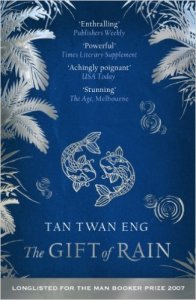
Recommended read – The Gift Of Rain by Tan Twan Eng

the-gift-of-rain-by-tan-twan-engPenang, 1939. Sixteen-year-old Philip Hutton is a loner. Half English, half Chinese and feeling neither, he discovers a sense of belonging in an unexpected friendship with Hayato Endo, a Japanese diplomat. Philip shows his new friend around his adored island of Penang, and in return Endo trains him in the art and discipline of aikido.

But such knowledge comes at a terrible price. The enigmatic Endo is bound by disciplines of his own and when the Japanese invade Malaya, threatening to destroy Philip s family and everything he loves, he realises that his trusted sensei to whom he owes absolute loyalty has been harbouring a devastating secret. Philip must risk everything in an attempt to save those he has placed in mortal danger and discover who and what he really is.

With masterful and gorgeous narrative, replete with exotic and captivating images, sounds and aromas of rain swept beaches, magical mountain temples, pungent spice warehouses, opulent colonial ballrooms and fetid and forbidding rainforests Tan Twan Eng weaves a haunting and unforgettable story of betrayal, barbaric cruelty, steadfast courage and enduring love.

In ‘the Gift Of Rain’ the reader is immersed in life in Malaya during the 1940’s. Tan Twan Eng writes some of the best prose I have read in a long time, and it pays to take the time to read slowly and savour this poetic and evocative language. Whether he is describing the beauty of Malaya or the brutality of occupation the author places the reader there, in the midst of the action, in such a way that it easy to become lost in this book. Supporting the lyrical descriptions is a cast of characters who are multi-faceted and totally believable. It is easy to sympathise with Philip in his search to find out where he belongs; even when he makes choices which we might not agree with we can understand his reasons and fervently hope that he will find the love, acceptance and peace that he is searching for.

This book is written in two distinct sections. The first, set in Penang in 1939, moves at a gentle pace as Philip meets a Japanese aikijitsu master, and through his lessons with Endo develops a physical, intellectual and spiritual awareness which remains with him for the rest of his life. There is a strange bond between the two which seems to transcend time and space, and the playing out of this relationship is the pivot of the whole book. The second part of the book takes place after the Japanese invasion and is faster paced, dramatic and hard hitting. Philip finds that life puts him in a position which challenges his ethics and morals; does his loyalty lie with his family or with Hayato Endo? Or does he have a much broarder loyalty to the people of Malaya? And where does his sense of self fit within this conflict?

‘The Gift Of Rain’ evokes a real sense of time and place, giving the reader insights not only into the history of Malaya but also of Japan and China. The way that the Second World War impacted on the different ethnic groups and their relationships with each other is the cloth of which this story is woven; it is a testament to the thorough research which Tan Twan Eng has made of the history of these countries, and of the colonial impact which played a part in shaping events. Why does history seem to see British occupation of Malaya as acceptable, unlike the Japanese occupation which is seen as criminal? What responsibility did the colonial power have to the people of Malaya, and they to it? There are no easy answers to this, and the questions raised are played out through Philip’s own personal search for identity.

Tan Twan Eng has created a book which looks at the darker side of life yet which holds an incredible balance. One could almost describe the whole novel as an evocation of the ying and yang of life, the balance of duty and loyalty, the image of a civilised and refined Japan which can be selfish and brutal at the same time. It is a book which is incredibly difficult to categorise. Part historical fiction and part martial arts treatise, part philosophy and part a coming of age story, it is a book which draws the reader in from the very first words and doesn’t let go, even after the last page has been turned. I have read this book a number of times and come back to it again and again, learning something new each time. I heartily recommend ‘The Gift Of Rain’ as one of those few books which will leave a lasting impression on you for some time to come.

The Gift of Rain is available on Amazon 
Tan Twan Eng has a website here
You can find more of my book reviews here

Recommended Read – Life After Life by Kate Atkinson

life-after-life-by-kate-atkinson

What if you had the chance to live your life again and again, until you finally got it right? During a snowstorm in England in 1910, a baby is born and dies before she can take her first breath. During a snowstorm in England in 1910, the same baby is born and lives to tell the tale. What if there were second chances? And third chances? In fact an infinite number of chances to live your life? Would you eventually be able to save the world from its own inevitable destiny? And would you even want to?

Life After Life’ is not the usual type of historical novel that I review. This is a fascinating story which explores the concept of life and time. What would happen if we lived the same life over and over again? Would it always be the same or would things change? Would we be able to guide our destiny to avoid the bad things which happen in life or to seek to achieve a goal which appears to be out of reach? Ms Atkinson uses the life/lives of Ursula to explore this theme.

Ursula is born one snowy day in 1910. She dies without taking her first breath but then is born again in the same situation with one minor difference which allows her to live. The novel continues to follow Ursula as she is born and dies, again and again. Each time her life is changed in some small way which leads to much larger changes as the years go by. Edward Lorenz asked, ‘Does the flap of a butterfly’s wings in Brazil set off a tornado in Texas?’ In this novel Ursula finds that her choices, as well as the decisions which people make all around her, do indeed lead to great changes – lives saved or lost, war or a chance for peace, all made possible through something as small as the proverbial flap of a butterfly’s wings.

Knowing, in part, what is going to happen to Ursula leaves you rooting for her, hoping that she will make a certain choice, speak to a certain person, avoid a certain action. In some of her incarnations you find yourself hoping that she survives and is happy, in others you hope that her death comes more quickly and she can start a new and better life. It is a strange novel in this sense, yet compulsive reading.

The reason I am recommending this book as historical fiction is the period in which it is set. Ursula lives during the turbulent years of both World Wars, and Ms Atkinson conveys these times in incredible detail. Her fictional accounts of the London blitz are some of the best I have read – both harrowing and inspiring. In another life Ursula lives in Germany during the Second World War. The descriptions of the changes from pre-war euphoria through nationalism to war and, finally, despair in Berlin during the last days of the Reich bear testimony to the depth of research which the author has carried out.

‘Life After Life’ is a unique novel in its structure. It is also a novel rich in historical detail and, in addition, a compelling portrait of Ursula and her family. Ms Atkinson’s writing cuts to the heart of human hopes and dreams, ambitions, loves and losses; the reader comes to love or hate the characters who are well drawn and believable, the kind of people you could meet almost anywhere.

The author writes with great skill, producing a novel which is thought provoking, moving and at times uncomfortable. It is the sort of book which leaves the reader reflecting on life, destiny and fate. What might be the consequences of our actions? Can we shape the future by a single word or deed or is it all pre-ordained? This is not a light read, but if you are looking for something entertaining and educational which leaves you asking questions and wanting more then I heartily recommend that you read ‘Life After Life’.

This novel won the 2013 COSTA Novel Award, and deservedly so.

‘Life After Life’ can be found on Amazon

Kate Atkinson’s website can be found here

More of my Recommended Reads can be found here.

Recommended Read – ‘A Fine Balance’ by Rohinton Mistry

a-fine-balance-by-rohinton-mistry‘A Fine Balance’ tells the story of the lives of four individuals who are brought together by circumstances. While we learn a lot about their background the main focus of the novel is the political and social situation in India in the 1970’s. Through their relationships with each other and interactions with other people Rohinton Mistry paints a compelling picture of poverty and prejudice in India. The levels of corruption and injustice portrayed in the novel give a sense of the hopelessness of life for many, yet the fact that the poorest characters can find a joy in their lives which evades those of a higher social standing is humbling.

This is a novel which tells the truth of the brutality if a government which could force sterilization on people in an effort to control the population; and the brutality of people who , by a  simple accident of birth, found themselves in a position of power. The title ‘A Fine Balance’ is well chosen as Mr Mistry balances this darkness with a  lightness and humour from both the characters and  their situations. As one who has lived in India for the last few years I found many of the descriptions incredible accurate – from the chaos of the courthouse and other official institutions to the busy streets, chaotic trains and remote village life.

Sadly, my experience tells me that although the caste system is now illegal in India it is still all pervading, and it would not be difficult to imagine aspects of this story happening today. Yet alongside this the humour, love and hope which Mr Mistry describes are still there and the road to change, which often seems too long and slow, is still progressing.

The only aspect of this novel which I found difficult was the number of coincidences which occurred, bringing minor characters into the story at frequent intervals which are unlikely to happen in life. Having said that, I recognise that these characters and their meetings are an essential part of the story which Mr Mistry is telling, so if you can set aside the coincidences and accept the truths that the characters bring to the story it will not spoil your enjoyment.

‘A Fine Balance’ is a well written novel with deeply nuanced characters, all the more real to me as I see in them much that reminds me of the Indians I know and love. It is well structured, invoking a sense of place so that we can almost feel the heat, smell the streets, taste the food, bathe in the dust or rain. This is a novel which shows the real India, where life can be hard for all but the most wealthy; it is therefore interesting that the character who has the easiest life, the best situation, finds it the most difficult to cope. As for the reader, I think we can all learn from the attitude of the main characters, and Indians in general – life is not easy, we all face difficulties challenges and heartaches; what defines us though is how we face what life throws at us, and move on.

‘A Fine Balance’ is up there as one of my favourite novels about India, alongside ‘A Suitable Boy’ by Vikram Seth. Anyone who wants to try to understand the complexities, mysteries and universal truths of India presented by an author with an exceptional command of language should read this novel.

Highly recommended.

A Fine Balance is available on Amazon

More of my Recommended Reads can be found here

Meet Humpty Dumpty

Do you ever wonder where nursery rhymes come from? Although they are simple songs to children today they are often based on difficult or unpleasant times in the past; for instance, ‘Ring a ring o’ roses’ is said to be about the Back Death which devastated the population of England in the Middle Ages. But what about Humpty Dumpty? Who was he, why was he sitting on a wall, and what made him fall?

The general consensus amongst historians is that this nursery rhyme originated during the English Civil War. By 1648 King Charles I had been captured by the Parliamentarians and was being held prisoner. In the hope of freeing him the Royalists planned an invasion of England by a Scottish army, those in England who supported the King were to rise up at the same time. But the Scottish invasion was delayed, the Royalist forces in the east of England were attacked by Lord-General Fairfax and retreated behind the walls of Colchester. Fairfax surrounded the city and a siege began.

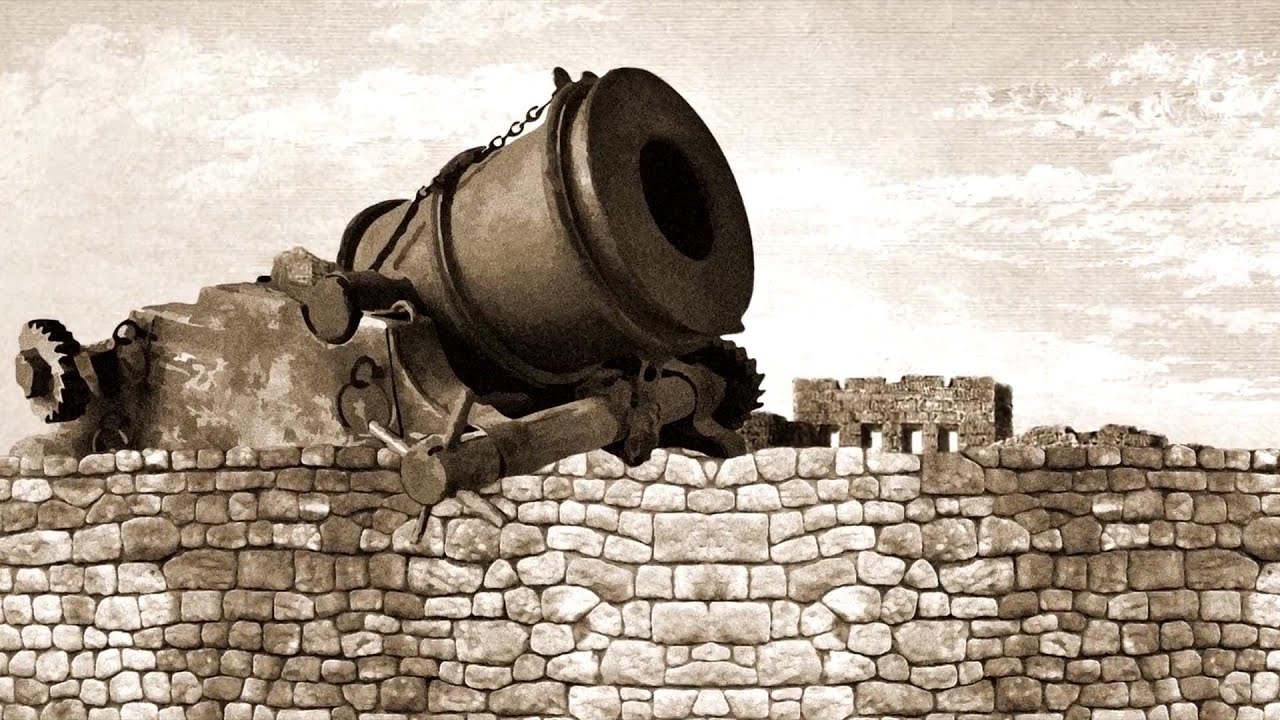
The siege lasted from 12th June to 28th August 1648. In defence of the city several artillery pieces were set up on the walls. The biggest gun was placed on the walls of St Mary’s Church. This gun was one of the largest at the time and so called Humpty Dumpty, which was a common nick-name for an overly large (or over weight) person.

A drawing of the real Humpty Dumpty on Colchester Wall.

On the night of 14th July 1648 Fairfax ordered an attack on the Royalists in Colchester; one focus of the attack was the guns on the walls, particularly Humpty Dumpty. By the end of the night the wall beneath the gun had crumbled, sending it crashing to the ground below. The Parliamentarian forces failed to take Colchester that night, but folklore has it that the failed attack was commemorated in a nursery rhyme about the big gun which was destroyed. The earliest versions of the rhyme differ from what we know today, but its meaning is still clear:

Humpty Dumpty sat on a wall,

Humpty Dumpty had a great fall.

Four-score men and four-score more

Could not make Humpty where he was before.

Despite the deplorable conditions for the people living inside the city walls – things were so bad that people had to resort to eating soap and tallow candles – Colchester continued to hold out until the end of August. The Scottish invasion had eventually come but the army was defeated by Cromwell on 19th August; news of the Parliamentary victory reached Fairfax on 24th August. On the morning of the 28th the defenders of Colchester finally laid down their arms and surrendered.

My novel ‘The Cavalier Historian’ tells the story of the siege of Colchester in detail; a tale of suffering and hardship, of lost hope and defeat. A pivotal moment in British history which few know about yet which is celebrated by English children every day in the nursery rhyme ‘Humpty Dumpty’.

Cover_Kindle_front cover

Are you a revolutionary?

If you had lived in the 17th century would you have backed King Charles I or Oliver Cromwell during the Civil War? For a bit of fun why not answer these questions and find out?

parliamentWhat is your view of politics?

A An elite should govern us

B Every-one should have an equal say in government


queenWhat is your view of the monarchy?

A The Queen should have much more power to set laws

B The Queen should be a figurehead only


archbishop-of-canterbury-justin-welbyWhat is your view of religion?

A People should follow a structured form of worship set by the state

B People should be free to worship in an informal way


Result

charles-i

Mostly A’s – You would have been a Royalist. You would have said that the King is a divine ruler appointed by God. He should be able to rule without Parliament, choosing what laws and taxes he wishes to impose without interference from a Parliament which represents the people. You would also have said that the King is the Head of the Church of England which should be the state religion; form and structure is required to worship God, informality shows a lack of respect.


220px-oliver_cromwell_by_samuel_cooper

Mostly B’s – You would have been a Parliamentarian. You would have said that the King should only be a figurehead for the people, he is not divinely appointed by God and so should rule according to the wishes of the people. You would also have said that it is the role of Parliament to set laws and taxes; members of Parliament should be elected by the people. You would have believed that worship should be simple and from the heart, arguing that Jesus criticised the religious leaders of his day for their insistence on form whilst ignoring the needs of the people.

Of course, it was not quite that simple! Although Parliamentarians wanted the people to have more of a say in government it was only a limited number of people from certain classes in society who had that right. There was no universal suffrage – no votes for women or for men who did not belong to the right social class. As for religion, it went without saying that you would have been a Christian. Also, both Parliamentarians and Royalists felt the need to impose their form of worship on everyone whereas people today would say that there should be much more freedom to choose, and acceptance of those who choose to worship differently or not at all.

So, now you know which side you would have been on why not read ‘The Cavalier Historian’ and see what might have happened to you if you had lived through the English Civil War!

Cover_Kindle_front cover

Today’s the day!

At last the day has arrived!

‘The Cavalier Historian’  is now available in e-book form.

Cover_Kindle_front cover

If you haven’t pre-ordered your copy you can buy it now on
Amazon for Kindle and Smashwords for all other e-book formats

Civil war. Witchcraft. Persecution. Injustice.

Can Rob right a past wrong and save his future?

Marston Manor is an old manor house in Oxfordshire which the new owner plans to turn into a ‘themed’ attraction based on the years of the English Civil War.  When historian Robert Hardwick joins the project he is delighted to discover a family link with Marston dating back to the time of King Charles I and the witch persecutions of the 17th century.

But right from the start disturbing events raise mistrust and fear on the estate.  Who, or what, is trying to halt the plans for the Manor?  Can the disruption and sabotage be linked to the traveller camp in the woods or to the more sinister appearances of a ghostly old woman?  And just who is Rebekah, and why does she have such a hold over Rob?

In his haunted dreams Rob finds himself living through the turbulent years of the English Civil War, experiencing it all through the eyes of his ancestor, Simon. Dreams which begin gently enough in the days leading up to war in 1642 but which become ever more frightening, ending with the terrifying events of the witch trials of 1651.

The Cavalier Historian is a novel which follows characters separated by more than three centuries, living in the 17th century yet somehow linked through time to present day events.  Over the centuries they live through war and peace, experience love and loss, suffer fear and persecution yet, at the very end, is it possible for them to find hope for the future?