 An empowering, thought-provoking feminist novel that will change the way you see the world. Perfect for fans of Elizabeth Day, Claire Fuller and Joanna Cannon.
1968. Veronica Moon, a junior photographer for a local newspaper, is frustrated by her (male) colleagues’ failure to take her seriously. And then she meets Leonie on the picket line of the Ford factory at Dagenham. So begins a tumultuous, passionate and intoxicating friendship. Leonie is ahead of her time and fighting for women’s equality with everything she has. She offers Veronica an exciting, free life at the dawn of a great change.
Fifty years later, Leonie is gone, and Veronica leads a reclusive life. Her groundbreaking career was cut short by one of the most famous photographs of the twentieth century.
Now, that controversial picture hangs as the centrepiece of a new feminist exhibition curated by Leonie’s niece. Long-repressed memories of Veronica’s extraordinary life begin to stir. It’s time to break her silence, and step back into the light.
The Woman in the Photograph takes the reader on a journey exploring the development of feminism in the UK from the 1960’s to the present day. It is innovative, thought-provoking, imaginative and moving. By following the career of Veronica we live fifty years of social history, charting the changing roles of women and discovering how far they have come yet how far they still have to go. The ‘descriptions’ of photographs that Veronica takes at key moments in feminist history give a real snapshot (pun intended!) of a particular time and place and are a testament to the authors descriptive writing and the clarity of her well-drawn characters.
Ms Butland has conducted in depth research for this novel which is crammed with information yet is never wordy or didactic, instead the reader experiences those years through the eyes of three very different women – Veronica, Leonie, and Erica – and is drawn into their lives and loves, their hopes and fears, their successes and failures. The Woman in the Photograph is unapologetic in this focus on the individual in the feminist movement but should not be seen as a simple history, it is so much more than that. This novel is also about the human heart with love and loss at its centre.
I must admit that when I first picked up The Woman in the Photograph I was not sure if it was for me, fearing that it might attempt be too moralistic and push feminism on the reader, but that is not the case. If you take the trouble to pick up this book you will certainly learn about the history of feminism but also enjoy a jolly good read.
The Woman in the Photograph is available on Amazon
You can find more of my Recommended Reads here
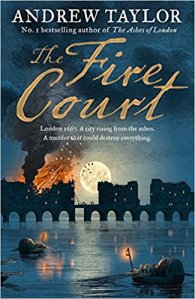 Somewhere in the soot-stained ruins of Restoration London, a killer has gone to ground…
 Somewhere in the soot-stained ruins of Restoration London, a killer has gone to ground…
 Richard I was crowned King in 1189 and set off almost immediately for the Third Crusade. This was a bloody campaign to regain the Holy Land, marked by warfare among the Christians and extraordinary campaigns against the Saracens. Men and women found themselves facing new sorts of challenges and facing an uncertain future. John, the youngest son, was left behind – and with Richard gone, he was free to conspire with the French king to steal his brother’s throne.
 It is 1953 in Canvey Island. Len and Violet are at a dance. Violet’s husband George sits and watches them sway and glide across the dance floor, his mind far away, trapped by a war that ended nearly ten years ago. Meanwhile, at home, a storm rages and Len’s wife Lily and his young son Martin fight for their lives in the raging black torrent. The night ends in a tragedy that will reverberate through their lives. This poignant novel follows the family’s fortunes from the austerity of the post-war years to Churchill’s funeral, from Greenham Common to the onset of Thatcherism and beyond, eloquently capturing the very essence of a transforming England in the decades after the war. It is a triumph of understated emotion, a novel about growing up and growing old, about love, hope and reconciliation.
 Longlisted for the baileys women’s prize for fiction 2017
 In the uneasy post-war peace of occupied Germany, a British soldier is billeted to a bombed Hamburg hotel. Alex’s days are spent investigating Nazi war criminals, but it is a chance meeting with a German university professor in a shabby back-street bookshop that changes his life. Having befriended the professor and his wife, Alex falls in love with their only daughter, Lisa, only to discover that the professor may not be as innocent as he first appeared. The stale aftermath of a long and hideous war has left the old society in ruins. There are still many secrets to uncover and Alex has to ask himself what is more important – love or truth? As he digs deeper into the professor’s past Alex is forced to recognise that he cannot have both.
 It is late summer in East Sussex, 1914. Amidst the season’s splendour, fiercely independent Beatrice Nash arrives in the coastal town of Rye to fill a teaching position at the local grammar school. There she is taken under the wing of formidable matriarch Agatha Kent, who, along with her charming nephews, tries her best to welcome Beatrice to a place that remains stubbornly resistant to the idea of female teachers. But just as Beatrice comes alive to the beauty of the Sussex landscape, and the colourful characters that populate Rye, the perfect summer is about to end. For the unimaginable is coming – and soon the limits of progress, and the old ways, will be tested as this small town goes to war.
 Vikram Seth’s novel is, at its core, a love story: the tale of Lata – and her mother’s – attempts to find her a suitable husband, through love or through exacting maternal appraisal. At the same time, it is the story of India, newly independent and struggling through a time of crisis as a sixth of the world’s population faces its first great general election and the chance to map its own destiny.
 An enthralling adventure story, honest and powerful. The Wars of the Roses are imagined here with energy, with ferocity, with hunger to engage the reader.’ Hilary Mantel
 Dorinda Balchin - Author