Tag Archives: WW2

Blitzkrieg – the ‘lightning war’

On 10th May 1940 Hitler launched an attack into Belgium and France. What no one could have imagined on that day was that just six weeks later Marshall Pétain would sue for peace, signing an armistice which ceded three-fifths of French territory to the Germans. To add insult to injury, Hitler insisted that the armistice was signed in the same railway carriage in which Germany had been forced to admit defeat at the end of the First World War. So what had gone wrong for the Allies?
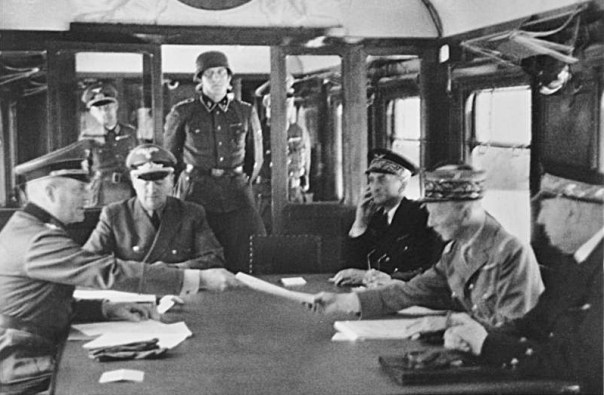
Signing the Armistice 1940

World War 1 had been a long-protracted conflict in which the opposing armies were static for the majority of the time, dug-in in extensive trench systems across northern Europe. Between the wars the Allies had assumed that if there were to be another war it would also be trench based and so they had planned accordingly. The French had used their huge defence budget to build a line of super-trenches with fortifications, tunnels, and underground bunkers on the German border (the Maginot Line), whilst the BEF supported French troops on the Belgian border. Therefore, when the British Expeditionary Force arrived in France at the outbreak of the Second World War they were ready for the prospect of a static defensive war. What the Allies were not prepared for, however, was Hitler’s intention to fight a swift, offensive war.

The Maginot Line

At dawn on 10th May 1940 29 German divisions began an invasion of the Netherlands and Belgium; in response the Allied commanders positioned the bulk of their forces defensively inside Belgium, playing into the hands of the enemy. What they were initially unaware of was that this attack was a feint and a further 45 divisions were thrusting forwards through the Ardennes. The French had believed this forested area to be impassable by enemy troops and so had left it woefully undefended. This second German force swiftly breached the Allied right flank, pushing them back towards the English Channel. With the fall of France and the disastrous retreat of the BEF from Dunkirk blame was placed on an innovative German tactic of blitzkrieg in which the enemy used the new technology of tanks and dive-bombers to force a swift victory. In German blitzkrieg means lightning war, a term which seemed apt for surprise attacks which made lightning fast advances into enemy territory, and in which air power supported ground troops to overwhelm the defenders. But blitzkrieg was not, in fact, a completely new idea.

Blitzkrieg – German attack through the Ardennes forest

The key elements of blitzkrieg are speed, surprise and superior firepower, and as such the concept can be traced back to Prussian military tactics in the early 19th century where limited resources meant that the only route to victory for the Prussians was through swift, powerful attack. Carl von Clausewitz, who made a detailed study of generals from Alexander the Great to Frederick II of Prussia, argued in his 1832 book ‘On War’ that all military force should be focussed in a single action against the enemy’s ‘centre of gravity’, its Schwerpunkt. Once this vulnerable point has been identified a frontal attack combined with a double flanking movement should crush the enemy, even if attacking troops had to be withdrawn from other areas and risks taken to achieve this objective.

Carl von Clausewitz

The German Alfred von Schlieffen developed a plan for a swift attack against his country’s old enemy, France, and this plan was put into action at the beginning of the First World War. Developing the ideas of von Clausewitz, Schlieffen’s aim was to achieve a swift victory by using 90% of the German army to move through Belgium and northern France to take Paris in a quick and decisive campaign. The plan was good in principle, but the attacking forces were slowed when they met with unexpected Belgian resistance, and this in turn gave the British time to prepare a defence at Mons. Although the Schlieffen Plan had failed it was believed to have a solid basis and so the idea of a lightning fast attack was used again in the spring offensive of 1918 when German armies reached within 75 miles of Paris before their advance was halted.
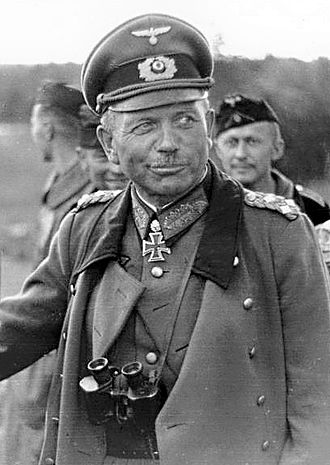
Heinz Guderian

Between the wars the theory of blitzkrieg was further developed by Heinz Guderian who advocated the integration of light tanks and dive-bombers to improve the manoeuvrability of the German army, insisting that every tank should have a radio to give them an added advantage. Hitler had fought in the trenches during World War 1 and wanted to avoid further trench warfare if at all possible, so when he saw Guderian’s plan he was very taken with the idea of victory through speed and movement. The German High Command were derisive of Guderian’s plan, telling Hitler that his claim that he could reach the French coast in a matter of weeks was idle boasting, but Guderian insisted that if they could break through the enemy frontline the panic and confusion caused amongst the civilian population would hamper any defending army’s movements to the front and so make success even more assured. Despite the misgivings of his senior officers Hitler was prepared to take the gamble. Germany tested its modern blitzkrieg tactic with a combination of both air and land action in the Spanish Civil war in 1938 and in Poland in 1939, with promising results.

When Germany pushed into the Ardennes in 1940 stukas were sent in just ahead of the armour to soften up the target and destroy rail links and communication centres. The German tanks, supported by infantry in half-track vehicles, began their advance at the same time with the bombing only stopping at the last minute, leaving the Allies no time to re-group. Once the first objective was taken the attacking army moved on leaving civilian refugees to clog the roads needed by the defending army, and also attacking the fleeing civilians to add to the fear and panic. The use of FM radio communication gave yet another advantage to the attacking army, enabling quick decisions to be made based on reliable evidence rather than waiting for orders from HQ. It was left to units following this initial attack to secure the gains made, thus freeing the panzer units to move on to the next Schwerpunkt.

French refugees, 1940

Blitzkrieg was so successful in the initial phase of the war that Germany went on to use the tactic on the Easter Front against the Russians during Operation Barbarossa, and in the North Africa campaign (Rommel, who commanded the German Afrika Korps, had been involved in the May 1940 attacks which forced the surrender of France). The Allies also adopted the ‘lightning war’ tactic in the Western Desert, on the Eastern Front, and after the D Day landings, relying on firepower to establish breakthroughs by fast-moving armoured units. Germany last used the blitzkrieg tactic during the Battle of the Bulge, yet the Allies continued to push forward and by the end of the war Hitler’s Third Reich was defeated by the very tactic which had brought it such success in 1940.
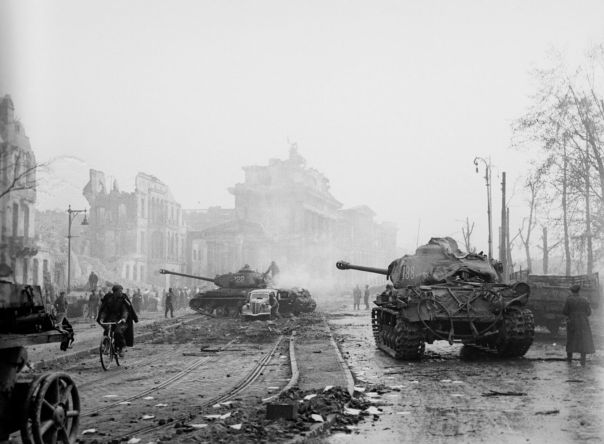
Fall of Berlin

Bibliography:

  • The Roots of Blitzkrieg by James Corum
  • Panzer, a Revolution in Warfare: 1939–1945 by Roger Edwards
  • The Blitzkrieg Legend: The 1940 Campaign in the West by Karl Heinz Frieser
  • To Lose a Battle: France 1940 by Alistair Horne.
  • History of the Second World War by B H Liddell Hart
  • A History of Blitzkrieg by Bryan Perrett

The Windsors at War – Part 3 Edward VIII, the Duke of Windsor

This is my third and final article about the British royal family during the Second World War. My pieces about King George VI and Princess Elizabeth (now Queen Elizabeth II) showed two individuals with a keen sense of duty who, despite their privileged position, tried to understand what it was like for the ordinary British citizen – staying in London during the Blitz, living on the same rations as everyone else, serving in the ATS etc. – but for the Duke of Windsor, formerly King Edward VIII, the role he played before and during the conflict is a more controversial issue altogether.

Edward VIII as a boy cadet

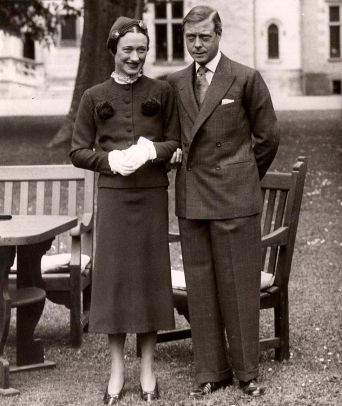
Prince Edward had trained in the Royal Navy from the age of 13, but at the outbreak of the First World War he was commissioned and served as a staff officer in the Grenadier Guards. After the war he toured many parts of the British Empire and took an interest in national affairs; his support for the unemployed made him incredibly popular with the working classes. But as the years progressed Edward appeared to develop a dislike for the official world he was forced to live in and began to cultivate friends from ‘high society’ rather than the aristocracy. 1930 proved to be a pivotal year for the future king as that is when he met and fell in love with Wallis Simpson, a married American. When George V died in 1936 and Edward became king his affair with Simpson was the subject of much speculation in the foreign press, but pressure was put on British newspapers to keep it quiet as Edward VIII was Head of the Church of England and, as such, would not be able to marry a divorcee. Under pressure to choose between the throne or the woman he loved Edward chose Wallis and abdicated saying ‘I have found it impossible to carry the heavy burden of responsibility and to discharge my duties as King as I would wish to do without the help and support of the woman I love.’ After his abdication Edward moved to France and the couple were married when Wallis was finally divorced in 1937. The new king, George VI, created his brother Duke of Windsor but refused to allow the new Duchess the rank of ‘Royal Highness’, something which the Duke and his new wife both resented. There were also conflicts within the royal family as to the financial worth of Edward who had hidden some of his wealth from his brother when the abdication settlement was worked out, relations were therefore frosty between the former king and his family. And so the scene was set for the role that Edward and Wallis would play during the war.

(You can listen to the Abdication Speech here)

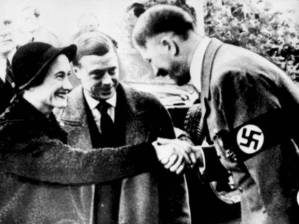
During 1937 and 1938 the Duke and Duchess lived in France although they spent a lot of time traveling around Europe, including a visit to Germany where they met with Hitler, a visit which was well publicised in the German media. The Duchess, who always felt slighted by the British royal family and government, was treated like royalty during the visit with German aristocrats bowing and curtsying to her; Edward was inordinately pleased that the Germans treated her with the status and dignity which he felt she was due as his wife and yet was withheld from her by his own people.

According to Albert Speer Hitler believed that Edward was friendly towards Germany so the fact that he was no longer king had a negative effect on the Fuhrer’s plans for Europe, as Hitler is reported to have said – ‘I am certain through him permanent friendly relations could have been achieved. If he had stayed, everything would have been different. His abdication was a severe loss for us.’ The Windsor’s visit to Germany went against the advice of the British government who felt that their opposition was vindicated when the Duke was seen to give a full Nazi salute on a number of occasions whilst in Germany.

The Duke and Duchess of Windsor visit Hitler

Some historians have defended Edward’s links with Hitler by saying that he saw fascist Germany as a barrier between western democracy and communism and that having seen the horrors of the battlefields of the Great War he was willing to appease Hitler to prevent such wholesale slaughter happening again. In May 1939 Edward gave a radio broadcast for NBC in which he appealed for peace. The recording took place on the First World War battlefields of Verdun where he said ‘I am deeply conscious of the presence of the great company of the dead, and I am convinced that could they make their voices heard they would be with me in what I am about to say. I speak simply as a soldier of the Last War whose most earnest prayer it is that such cruel and destructive madness shall never again overtake mankind. There is no land whose people want war.’ The speech was broadcast around the world but although many British newspapers published the transcript in full the BBC refused to air it as it seemed to be supporting appeasement.

The Duke and Duchess of Windsor

It is difficult to assess just how much the Duke supported fascism and Nazi Germany although many believe that his words in 1940 were quite revealing when he said that ‘In the past 10 years Germany has totally reorganized the order of its society… Countries which were unwilling to accept such a reorganization of society and its concomitant sacrifices should direct their policies accordingly.’

When war broke out Edward hoped to be reconciled with his brother but George VI was still angry that his brother had abdicated. Rather than being given a royal role to play Edward was given a position as liaison with the French. Years later, in February 1949 Count von Zech-Burkersoda, who was the German Minister in the Hague at the outbreak of the war, said that the Duke had passed the Allied plans for the defence of Belgium to Germany which had helped the swift invasion of France and, consequently, led to the disaster at Dunkirk. After the fall of France the Windsors travelled to Madrid where the Duke appears to have been introduced to a plan for the Nazis to put him back on the throne with Wallis at his side, a not very subtle plan to use the former king against the established government in Britain. Edward travelled from Madrid to Lisbon where he is said to have received a number of telegrams with details of the plan to reinstate him on the throne in return for his support for Hitler. Copies of the telegrams (which were found in Germany at the end of the war) say that Edward had initially believed that he could never be king again after abdicating but that when he was told that it was possible that the British constitution could change after a Nazi victory ‘the Duchess in particular became very thoughtful.’ One telegram even suggested that the ‘Germans expect assistance from the Duke and Duchess of Windsor, the latter desiring at any price to become queen.’

The British were not aware of the telegrams at the time, but Edward’s reluctance to return to England forced Winston Churchill to threaten to court martial him if he did not immediately travel to London; then the Prime Minister offered him the position of Governor of the Bahamas as there were ‘fears for his safety’. The Windsors travelled to the Caribbean in 1940 and remained in post until the end of the war. In December 1940 the Duke gave an interview to Liberty magazine in which he was reported to have said that ‘Hitler was the right and logical leader of the German people,’ he went on to say that the time was coming for the American President to mediate a peace agreement between Germany and Britain. The former king said that he had been misquoted and misrepresented in the article, but the Allies were sufficiently worried that President Roosevelt ordered the Duke and Duchess to be placed under surveillance when they visited Florida in 1941. The Allies concerns were further enhanced when they received information (which may or may not have been true) that Wallis had slept with Ribbentrop (the German Ambassador) in 1936, was still in contact with him and passed secrets to him.

Governor of the Bahamas

After the war ended the Windsors returned to France to live, and the Duke never held another professional position after his Governorship of the Bahamas.

Just after the war ended the Americans found 400 tons of German diplomatic papers near Marburg Castle; included in the haul were around 60 letters, telegrams and other papers about the Duke of Windsor and his links to the Nazis. Amongst the documents were details of ‘Operation Willi’ which was the codename for the plan to conquer Britain, overthrow George VI and put Edward back on the throne. It appears that there was a concerted effort to manipulate Edward into helping the Nazi plan, including telling him that his brother, the king, planned to have him assassinated. Copies of the documents were sent to America, and Churchill appealed to the Americans and French to refrain from publication for at least 10 to 20 years, saying that the documents were ‘tendentious and unreliable’ and likely to leave the misleading impression that the Duke ‘was in close touch with German agents and was listening to suggestions that were disloyal.’ Eisenhower replied, saying that the telegrams were “obviously concocted with some idea of promoting German propaganda and weakening western resistance” and were “totally unfair” to the Duke. The telegrams were suppressed but not for as long as Churchill had hoped. They were eventually published in 1957. Included in the documents were statements attributed to the Duke saying that he was convinced that war could have been avoided if he had not abdicated as he was a firm supporter of compromise with Germany. Another telegram said that the ‘Duke believes with certainty that continued heavy bombing will make England ready for peace’ (some historians believe that his comment could have been the reason that Hitler shifted the focus of Luftwaffe actions in 1940 from the Battle of Britain to bombing cities). American naval intelligence also published a report from a German conference held in 1941 that said that the Duke was ‘no enemy to Germany’ and the only English representative with whom Hitler was willing to negotiate peace terms, saying that Edward was ‘the logical director of England’s destiny after the war.’ When he found out about them the Duke of Windsor said that the telegrams and documents were ‘complete fabrications…and gross distortions of truth’. Edward admitted in his memoirs that he admired the Germans but had never been pro-Nazi and that Hitler struck him as a ‘somewhat ridiculous figure, with his theatrical posturing and his bombastic pretensions.’

Marburg Castle

Some historians don’t believe that the Duke of Windsor knew about the plan to put him on the throne and that his contacts with Germany were more about working for peace and finding a place for himself and Wallis in government circles after his abdication, as well as making the Duchess feel important and a part of state affairs (something which the royal family never did). On the other hand Andrew Morton, the royal biographer, suggests that Edward was a Nazi sympathiser saying that he ‘was certainly sympathetic…even after the war he thought Hitler was a good fellow and that he’d done a good job in Germany, and he was also anti-Semitic, before, during and after the war’.

The Duke of Windsor’s attitude to Germany and conduct during the war is in stark contrast to that of his brother, King George VI, and his niece, Princess Elizabeth. There will always be controversy about just how much of a Nazi sympathiser he was and how deep his admiration and support for Hitler went but, if the historical documents are to be believed, then many people feel that he should never have been allowed to return to live in France after the war ended and that he certainly should not have received any further funds from Britain. True, he was socially ostracized and had very little contact with his family for the rest of his life, but many people felt that was far too lenient and he should have been tried for treason.

Whatever your view of the monarchy one could argue that the Windsors were a fair reflection of British society during the Second World War, from an appeaser and probable Nazi sympathiser to a prince who died for the Allied cause (Prince George), a princess who enrolled in the armed forces, and a king and queen who worked tirelessly to build morale and support the British people in their hour of need.

(The Marburg files appeared in a recent episode of The Crown, you can find out more about how the files were discovered here )

Bibliography:

Block, Michael. The Secret File of the Duke of Windsor. L

Donaldson, Frances Lonsdale. Edward VIII.

Roberts, Andrew, and Antonia Fraser. The House of Windsor. A Royal history of England.

Windsor, Edward, (Duke of). A King’s Story The Memoirs of H.R.H. the Duke of Windsor K.G.

Ziegler, Philip. King Edward VIII The Official Biography.

The Windsors at War – Part 2 Queen Elizabeth II

Queen Elizabeth II was a teenager during the Second World War and life for her was, in many ways, not dissimilar to that of other teenagers. Her father, King George, insisted that the royal family should not have any special treatment, they had the same rations as everyone else and even applied this to visitors to Buckingham Palace – including Eleanor Roosevelt, the wife of the American President!

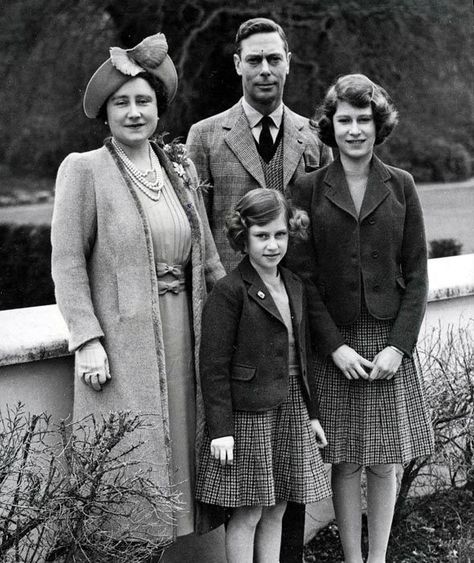
Princess Elizabeth was 14 years old when Britain declared war on Germany and her safety as heir to the throne was of great concern to many people. Viscount Hailsham, a well respected former Conservative politician, spoke for many when he suggested that Elizabeth and her sister, Princess Margaret, should be evacuated to Canada for the duration of the war. The Queen, however, was adamant that this should not happen and told the Viscount that ‘The children won’t go without me, I won’t leave without the King, and the King will never leave.’ This was a very public statement that the royal family intended to stay in the United Kingdom but, in private, King George VI made plans for the two princesses to be evacuated if, and only if, a German army landed in England and there was a real threat that the royal family might be taken prisoner. (see article on George VI) Although his children would be taken abroad to safety King George intended to stay after any invasion to help with the resistance.  This plan was kept secret in order to keep up the morale of the British people and, thankfully, there was never any need to put it into action. During the first winter of the war Elizabeth and Margaret stayed at the Balmoral estate in Scotland, moving to Sandringham after Christmas 1939 and then back to Windsor where they lived for the remainder of the war. Each year they ‘did their bit’ by putting on a pantomime to raise money for the Queen’s wool fund to buy wool for the manufacture of military clothing.

The relentless bombing of British cities in the Blitz meant that many children were evacuated to the countryside and, in October 1940, Princess Elizabeth broadcast a radio message to them on the popular Children’s Hour programme. Her message offered thanks to the host families and support for the children who were living with strangers in a strange environment. The core of her message was that the children should stay strong, and face the war with courage, determination, and hope. She said that ‘We are trying to do all we can to help our gallant sailors, soldiers and airmen, and we are trying, too, to bear our share of the danger and sadness of war. We know, every one of us, that in the end all will be well.  When peace comes,” she said, “remember, it will be for us, the children of today, to make the world of tomorrow a better and happier place.’ (Princess Elizabeth’s broadcast)

Although Elizabeth felt an affinity for the children of the United Kingdom her position as heir to the throne meant that she would have a unique role and responsibilities. In 1941, at the age of 15, she was appointed Colonel-In-Chief of the Grenadier Guards, and her first public appearance alone was a visit to inspect the regiment when she was 16. Yet she could sympathise with those who had lost family members in the war for she, too, lost her beloved uncle Prince George, Duke of Kent, who was the first member of the royal family to be killed on active service for 500 years. Mystery still surrounds the circumstances of his death; Prince George was an RAF pilot and set out alone on a secret mission, when his body was recovered from the hillside in Caithness where his plane had crashed he was found with a bag containing a large number of 100 Krona banknotes handcuffed to his wrist.

In 1944 Parliament changed the law to allow Princess Elizabeth to act as one of the five Counsellors of State who were senior members of the royal family who would effectively take over the role of the monarch should the King be incapacitated or out of the country. She performed this role when George VI went to Europe to visit the troops after the D Day landings. (see article on George VI)

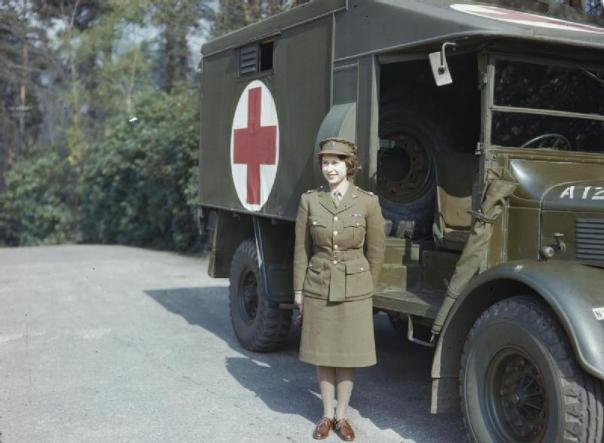
When she was 18 Elizabeth wanted to join the ATS but this was opposed by the King; it was not until February 1945 that he finally agreed and the princess signed up as an honorary Second Subaltern with the service number 230873. After five months of training as a mechanic and military truck driver in Camberley the future queen was promoted to the rank of honorary Junior Commander (the equivalent of a Captain in the army). Throughout her training Elizabeth worked for seven hours a day before returning to Windsor Castle at night; she appears to have taken her duties very seriously and, although some people were excited by her presence, it is reported that she was hard working and humble during the time she served in the ATS. The Queen is the only female member of the British royal family to have served in the armed forces. The ATS (Auxiliary Territorial Service) was the women’s branch of the army during the Second World War, but although the women had full military status they were only paid two-thirds of the wage of a man of the same rank even when serving overseas. Women in the ATS served in a number of roles from the mundane clerical to the most dangerous, including manning anti-aircraft guns (Mary, the daughter of Winston Churchill, served on anti-aircraft batteries for the duration of the war).

Watch a Pathe News report of the King, Queen and Princess Margaret visiting Princess Elizabeth on a driving course at a training centre.

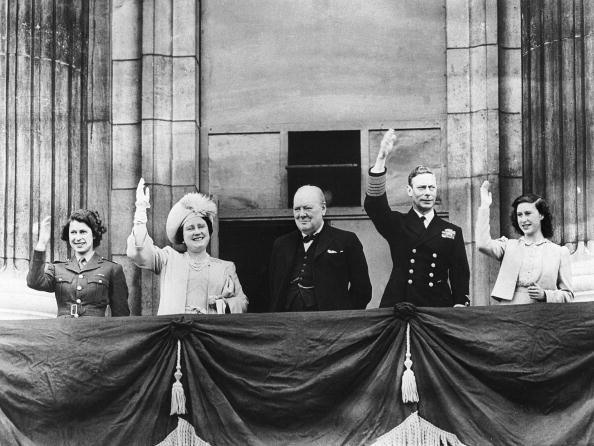
There were great celebrations when the Allies finally achieved Victory in Europe. On VE Day, 8th May 1945, the royal family made numerous appearances on the balcony of Buckingham Palace to the cheers of massive crowds. The princesses Elizabeth and Margaret looked down to the joyful celebrations and wanted to join in; surprisingly, the King gave his permission for the sisters to go into the streets incognito. So the heir to the throne strolled down Whitehall arm in arm with her sister, possibly the only time that she has been able to be just one of the crowd, as she later described it ‘We asked my parents if we could go out and see for ourselves. I remember we were terrified of being recognised … I remember lines of unknown people linking arms and walking down Whitehall, all of us just swept along on a tide of happiness and relief.’

Although the Second World War ended in 1945 rationing was only phased out gradually and did not finally end until 1954. The royal family continued to follow the restrictions and Princess Elizabeth even saved up ration coupons to buy the material for her wedding dress in 1947.

Queen Elizabeth II is the only remaining living head of state in the world who served during the Second World War and remains the only female member of the royal family to have served in the armed forces.


The Windsors at War – Part 1 King George VI

King George VI was a reluctant monarch. He grew up with the expectation that his elder brother would become king, a situation he was more than happy with as he was a rather shy man who suffered from a stutter. Unfortunately for George his plans for himself and his family were turned on their head when his brother, King Edward VIII, abdicated in December 1936 so that he could marry Wallis Simpson. George suddenly found himself in a position he had never wanted and, what was worse, at a time of impending crisis. But George also had a profound sense of duty and honour, things he found sadly lacking in his elder brother, and vowed to be the best monarch he could as the world faced up to the growing threat of Nazi Germany.

George VI had served in the Royal Navy during the Great War and was present at the Battle of Jutland in 1916 when Britain lost 14 ships and over 6,000 men. As with many of his generation the King wanted to avoid another war like the one which had blighted his youth and so was in favour of Chamberlain’s policy of appeasement, but as time passed he realised that this was hopeless and war against Germany was unavoidable. In 1939 George VI travelled to America and Canada in an effort to build support for the inevitable conflict. By 3rd September of that year, the day that Britain declared war on Germany, he was resigned to what was to come; he wrote…

“As 11 o’clock struck that fateful morning I had a certain feeling of relief that those 10 anxious days of intensive negotiations with Germany over Poland, which at moments looked favourable…were over. Hitler would not and could not draw back from the edge of the Abyss to which he had led us. Despite our protestations that the Polish Question could have been settled without force, Hitler had taken the plunge.” The King went on to compare his situation in 1939 to the one he had been in at the outbreak of war in 1914 when he was “keeping the middle watch on the bridge of HMS Collingwood… Today we are at War again, and I am no longer a midshipman in the Royal Navy.” The King obviously felt that Edward VIII had shown a great lack of character, and remarked in his diary that, before the abdication, he had “never expected to have all this responsibility on me”.

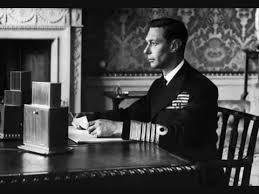
On the day that war was declared the King spoke to the nation in a radio broadcast, something he always found difficult as those who have seen the film ‘The King’s Speech’ will know. In his address George VI said “In this grave hour, perhaps the most fateful in our history…for the second time in the lives of most of us we are at war. Over and over again we have tried to find a peaceful way out of the differences between ourselves and those who are now our enemies. But it has been in vain…The task will be hard. There may be dark days ahead and war is no longer confined to the battlefield, but we can only do the right as we see the right and reverently commend our cause to God…with God’s help we shall prevail. May He bless and keep us all.”

(You can listen to the full speech here.)

King George VI made it a matter of principle that, no matter how busy he was, he would write a diary entry every night for however long the war lasted, and his writings give an insight into the reluctant monarch, his relationship with his government, and his sense of duty and service.

In May 1940 Chamberlain resigned as Prime Minister and the King, along with many others, wanted Lord Halifax to take his place; the monarchs role in appointing a Prime Minister is, however, little more than a symbolic confirmation of the will of the ruling party and George was reluctantly persuaded that Winston Churchill should be made Prime Minister. The King initially found Churchill difficult to get along with, but as time passed they developed a deep respect for each other and a close personal relationship, meeting for lunch every Tuesday to discuss the war in private in a very open and frank way.

At the outbreak of the war some of the King’s closest advisors suggested that he should move from London to the countryside to avoid enemy attacks, but both he and the Queen were adamant that they would stay in the capital as a symbol of strength and unity. George VI was not reckless, however, and personally set up the Coats Mission which was to be enforced if a German army invaded the British Isles. The key to this was the creation of a personal bodyguard of Coldstream Guards and Royal Lancers led by Major Coats to protect the King, the Queen and the Princesses Elizabeth and Margaret. The Lancers had specially adapted armoured cars which were to be used to take the royal family from Buckingham Palace to either Windsor or one of four other country houses which had been secretly prepared to conceal them, and where they would be met by the Coldstream Guards. King George was firm in his instructions that the royal family should not be handed over to the enemy and the guard were to fight to the last man if necessary. The second stage of the plan was to fly the Princesses abroad whilst the King and Queen remained behind to bolster resistance.

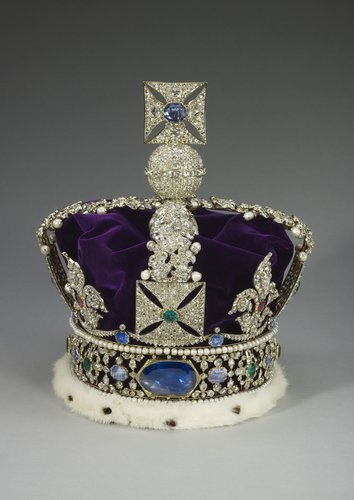
Thankfully the invasion never came and the Coats Mission was never put into operation, but there were other actions which did take place to ensure the safety of the royal family and Britain’s heritage. Hiding the Crown Jewels in a biscuit tin is just one example. This may sound like a comedy sketch but it did, in fact, happen. Some of the most precious jewels, including the Black Prince’s Ruby from the Imperial State Crown, were taken to Windsor Castle where they were put into a biscuit tin and buried under what is known as a sally port (a secret exit which could be used in an emergency). A large hole with two chambers protected by steel doors had been dug in preparation and was accessible by a trap door which, reportedly, still exists today.

The royal family spent most of the war at Buckingham Palace, although they often spent the night at Windsor Castle during times of heavy air raids. The King and Queen were at Buckingham Palace on 13th September 1940 and narrowly missed injury or death when two bombs exploded in the courtyard. In a letter to her mother-in-law the Queen wrote that they had gone to the Palace to collect some possessions after a previous bombing raid when they heard the approach of a German plane closely followed by the scream of falling bombs. At the first explosion they all dived for cover, after the second they all made their way to the shelter. The Queen describes how everyone remained calm whilst the three people who had been injured were treated. She later went on to say that “I am glad we have been bombed. It makes me feel we can look the East End in the face.”

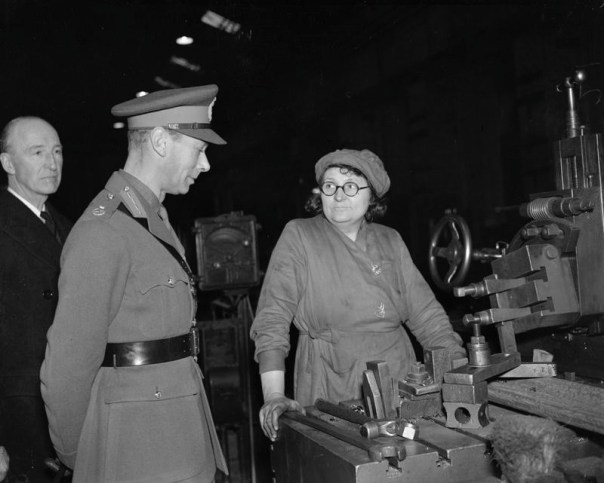
King George VI believed that he had an important role to play in keeping up the morale of the British people and so frequently visited bomb sites and munitions factories, accompanied by the Queen who took a great interest in what was being done to help people whose homes had been destroyed in the bombings. The Royal couple were also interested in the war work which was being done by civilians, often women, and their visits had a profound effect. The Ministry of Supply found that production figures inevitably dropped on the day of a royal visit, but the workers found it such a morale boost that they worked even harder and the weekly production figures always rose after such a visit. Both King George and Queen Elizabeth were compassionate by nature and also toured hospitals to visit wounded civilians and troops.

In his role as monarch George VI held the ranks of Admiral of the Fleet, Marshal of the Royal Air Force, and Field Marshall, and he made a particular effort to visit every type of unit within the armed force; whenever he toured work places or inspected troops he would invariably do so in uniform. The king often visited troops in the UK, but it was not always so easy for him to do so abroad because of fears for his safety, although he did visit military troops in France in December 1939 during the ‘Phoney War’, Malta and North Africa in 1943, Normandy 10 days after D Day in June 1944, southern Italy in July 1944 and the Low Countries in October 1944. His trip to the Mediterranean in 1943 is an example of how he saw his role as that of a ‘morale booster’ for armed forces and civilians alike as he inspected the Roya Navy (and also the US Navy), the Merchant Navy, the Royal Marines, the Army, and the Royal Air Force before going on to the island of Malta. As well as visiting troops George VI also took a keen interest in the planning and strategy of the war and it was after he made a personal request to be kept informed that Dwight Eisenhower briefed him on the plan for Operation Overlord – the invasion of Europe via the Normandy beaches in 1944.

King George VI created the George Cross which is awarded “for acts of the greatest heroism or for most conspicuous courage in circumstance of extreme danger” and can be awarded to civilians as well as members of the armed forces. During the war air raid wardens, fire men, policemen and other individual civilians were awarded the George Cross, but one of the best known awards went to Malta. The people of the island had suffered dreadfully when besieged by the Germans and Italians who bombed the island round the clock. Malta held a strategically important position in the Mediterranean and so the people were determined not to give in even though whole towns and villages had been reduced to nothing but rubble, and there was a terrible food shortage. King George made a personal decision to award the George Cross to the island of Malta saying that “To honour her brave people I award the George Cross to the Island Fortress of Malta to bear witness to a heroism and devotion that will long be famous in history”. During his visit to North Africa in 1943 King George was determined to visit Malta and spent a day touring the island where he was greeted by cheering crowds and the ringing of the island’s church bells.

Although he was the monarch George VI believed that he and his family should share the same difficulties and dangers as his subjects. He insisted that the royal family should have the same rations as everyone else and follow all other war time directives; what’s more, this also applied to visitors. When Eleanor Roosevelt, the wife of the American President, visited Britain she commented on her time at Buckingham Palace which was unheated and boarded-up and where she was only allowed limited bathwater and was served rationed food. The royal family also knew what it felt to lose a loved one to the conflict with the King’s brother and the Queen’s nephew both killed.

Prince George, Duke of Kent, was a member of the Royal Air Force and set off alone on a mission about which little is known. His plane crashed into a hillside in Caithness in Scotland, and his body was found with a briefcase full of 100 Krona banknotes handcuffed to one wrist.

After sharing the dangers and deprivations of a country at war it was only fitting that the royal family shared in the jubilation when victory was finally achieved in Europe. At 6pm on the 8th May 1945 the King made a broadcast to the country, and during the afternoon and evening of that day the royal family made eight appearances on the balcony of Buckingham Palace as the city celebrated VE Day, huge crowds cheering the royals who had refused to leave Britain and stayed to play an active part in the war effort. King George VI and Queen Elizabeth had become symbols of national resistance, as had Princess Elizabeth who served in the ATS. The man who had only reluctantly taken on the role of king at his brother’s abdication had proven to be the one most fitting to lead his country in a time of war and, as such, was greatly loved. It is sad that he did not live long enough to enjoy the fruits of peace as he died in February 1952, aged 56, the beloved king of a country which still had another two years before rationing was finally over.

Carl Lutz – Forgotten hero of the Holocaust

The Second World War saw the mass slaughter of a number of groups of ‘undesirable’ people by the Nazi regime. Amongst them were the Roma, homosexuals, and the handicapped; but by far the greatest number to die were Jews, around six million of them. Yet the number could have been much greater if not for courageous men and women who laid their own lives on the line in defiance of Hitler’s Final Solution. So on Holocaust Remembrance Day perhaps it is fitting that, as well as the millions who died, we remember those people who risked everything to save others.

Carl Lutz, Budapest 1944 By FOTO:Fortepan — ID 105824

The names of some of these brave people are known to us – Oscar Schindler (who employed Jews in his factories so that they would not be sent to the concentration camps) and Raoul Wallenberg (who I shall mention again later) to name but two – yet few people have ever heard the name Carl Lutz, including those in his homeland of Switzerland. Lutz was the Swiss consul in Palestine in the 1930’s before being transferred to Hungary as the Swiss Vice-Consul in Budapest in 1942; he stayed there until 1945. Hungary had joined the war on the side of Hitler in 1941 and so Lutz found himself in an unusual position in a country at war – as Switzerland was neutral Lutz was given the task of representing the interests of countries which were at war with Germany and had closed their embassies in Budapest, countries which included Britain and America. Soon after his arrival Lutz began working with the Jewish Agency for Palestine and issued Swiss safe-conduct documents to almost 10,000 Hungarian Jewish children who were then able to emigrate to Palestine.

It was not until 1944 that German forces actually moved in and occupied Hungary. They immediately began to target the local Jewish population, and Lutz saw how Jews from the countryside were being rounded up for deportation (mostly to Auschwitz). He was not naïve and realised what the fate of the Jews would be. Although a quiet and rather shy man Lutz was unable to look the other way; he felt he had no choice but to do something to help, and whatever that was he would have to do it quickly.

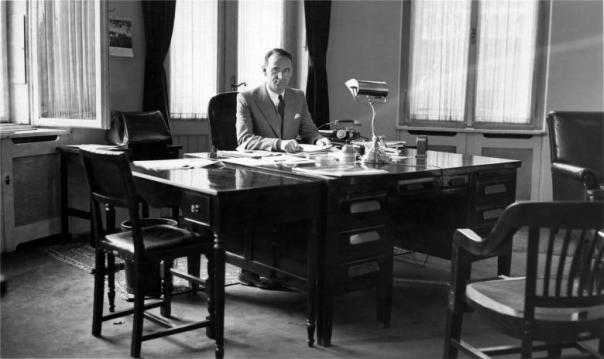
Carl Lutz in his office at the United States legation, Budapest © Archives of Contemporary History, ETH Zurich / Agnes Hirschi

Lutz’s solution was to give Swiss protection to any Jews who had connections to Switzerland or the other countries which he was representing in Hungary. Somehow he managed to persuade the Germans to let him issue 8,000 diplomatic letters of protection. These letters were intended for individuals but Lutz issued them to whole families instead so that thousands of Jews received protection; yet there were thousands more who needed help. As the number of letters available swiftly diminished Lutz decided that there was only one thing to do – he issued letter number 7,999 and then re-issued letter number 1. It was a gamble which could have cost him his life, but it paid off and the Germans were never aware that he was duplicating the numbers. Carl Lutz single handedly ran the largest civilian rescue operation of the war and is credited with having saved around 62,000 Jews with his diplomatic letters. Other foreign diplomats in Budapest were aware of what Lutz was doing and decided to copy his methods, notable amongst them was the Swedish envoy Raoul Wallenberg who also saved tens of thousands of Jews.

Jews queuing outside the Swiss Embassy in Budapest By FOTO:FORTEPAN / Archiv für Zeitgeschichte ETH Zürich / Agnes Hirschi, CC BY-SA 3.0,

As the war dragged on and it became obvious that Germany would lose, the Nazis in Hungary became more brutal than ever. Rather than deporting Jews to be killed in the concentration camps they began to take whole families to the banks of the Danube where they were shot and their bodies disposed of. One day, Carl Lutz came across a group of fascist Arrow Cross Party militiamen who were shooting Jews on the banks of the river. One woman had not been killed in the initial shooting and was struggling in the water, bleeding badly. Lutz jumped in and grabbed here, swimming to the bank with her where he confronted the officer in charge, declaring that the woman was a foreign citizen under the protection of Switzerland. He then calmly walked her to his car, got in, and drove away. The Arrow Cross men were stunned and subdued by the diplomat; not sure if he was telling the truth or not, no one dared to stop him. (That quay beside the Danube in Budapest is now named after Carl Lutz).

The Shoes on the Danube Bank is a memorial by film director Can Togay and sculptor Gyula Pauer on the east bank of the River Danube River in memory of the people who were killed by Arrow Cross militiamen in Budapest during the Second World War. The Jewish victims were ordered to take off their shoes, and were then shot so that their bodies fell into the river and were carried away.

As the end of the war drew closer, and the Nazis more brutal, Lutz realised that his diplomatic letters might no longer offer protection and so he set up 76 safe houses in the city. He told the authorities that each house was an annex of the Swiss legation and so, according to the Vienna Convention on Diplomatic Relations, the Nazis were not allowed access. Among the safe houses was one known as ‘The Glass House’ which sheltered around 3,000 Jews. The Red Cross and Swedish embassy also set up safe houses and there were a total of 120 in Budapest by the end of the war. Carl Lutz’s efforts to undermine the Nazi genocide were so extensive and so openly defiant of the Nazis that the German Proconsul in Hungary asked for permission to assassinate him; Berlin never answered.

In the winter of 1944-45 the Soviet Army was moving westward through Hungary and targeted Budapest. For two months the city suffered an horrific bombardment which resulted in a Russian victory in February 1945. Lutz was recalled home to Switzerland. While not necessrily expecting to be rewarded for his bravery Lutz was stunned to actually be reprimanded for overstepping his authority in saving the Jews. That may seem strange to us today but the main reason that Cal Lutz was not celebrated as a hero was the concept of Swiss neutrality. Switzerland was determined to be neutral at all times and Lutz’s actions had compromised that position.

Whilst in Budapest Lutz’s wife Gertrud (‘Trudi’) was a constant help and support to him. One of the women they helped was Magda Csányi who had gone to Lutz to ask for help for her young daughter, Agnes. Lutz gave them a lettere of protection in 1944, and when the Russian bombardment began they took shelter in the Swiss consulate. Although the end of the war brought a happy ending for Magda and her daughter it was less so for Trudi as her husband, Carl, had fallen in love with the Hungarian. The Lutz’s were divorced, and Carl and Magda were married.

Lutz died in Bern, Switzerland, in 1975.

Carl Lutz Righteous Among Nations Plaque Washington, DC

Although Lutz had been criticised for his actions when he returned to Switzerland in 1945 things slowly changed and, in 1958, the government honoured him for his actions. There are a number of streets in Switzerland named after him but few people know who he was or why he is remembered. Other nations have also commemorated the heroic stand which Carl Lutz made, and the thousands he saved from Hitler’s Holocaust.

  • In 1963, a street in Haifa, Israel was named after him.
  • In 1965, Lutz was the first Swiss national named to the list of “Righteous Among the Nations” by Yad Vashem, Israel’s memorial to the Holocaust.
  • Lutz received the Cross of Honor, Order of Merit, from the Federal Republic of Germany.
  • In 1991, a memorial dedicated to him was erected at the entrance to the old Budapest ghetto.
  • In 2014 George Washington University in Washington, DC, posthumously honoured Lutz with the President’s Medal in a ceremony attended by various international dignitaries and his step-daughter Agnes Hirschi.
  • His name has been included in The Raoul Wallenberg-memorial at the Dohány Street Synagogue in Budapest.
  • A street in Jerusalem has been named after him.
  • In November 2017 a memorial above the Sea of Galilee was inaugurated in his honour.
Carl Lutz can be easily described as “forgotten hero” in his home country Switzerland. In Israel however the situation is different, as he was the first Swiss to be recognized by Yad Vashem as “Righteous Among the Nations”. A new scenic lookout high above the Sea of Galilee was inaugurated in his honour in November 2017

A wartime Christmas

Children who grew up during the long years of the Second World War had a difficult life, they certainly had little idea of the type of Christmas festivities which had been enjoyed by their parents or older siblings in earlier years. With food shortages, rationing, and manufacturing focused on the war effort, these children had far less too enjoy than those who had gone before. But what was worse for most families was the fact that they had to spend the festive season without their loved ones – many husbands, fathers, brothers, and sons were fighting overseas, or were prisoners of war; many women were in the services or carrying on vital war work, many children had been evacuated and would be spending Christmas far from home with strangers. And many families had empty chairs at their tables which would never be filled again – family members killed in action or bombing raids.

As well as the sadness of separation Christmas luxuries were also hard to come by, even basic foods were scarce and people had to improvise by finding creative substitutes for festive ingredients. The black market did a roaring trade  in December but, even so, few people were able to buy gifts which  meant that many of the presents unwrapped on Christmas morning were homemade and practical. The government even encouraged people to ‘Make it a War Savings Christmas’, buying bonds and supporting the war effort rather than giving presents.

Poster issued by the National Savings Committee. © IWM (Art.IWM PST 16433)

Making Christmas look as festive as possible was more difficult from 1941 onwards because it was impossible to buy Christmas wrapping paper thanks to the Ministry of Supply ruling that ‘no retailer shall provide any paper for the packaging or wrapping of goods excepting foodstuffs or articles which the shopkeeper has agreed to deliver’. This effort to save paper  impacted on many aspects of life, including making it difficult to wrap Christmas presents and keep them a surprise. The shortage of paper also meant that it was almost impossible to find decorations so these, too, were homemade, often using old newspapers which had been painted in festive colours.

Children at Fen Ditton Junior School (Cambridgeshire) making paper chains for Christmas..© IWM (D 23619)

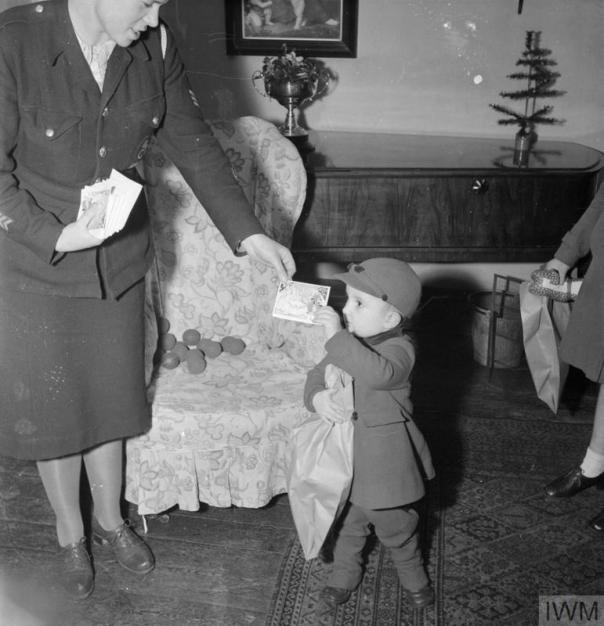
Britain’s allies understood the hardships of people back in the United Kingdom and set up charities to help. In America many of these charities came together under the umbrella of the British War Relief Society whose aim was to send food and clothes to those in need. In this photograph a young boy called Derek Cunningham received a Christmas card and gifts from the BWRS in Canning Town (London).

© IWM (D 23296)

American soldiers were also encouraged to spend Christmas with their English allies in an effort to integrate more closely as they were often resented by the locals for being ‘overpaid, oversexed, and over here!’ Most GI’s had never been abroad before so to be spending Christmas away from their families was difficult for them. The idea was that civilians would invite an American to spend Christmas Day with them and, in return, the soldiers would bring gifts (nylon stockings, chocolate, cigarettes, chewing gum etc.). Rationing meant that the British had limited food supplies so each soldier who accepted an invitation was given special rations from the PX for every day that they spent with a host family (the PX was the Post Exchange which was the American equivalent of the British NAAFI). Despite initial misgivings the programme proved a huge success.

© IWM (EA 10182)

Added to the sadness of Christmas without family members and the hardship of trying to find food and presents during a time of rationing, was the fear of the enemy. In 1940 London had been bombed for 57 consecutive nights leading up to Christmas, and no one believed that Christmas Eve would be any different. Fearing for their safetly many people spent the night before Christmas in air-raid shelters rather than waiting at home for Father Christmas to call. It could be a very dark and dreary begining to what should be a festive season.

A Shelter in Camden Town under a Brewery: Christmas Eve, 1940, by Olga Lehmann. © IWM (Art.IWM ART LD 1899

Some places which offered shelter did thier best to raise people’s spirits with decorations and maybe even a little tree. This picture, by Edmund Knapp, depicts the crypt of St Martin-in-the-Fields church (close to Trafalgar Square) which was used as a canteen by firewatchers, ARP wardens, and people whose homes had been bombed. The church itself was damaged by the massive bombing raid on 29th December 1940 but the crypt remained intact and in use for the remainder of the war.

Ready for Christmas: the Canteen under St. Martin’s-in-the-Fields, 1941, by Edmund Knapp © IWM (Art.IWM ART LD 800)

Despite the hardship of a war-time Christmas some pre-war rituals remained, such as carol singing and pantomimes, and the BBC tried to help with the festive cheer by broadcasting a special radio programme for Christmas Day. In 1939 this programme included a Christmas speech from King George VI. Although there had been previous broadcasts by monarchs this message had particular meaning as it was the first year of the war. As well as praising the  armed forces the king ended with a message of hope from the poem ‘God Knows’ by Minnie Louise Haskins:

I said to the man who stood at the Gate of the Year, “Give me a light that I may tread safely into the unknown.” And he replied, “Go out into the darkness, and put your hand into the Hand of God. That shall be to you better than light, and safer than a known way.”

George VI’s speech was listened to by everyone who could get close to a radio, instilling a sense of common purpose as the country faced an uncertain future. It was to be six long years before the king gave his next Christmas message in a time of peace.

May I take this opportunity to send you all best wishes for  a happy and peaceful  Christmas, and hope that 2018 is all that you dream it will be.

The Orphan’s Tale by Pam Jenoff

(New York Times Bestseller)

In Nazi-occupied Holland, seventeen-year-old Noa snatches a baby from a train bound for the concentration camps, fleeing with him into the snowy wilderness surrounding the train tracks.

Passing through the woods is a German circus, led by the heroic Herr Neuhoff. They agree to take in Noa and the baby, on one condition: to earn her keep, Noa must master the flying trapeze – under the tutorage of mysterious aerialist, Astrid.

Soaring high above the crowds, Noa and Astrid must learn to trust one another…or plummet. But with the threat of war closing in, loyalty can become the most dangerous trait of all.

In this novel Noa, a Dutch teenager who falls pregnant after a one-night stand with a German soldier, is disowned by her family and forced to give up her baby. She later comes across a train pulling a cattle truck full of Jewish babies en-route to a concentration camp, and impulsively takes a child – partly because of her horror at the situation and partly because of the loss of her own child which has left her feeling guilty and bereft. Noa gets lost in a snow storm and expects to die, but is rescued by a travelling circus where she makes a strange alliance with Astrid who has her own complicated history as a Jew who had once been married to a German officer. The premise of this story may seem far-fetched but, surprisingly, it is based on a number of true stories from the Second World War. In her notes at the end of the novel Ms Jenoff explains how she came across two stories in the Yad Vashem archives whilst doing research for her job as a diplomat for the U.S. State Department handling Holocaust issues in Poland. The first story was an account of a boxcar full of babies being sent to a concentration camp, the second was the story of a German circus which had sheltered Jews during the war (the owner, Adolf Althoff, was named Righteous Among The Nations by Yad Vashem). The author has taken these stories and woven them together to create a fictional circus with characters and incidents which give us a glimpse of the fear and hardship of those who put humanity above nationality during one of the darkest periods of the 20th century.

Using parallel narratives Ms Jenoff tells an inspiring story of two very different women brought together by war; characters who are believable because they are so flawed – capable of generosity and selflessness at times, and at other times quite reckless and selfish; women who are changed for the better by the tragedies they have to endure. I must admit that I found Noa’s almost instant love for Luc, and his for her, rather improbable; for me this is the weakest part of the novel but, setting that aside, it does help the author to explore one or two other themes connected to war and conflict, particularly how a family (in this case Luc’s) can be divided by their beliefs and by what they feel is the best way for them to protect the people around them. Noa also seemed rather reckless at times as she knowingly did things which could jeapordise the safety of others but, having said that, one must remember that the character is just seventeen years old and I’m sure that the characteristic traits of a teenager could not be totally surpressed even during a time of war! The focus of this novel is on the relationship of these two women rather than the war itself, and I find this to be one of the strengths of the book. The two women journey from jealousy and suspicion to a grudging respect, and then even love for each other.

Ms Jennoff has also shown a detailed knowledge of circus life in her writing. The atmosphere of the circus ring is vividly evoked – the excitement and glamour as seen from the perspective of the customers. Yet this is well contrasted with life behind the scenes – the shabbiness, the hard work, the lack of privacy, the monotony. The author also conveys how life became much more difficult for German circuses during the war as restrictions were placed on them by the Nazis, yet the determination that ‘the show must go on’ shines through, particularly as the circus brings a feeling of normality and escapism to the people of towns and villages living under German occupation.

‘The Orphan’s Tale’ has a well-structured plot which is well paced with the tension rising steadily to the ultimate climax in the big top. Interestingly the pivitol role is a baby who has no words to speak and no actions which influence the tale; the purpose of his character is, in my view, to be a symbol for all those who were victims of the Nazis. The child represents every Jew, or gypsy, or homosexual, or disabled person taken by the regime; it doesn’t really matter who he is or where he came from, the underlying current of this novel is that he should survive to tell the tale and to live a life denied to so many others. ‘The Orphan’s Tale’ is historical fiction with a focus on how ordinary people survive during times of conflict and upheaval rather than on the key events of the war. If you are fond of character driven  historical novels you will probably enjoy this.

The Orphan’s Tale can  be found on Amazon

You can find out more about Ms Jenoff here

You can  find more of my Recommended  Reads here


THE GRAVES AT MERSA MATRUH.

At 11am on 11th November we remember the ending of the First World War, and the men and women who lost their lives in other wars and other parts of the world. Much of our focus is often on Europe, and those who fought and died in other theatres of war can sometimes be forgotten or relegated to the sidelines. One such group are the men who fought and died in North Africa during the Second World War.

Men of the Highland Light Infantry (City of Glasgow Regiment) camouflaging a gun position at Mersa Matruh, 28 May 1940. Copyright: © IWM. Original Source: http://www.iwm.org.uk/collections/item/object/205193447

Mersa Matruh is an ancient fishing port dating back to the time of Alexander the Great. It was also the place where Anthony and Cleopatra would escape for seclusion – at the time it was a village of sponge fishermen where the two lovers would relax and swim naked together in the sea. Allied troops were stationed in Mersa Matruh during the First World War, and at the time of the Second World War it was at the end of a narrow-gauge railway from Alexandria and as such was an important supply post for the Allies. The Allied troops who fought in North Africa came from all around the world – from the United Kingdom to Australia, from India to New Zealand, and the British Eighth Army (including the famed Desert Rats) set out on some of their most important operations from Mersa Matruh. Mersa was also the site of a crushing Allied defeat by Rommel’s Afrika Corps in June 1942.

I would like to thank Ian from the Desert Rats website for allowing me to use the following poem as a tribute to all those who fought and died during the North African campaigns of World War 2.

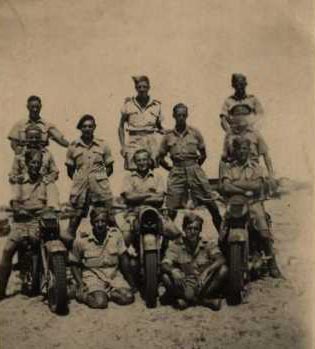
Signallers at Homs

THE GRAVES AT MERSA MATRUH.

How often do you folks at home
Think of sandy graves without a stone,
Where sleep our comrades brave and true,
Out in the desert at Mersa Matruh.

The raging sandstorms awake them not,
They’re cool below but above is hot
The trails of the desert are over them,
They fought and died like Englishmen.

Do you not feel pride in your heart
Where you think may be a friend took part
in the struggles for the empire, Britain and you,
And lay down their lives at Mersa Matruh.

On honoured scroll their names shall shine,
And will not dim through pass of time
In years to come we will remember them
As soldiers of the empire and British men.

Then forget them not you folks at home,
Those men who lie in the desert alone,
They died for their country, Britain and you
In the western desert of Mersa Matruh.

Desert Graves

The only thing that ever really frightened Churchill – The Battle of the Atlantic

What image do you have of Winston Churchill as he led Britain during the Second World War? Most people would say positive things like ‘steadfast’, ‘unflinching’, ‘courageous’, etc., few would mention the word ‘afraid’. Yet there was one thing which worried him more than any other, in his own words ‘…the only thing that ever really frightened me during the war was the U-boat peril.’ And Churchill had every right to feel afraid. The route across the Atlantic was Britain’s lifeline, and Germany’s best hope of defeating the island nation would be by winning the Battle of the Atlantic.

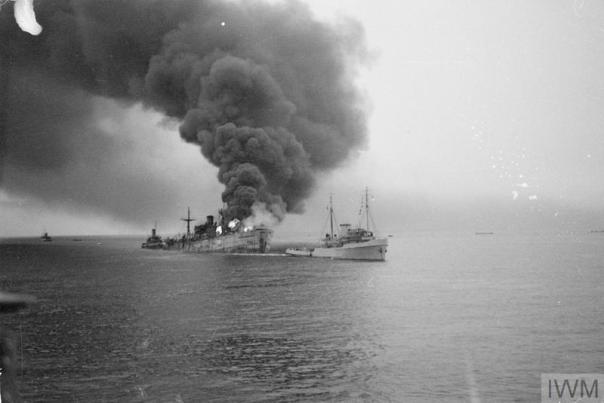
HMS BARHAM explodes as her 15 inch magazine ignites, 25 November 1941. Copyright: © IWM. object/205022049

Britain relied heavily on merchant ships carrying supplies of raw materials, food, troops, and military equipment from America. If the convoys had failed to get through Britain would most likely have been starved to the brink of surrender; her badly equipped armies, lacking tanks and weapons built in America, would have been overrun; it would have been impossible to transport land forces to North Africa, the Mediterranean, or across the English Channel on D Day; and it would have been impossible for the British to blockade the Axis powers in Europe. In short, if German U-boats had reigned supreme in the Atlantic then Hitler would, in all likelihood, have won the war.

A German U-Boat commander tracking a British merchant ship through his periscope during an attack on a convoy, 10-20 June 1942. Copyright: © IWM. object/205194304

The first phase of the Battle of the Atlantic lasted from the outbreak of war in 1939 until the British retreat from Dunkirk in June 1940. This was a time which saw the British and French with the upper hand, establishing a long-range blockade on German merchant ships. But after the German victories in northern Europe in 1940 and the entry of Italy into the war, Britain lost the support of the French navy. It was a difficult time; as well as the loss of the French ships Britain also suffered losses in the retreats from Norway and Dunkirk, losses which cut the British merchant fleet to almost half of its former size at the critical moment when Germany was acquiring naval bases on the Atlantic coast of France which made it easier for them to attack Allied shipping in the Atlantic; bases such as the one at Saint Nazaire. The attacking forces had the support of long-range Kondor aircraft which carried out reconnaissance for the U-boats and also attacked Allied shipping. Between the fall of France in June 1940 and the end of the year German U-boats sank three million tons of Allied shipping. To make matters worse, the Axis powers in the Mediterranean made the route through the Suez Canal so dangerous that British merchant ships had to take the much longer route around the Cape of Good Hope. The situation, which was so dire for the Allies, appeared more hopeful for the Germans who believed that it would only be a matter of time before they would knock Britain out of the war by attacking her trade. (The Germans estimated that they would have to sink 150 merchant ships a month to starve Britain into submission).

Shipping losses: HMS BARHAM listing to port after being torpedoed by U 331. HMS VALIANT is in the background. Photograph taken from HMS QUEEN ELIZABETH. Copyright: © IWM. object/205194526

The German U-boats hunted in ‘wolf packs’ which were faster than the convoys and had the advantage of being able to see without being seen. The merchant convoys were relatively safe in either British or American waters where they could receive fighter cover, but were much more vulnerable in the mid-Atlantic where German submarines reigned supreme. During the autumn and winter of 1940-41 German U-boats had great successes supported by surface ships and planes. But Britain hung on with the help of Canadian naval and air forces so that, by May 1941, a system of fully escorted convoys was in place. The position for Britain was eased further with the ‘Destroyers for Bases’ deal in which America, although not yet in the war, provided more than 50 old World War I destroyers in return for 99-year leases for bases in the Caribbean. New lightly-armoured and much faster ships called corvettes began to accompany the convoys; with their ASDIC (which helped them to hear submarines underwater) and their arsenal of depth charges they began to make a difference. Close to shore new planes like the Sunderland were able to give better air cover as a submarine had to be close to the surface to fire its torpedoes and so became a sitting target for the planes. Allied losses began to fall at last, particularly when the convoys sailed during bad weather as the U-boats could not fire their torpedoes in a heavy swell.

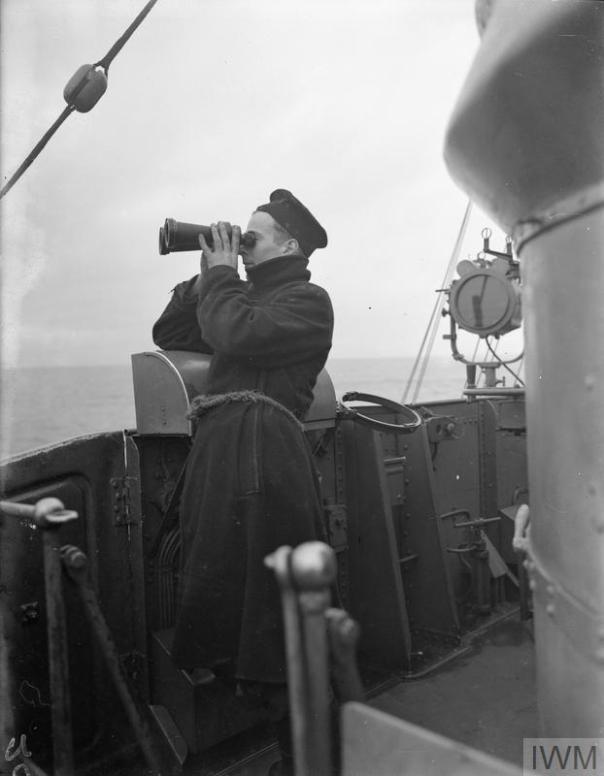
A seaman on watch at sea. Copyright: © IWM. object/205139887

Things changed again after Pearl Harbor and America’s entry into the war. US ships were re-deployed to the Pacific to face the Japanese threat, and the Germans found that shipping on the American east coast in early 1942 was unguarded. The situation led to a rise in Allied merchant shipping losses in the first half of 1942 with disastrous results – in those six months more tonnage was lost than in the entire preceding two and a half years. To make matters worse, the U-boat packs were ranging across the South Atlantic as well, targeting the shipping lanes from Asia and the Middle East, while Allied convoys to Russia were also suffering heavy losses.

Anti-Submarine Weapons: A Mk VII depth charge being loaded onto a Mk IV depth charge thrower on board HMS DIANTHUS. Copyright: © IWM.
object/205194536

It was Canada who once again came to the rescue, providing escorts for the North Atlantic convoys while America underwent a huge ship-building programme so that, by the autumn, they had caught up with losses and were increasing their fleet. The Allies were also intercepting German U-boat communications through the Ultra programme which made a real difference. Then, in March 1943, Ultra failed for a short time during which the Germans sighted every single Allied convoy and attacked over half of them. But, finally, the Battle of the Atlantic was turning in the favour of the Allies. Once more able to break the German codes, using more modern radar equipment, with the addition of new aircraft carriers to the escort groups, and more aggressive tactics meant that, by May 1943, the success of the German U-boat fleet in the North Atlantic was severely diminished. For the remainder of the war the Allies had more or less unchallenged control of the Atlantic sea lanes.

On board a destroyer on escort duty Copyright: © IWM. object/205139891

The men and women who served with the Army, Royal Air Force and Royal Navy are frequently remembered for their courage, and rightly so. But the men of the merchant navy who sailed the gauntlet of an ocean of hidden submarines to re-supply ‘Fortress Britain’ are often forgotten. Yet their courage and sacrifice under fire was no less heroic, and without them the war might well have been lost.

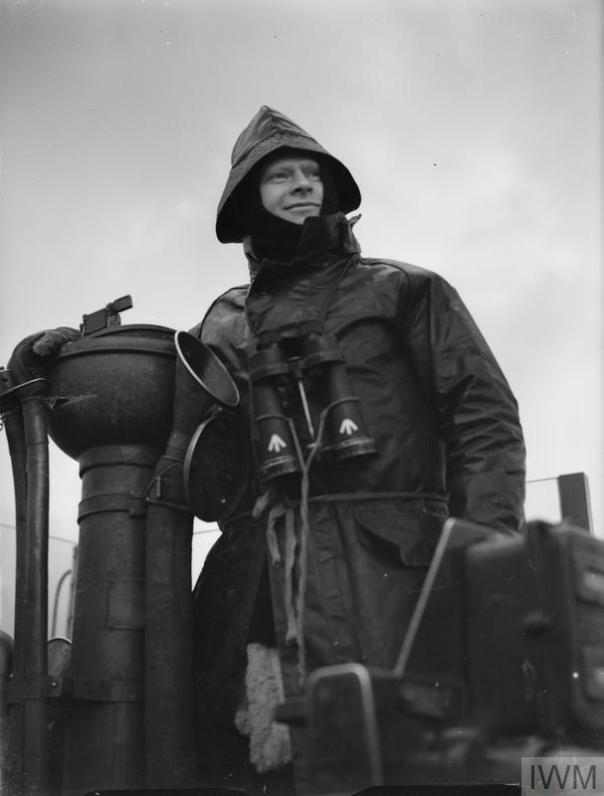
28 NOVEMBER TO 10 DECEMBER 1941, ON BOARD THE DESTROYER HMS VANOC. (A 6633) The officer of the watch dressed for the weather during an Atlantic winter. Copyright: © IWM. object/205140741

Allied losses during the Battle of the Atlantic

36,200 sailors killed
36,000 merchant seamen killed
3,500 merchant vessels sunk
175 warships sunk
741 RAF Coastal Command Aircraft lost in anti-submarine sorties

1943 (AX 44A) The Dutch tug ZWARTE ZEE tows back to harbour a blazing American freighter, probably the SS FLORA MACDONALD which had been torpedoed by a U-boat in the Atlantic during a convoy from Marshall, Liberia to Freetown, Sierra Leone, 29 May 1943. Copyright: © IWM. object/205133324

Bibliography

The Battle of the Atlantic by Andrew Williams

Captain Gilbert Roberts RN and the Anti-U-boat School by Mark Williams

In Great Waters: The Epic Story of the Battle of the Atlantic by Spencer Dunmore

The Battle of the Atlantic by Macintyre, Donald.

Life or death communications – the use of codes by Britain’s spies in the Second World War

Did you ever write messages in code when you were a child? I remember having fun believing that what I wrote to my friend was unreadable by anyone else – even though we only used a simple code where the letters of the alphabet were transposed a number of places. For instance, if we transposed the letters by two places we could send this message:

UJCNN YG IQ VQ VJG EKPGOC VQOQTTQY – I’m sure you’ll find it very easy to read!*

Communication is vital during war, particularly for agents who may be behind enemy lines, but sending messages can also be very dangerous. For agents of the Special Operations Executive (SOE) during the Second World War it was always possible that the enemy might decipher their messages or get a fix on the radio when the message was sent – both scenarios which could put the life of the agent in danger. To ensure a transmission was as safe as possible some sort of encryption was needed to keep the message secret.

Samuel Morse

Before learning how to encode a message the SOE agent would first have to learn how to send in Morse code which is a method of transmitting text as a series of ‘on’ and ‘off’ switches which are known as ‘dots’ and ‘dashes’ and are, in effect, a simple binary coding. The code is named after Samuel Morse who invented the telegraph in the 1830’s and needed a new electronic system to be able to send messages. Each letter or symbol in Morse code is represented by a series of these dots and dashes and it is the simplest and most versatile method of radio/telegraph communication. The most well-known grouping of letters in Morse code is the universal distress call    . . . _ _ _ . . . (dot dot dot dash dash dash dot dot dot), more commonly known as SOS.

But learning Morse code was only the first step for an agent who was preparing to go overseas as it was a universally known code and so the enemy would be able to read any messages that they sent. In the early days of the SOE agents used a simple, and consequently insecure, code known as ‘poem code’ to encrypt their messages. Both the agent and the person receiving the message would have a copy of the same poem. The sender would start his message with five letters to indicate which part of the poem his encryption would be based on; the message would then be written in columns before being transposed and transmitted. These poem codes worked well because they were quite secure but the agent didn’t need to carry a code book as they could memorise the poem. There were, however, weaknesses to this system. For instance, it was relatively easy to make a mistake when encoding; also, if the enemy managed to decode one message they then had all the information they needed to decode other transmissions from that agent in the future, and even ones they had intercepted in the past.

Leo Marks

The SOE knew that they needed to improve their communications system and so Leo Marks was appointed as codes officer. He found that the poems used for encryption had to be easy for agents to remember and so were often famous ones such as ‘Daffodils’ – the problem was that these famous poems would be known by the enemy and so make it easier for them to crack the codes. One of the first changes Marks made was to have original poems written for the agents to use rather than famous ones, these original poems were often comic, satirical or sexual to make them more memorable. Not all fell into these categories though, and one of the most famous of his original poems was, in fact, a love poem written for his girlfriend who had been killed in a plane crash; he later gave this poem to agent Violette Szabo to use when she was posted to France. (Violette was executed at Ravensbruck concentration camp in 1945 and her service in the SOE was commemorated in the 1958 film ‘Carve Her Name With Pride’).

The life that I have
Is all that I have
And the life that I have
Is yours.

The love that I have
Of the life that I have
Is yours and yours and yours.

A sleep I shall have
A rest I shall have
Yet death will be but a pause.

For the peace of my years
In the long green grass
Will be yours and yours and yours.

Violette Szabo

Another method Marks introduced was to simply use a different poem for each transmission to prevent any sort of pattern which might help the enemy. As it would have been hard for an agent to remember a number of poems correctly these were written on silk rather than memorised.

Leo Marks continued to work on more secure methods of encryption and the poem code was gradually replaced. The Worked-Out Key (WOK) system used a number of codes which were used only once and were written on silk (to be hidden in the agents clothing as described in my article on radio operators). Once a particular key had been used it would be torn off the silk and destroyed, leaving the next key ready for use. Marks went on to develop a One-Time Pad code where the letters of the alphabet were written in a list, the agent encoded his message by using a substitution square (i.e. substituting a different letter for each one in the alphabet). After being used once the list was thrown away and a different one used next time but still using the same substitution square. This was much safer than the poem code as there was no pattern to the listing of the letters of the alphabet and so even if the enemy managed to break the code for one message it wouldn’t help them with future ones. SOE agents liked this method as it was quick and secure.

As well as ensuring the safest possible codes Leo Marks worked on ways of deceiving the enemy through agent’s transmissions. One of these deceptions was Operation Gift-Horse which included key codes from the WOK system at the beginning of each message and fooled the enemy into thinking it was a poem code. The main aim of this operation was to get the Germans to waste their time trying to decipher coded poems when the message was, in fact, a completely different system. ‘Gift-Horse’ was used extensively just before D Day in 1944 at a time when there was already a huge increase in radio messages and so made the chances of the Germans decoding and compiling information about the invasion much more difficult.

So the types of puzzles which we find so enjoyable as a leisure activity had a far more serious role for a secret agent behind enemy lines. Maybe next time you do a puzzle in a magazine or a book you can take a moment to think of those for whom coding was not a simple pass-time but a key part of their work which, if not done correctly, could cost them their life.

*My code de-encrypted: SHALL WE GO TO THE CINEMA TOMORROW