Book Review – ‘To Defy A King’ by Elizabeth Chadwick

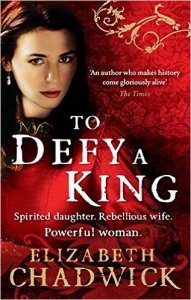
To Defy A King

This year we are celebrating 800 years since the signing of the Magna Carta. Why did the barons come together to write the charter, and force King John to sign it? Why did the king renege on his promises? 1215 was a turbulent time in English history and in her novel, ‘To Defy A King’, Elizabeth Chadwick brings this period to life. Set in England from 1204 to 1218 the story immerses us in England’s conflicts with France, Wales, Scotland, Ireland and the Roman Church. Following the characters we are able to see how these conflicts influenced the actions of both the barons and King John.


The novel begins with Mahelt, daughter of William Marshal (Earl of Pembroke), becoming betrothed to Hugh Bigod (future Earl of Norfolk). The marriages of children of important families in medieval England were arranged for political expediency, not for love. However, Mahelt and Hugh grow to love each other as they struggle to cope with an endlessly changing array of family and political alliances. The Marshal and Bigod families find themselves on opposing sides of the conflict surrounding King John, with Hugh’s family helping to formulate the Magna Carta in the hope of limiting John’s power whilst the Marshals stay faithful to their oath to the King, no matter how much they disagree with him. When John breaks his promises there is turmoil and conflict in England, including a French invasion. Throughout it all Mahelt and Hugh have to tread a knife-edge to protect their family and lands. Only with the death of the King is Mahelt able to re-unite her birth family and marriage family, and look to the future with hope.

As always, the historical research conducted by Elizabeth Chadwick in writing this novel has been immense. We know from history that these people existed. We know where they were at certain times and what their political persuasions were, who they fought for, who they loved. What Ms. Chadwick has done, with great skill, is to bring these people to life. One can only speculate on personal relationships so long ago (although there are hints in some of the historical documents Chadwick has used for her research), but it is this rich development of character which brings the novel to life. If you have no knowledge of medieval history when you pick up the book, by the end of it you will have some understanding of what it would have been like to live in King John’s kingdom – food, clothing, living conditions, family duty, loyalty, political and religious beliefs – for this is a book which immerses you in all aspects of medieval life.

Elizabeth Chadwick has a flair for descriptive writing with pace and believable dialogue. Couple this with well-rounded characters, an historically accurate story and a remarkable depth of research, and you have a book which will keep you hooked from start to finish. If you enjoy historical fiction Elizabeth Chadwick will become one of your favourite authors – if she is not already!

(Elizabeth Chadwick has written a number of novels set in this era featuring the Marshal and Bigod families. You can find the chronological order here on Ms Chadwick’s website. I decided to recommend ‘To Defy A King’ because of its link to the Magna Carta although it is not the first in the series)

‘To Defy A King’ can be found on Amazon.
Canada and the bombing of Hiroshima and Nagasaki

The atomic bomb. The Manhattan Project. Hiroshima. Nagasaki. This last week has seen the world remembering the horror of the atomic bombs dropped on Japan at the end of the Second World War. The use of these bombs issued in a new phase in world history, the nuclear age. As such the events of August 1945 are something which we have all heard about. But history is about more than ‘the big picture’. Many people, myself included, are fascinated by the way these major historical events affected the lives of ordinary people, moving from the impersonal to the personal.

Until a few months ago I was unaware of the fact that many Canadians suffered radiation poisoning caused by their involvement in the building of the atomic bombs which were dropped on Hiroshima and Nagasaki. The sad fact is that these Canadians themselves were also unaware of what had happened to them during the Second World War, and the part they had played in such a devastating episode in world history.

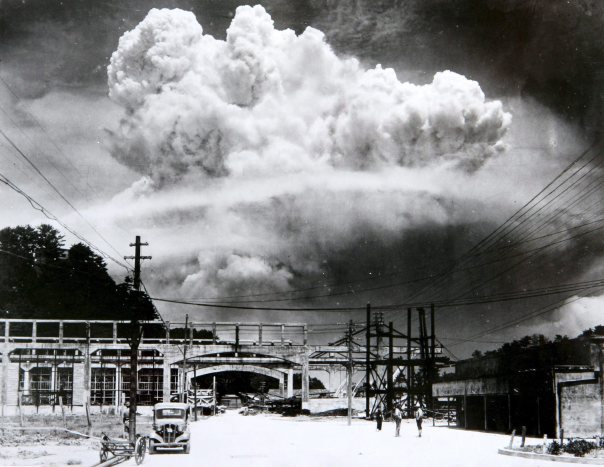
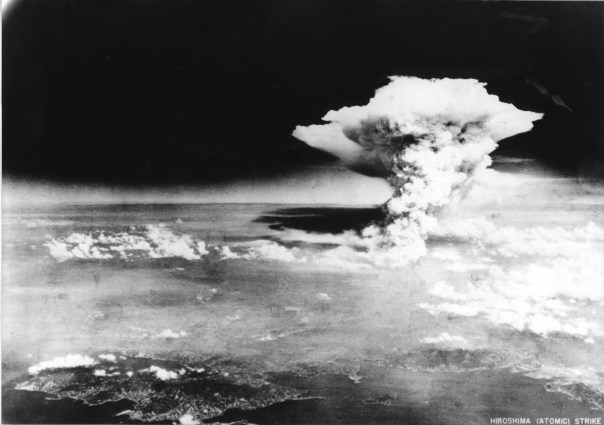
The nuclear cloud above Hiroshima

The story was only recently told to me by Julie Salverson, professor of drama and cultural studies at Queen’s University, Kingston, Canada. For more than ten years Julie has investigated the story of the atomic bomb and Déline, a tiny community on the western shore of Great Bear Lake in the Northwest Territories. Towards the end of the war many of the men from Déline were employed in the transportation of goods. What they did not know was what was in the sacks they were transporting across the lake from the mines at nearby Port Radium to Port Hope in Ontario. The sacks contained uranium. Of course, the workers were never told that the ore they carried on their backs was to be used in the experiments at the Manhattan Project, and in the building of the bombs which were dropped on Hiroshima and Nagasaki. Over the years that followed there were many unexplained illnesses in the community, and far more than the average incidence of deaths from cancer.

When the truth about their connection with the events of August 1945 finally came out, the people of Déline were devastated. They could now understand the illness and suffering which had plagued their community. In a global sense, they could also identify more fully with the people of Hiroshima and Nagasaki. So, what was the response of this small community of Canadians? Anger at the people who had used them and caused them suffering? A focus on the devastating effects on their own lives? No, they immediately sent a delegation to Japan to make their own personal apologies to those who had survived the bombs.

Atomic cloud over Nagasaki

Julie Salverson first heard this story in 2001. She has since followed the trail from Canada to Japan; a journey which has touched her deeply, and is recorded in her book ‘Lines of Flight: An Atomic Memoir’. During her research Julie visited Déline, New Mexico, Hiroshima and Nagasaki, following the stories of people thousands of miles apart yet linked by such terrible events. Personal stories of pain and suffering, from both Canada and Japan, have saddened her. Yet she has also been encouraged by the strength and fortitude of the people on both sides, and their capacity to forgive.

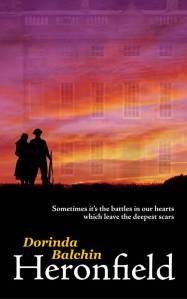
Like Julie, I am interested in the stories of ordinary people caught up in extraordinary events. Unlike Julie, I choose to tell these stories through fiction, as in my Second World War novel, ‘Heronfield’. In ‘Heronfield’ the bombing of Coventry is seen through the eyes of the civilians; the story of the French Resistance told from the perspective of one small family; the secret life of a spy seen from the perspective of his family and loved ones, as well as his own. ‘Heronfield’ follows the war in Europe from Dunkirk to VE Day – the dates, the bombing, the battles all historically accurate; but what brings it to life is the people. Ordinary people like you and me, people who were never famous but whose stories tell us so much about life in this fascinating period of history. Ordinary people like those who lived in Hiroshima and Nagasaki. And Déline.

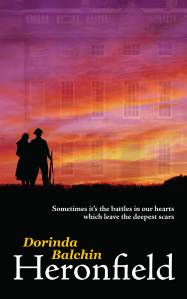
Heronfield

Ten interesting facts about the English Civil War

The English Civil War is a fascinating period of history, but few people know much about it. I recently came across Anglotopia’s post Ten Interesting Facts About the English Civil War. which is well worth a look.

I wonder if you have any facts you would like to add to the list? Please do so in the comment box below as I would love to read them.  Perhaps they would be similar to the facts I have come across in the research for my new novel, Rebekah. One thing I have found interesting is the high incidence of witchraft trials during the war. This is something which will impact on my main characters – but more of that in a later post!

When did you last see your father? by W. F. Yeames

Remembering ‘The Few’

Battle of Britain

I often wonder how it would have felt, as a civilian in southern England, to live through the summer of 1940. After the defeat of the British Expeditionary Force in France and the heroic evacuation from Dunkirk everyone was waiting for the Germans to cross the English Channel. Waiting for Hitler to add Great Britain to his list of conquests. We are lucky to be able to look back at history and see the events of that summer from both sides of the conflict. How much easier it would have been for people then if they had known what we know now.

Hitler’s plan to invade the United Kingdom, code-named Operation Sealion, depended on getting his forces safely across the English Channel. The key would be to make sure that the Royal Navy could not interfere with the invading army; and that would mean having complete control of the skies. To achieve this, the Luftwaffe needed to defeat the Royal Air Force.

As Commander-in Chief of Fighter Command, Air Chief Marshal Sir Hugh Dowding’s main worry in the summer of 1940 was lack of pilots. At the beginning August 1940, when the battle was entering its fiercest phase, there were 1,434 allied pilots available. By the end of the month 840 of these pilots had been lost, an average of 120 a week. The RAF’s training units could not keep up, and only managed to provide 260 new pilots during that month. As the battle progressed new pilots were sent up too soon, and their inexperience often cost them their lives. In opposition, the Germans were turning out more pilots than could be absorbed by the front-line forces during the same period. It was lucky for Britain that, during the early days of the battle, Goring considered the fighter arm as defensive and of secondary importance to the bomber squadrons, giving Dowding time to build up his forces. It also worked to Britain’s advantage that Goring was known for dismissing as unimportant anything he did not understand. This led to him calling off the attacks on radar stations, which he said were not necessary for success. A decision he was later to regret.

In July 1940, Goring planned to tempt the RAF out for a full-scale battle and destroy it in just a few days, leaving the way open for the invading troops. To do this he sent up the Luftwaffe to seize control of the Straits of Dover on 10th July. However, the RAF pilots proved far more tenacious than Goring had anticipated, and the battle raged on. By the end of July the RAF had lost 150 planes. The Luftwaffe losses ran at 268. Goring knew that he could not keep up these losses for ever so, in August, the Luftwaffe began to attack Fighter Command’s airfields, operations rooms and radar stations. If the RAF could be destroyed on the ground the battle would be won.

Battle of Britain working on plane

Dark days for the people of Britain, who felt that they were standing on the brink. Yet victory was theirs, and when the battle was over a new chapter in the war began. For many those facts are enough. But for me the Battle of Britain is not just about numbers. It is about the men who climbed into their planes, time after time, day after day. Battling exhaustion, injury and fear just as much as they battled the enemy planes. How can we imagine what it was like for them? The answer is – we can’t. But we can get some idea of what these men lived through from their memoires.

Battle of Britain pilots

In my novel, ‘Heronfield’,  David Kemshall is a fighter pilot. For me it was incredibly important to make the scenes of battle, his emotions, and his relationships as real as possible. For this I drew on the book ‘Smoke Trails in the Sky’ in which Anthony Bartley recounts his remarkable experiences as a fighter pilot in World War 2.  Anthony Bartley was one of ‘the few’ who Winston Churchill referred to in his famous speech. A select band of whom the majority (82%) were British; but what is often forgotten is that pilots from thirteen other nations fought by their side. In the summer of 2015 let us remember those who, 75 years ago, fought for the freedom of Great Britain.

Nationality Pilots Men killed % of pilots killed
Great Britain 2543 418  16%
Poland 147 30   20%
New Zealand 101 14   14%
Canadian 94 20   21%
Czechoslovakia 87 8   9%
Belgium 29 6   20%
South Africa 22 9   40%
Australia 22 9   40%
Free French 14 0 0%
Irish 10 0 0%
United States 7 1   14%
Southern Rhodesia 2 0 0%
Jamaica 1 0 0%
Palestine 1 0 0%
Total 3080 515 17%


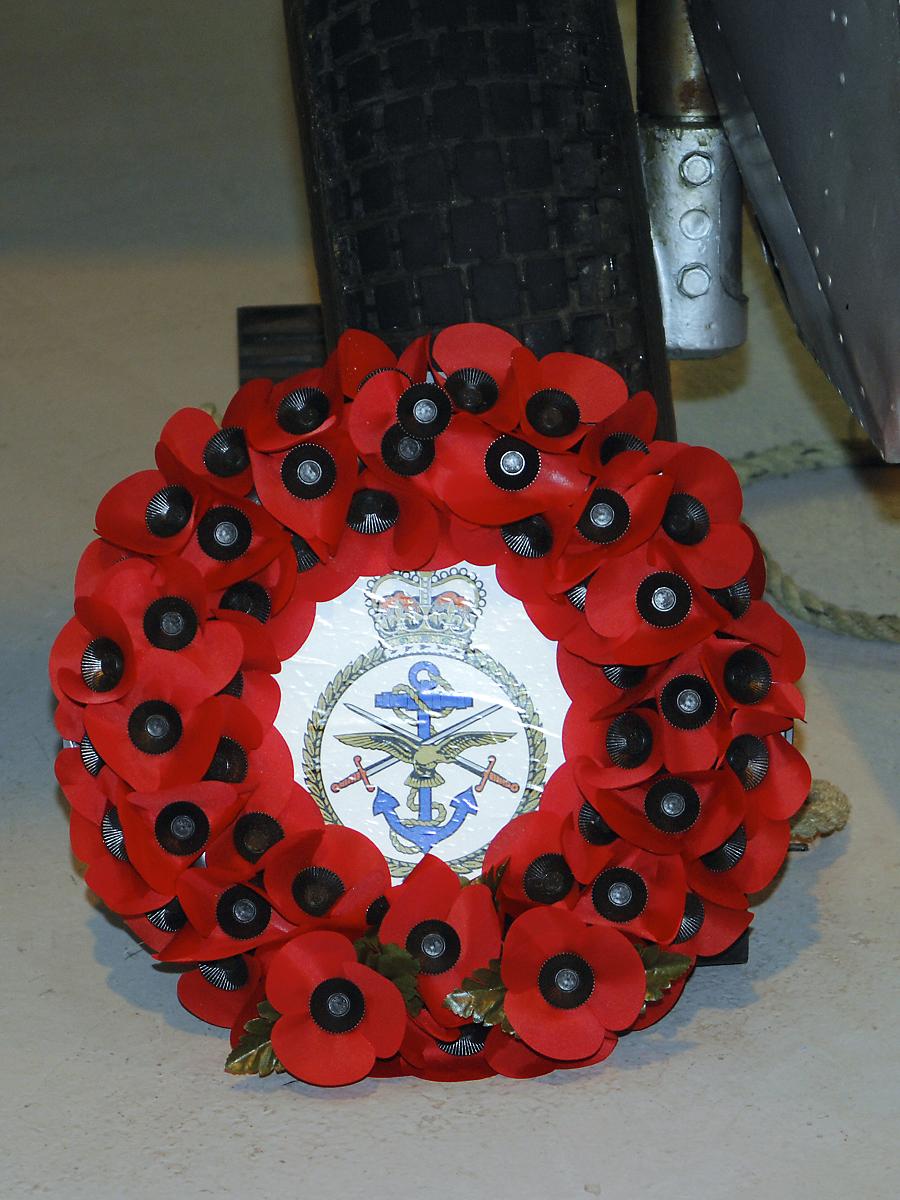
Remembance Sunday Parade and Ceremony held at Number one hangar (Museum) Royal Air Force Cosford with Group Captain James the Senior Officer Present.
Remembrance Sunday Parade and Ceremony held at Number one hangar (Museum) Royal Air Force Cosford


Never in the field of human conflict was so much owed by so many to so few

Sir Winston Churchill


With thanks to the RAF museum for the use of the photographs

http://www.rafmuseum.org.uk

Twitter @RAFMUSEUM

Great books for Christmas

Christmas is fast approaching, and books are as popular as ever as gifts. The question is, how do you make a decision with so many to choose from? Maybe this will help:-

Do you know someone who likes
Heronfield

Historical fiction
Epic stories
Family sagas
World War 2
Books which are character driven
Great dialogue
Intriguing plot lines
A little bit of romance
If so, then ‘Heronfield’ could be just the book for them!


Check it out here,
or buy now

Print edition
Kindle
Other ebook formats

The Historical Novel Society says of ‘Heronfield’The characters are incredibly realistic; it is difficult to set Heronfield down. It would not be possible to write a story about the bravery of the soldiers or the Resistance without making sure that the reader is aware of just why they were so brave, and this is put across tactfully, but still gives the reader an idea of the horrors faced by these people. An amazing read.

‘Heronfield’ not the book for the person you are thinking off? Do they like

The Guardians


Supernatural stories
Ghosts
A little bit of history
A little bit of horror
Intriguing plot lines
Interesting characters

Then maybe ‘The Guardians’ would make a great sticking filler!


Check it out here, or buy now
Print edition
Kindle

Whatever you choose, I wish you and your loved ones a very Happy Christmas!

Book launch – The Guardians

If you have been waiting for my second book – the wait is over!

‘The Guardians’ is available on Kindle from today. Print version will follow soon.

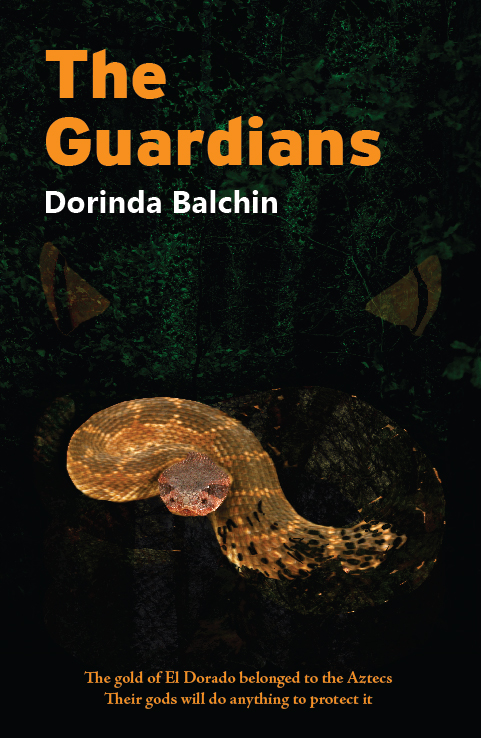
The Guardians

The gold of El Dorado belonged to the Aztecs. Their gods will do anything to protect it.

It is all too easy to lose focus on what is really important in life when surrounded by the pressures and demands of modern living. It can take something extraordinary, something out of this world, to re-focus us on life’s priorities.

For archaeologist Rick Gibson the priority is to discover a ‘great find’ which will make him a household name, and he is prepared to sacrifice everything – his home, his wife, his son – to achieve this. After years of disappointment Gibson’s luck changes with the discovery of an ancient manuscript detailing the hiding place of the Aztec treasure of Montezuma. Gibson leads a dig to Mexico to uncover the famous treasure of El Dorado, but it is not as easy as he had assumed for the treasure is guarded. ‘The Guardians’ come from the world of the dead to protect the treasure and, one by one, the members of Gibson’s party suffer the consequences.

The suspense builds from a gentle beginning in suburban England to a terrifying climax with supernatural forces of good and evil battling for supremacy. Woven skilfully into the narrative are the questions which all humans face, and the answers to which will bring life, or death, for Gibson.


The Guardians – Dorinda’s new book to be published this month


The Guardians


Great news!

‘The Guardians’ will be published this month!

It will be available in ebook format on Kindle from 20th October 2015 – just in time for Halloween!

Print version will soon follow.


The Guardians is a very different genre from Heronfield’.

The Guardians

It is all too easy to lose focus on what is really important in life when surrounded by the pressures and demands of modern living.  It can take something extraordinary, something out of this world, to re-focus us on life’s priorities.

For archaeologist Rick Gibson the priority is to discover a ‘great find’ which will make him a household name, and he is prepared to sacrifice everything – his home, his wife, his son – to achieve this.  After years of disappointment Gibson’s luck changes with the discovery of an ancient manuscript detailing the hiding place of the Aztec treasure of Montezuma.  Gibson leads a dig to Mexico to uncover the famous treasure of Eldorado, but it is not as easy as he had assumed for the treasure is guarded.  ‘The Guardians’ come from the world of the dead to protect the treasure and, one by one, the members of Gibson’s party suffer the consequences.

The suspense builds from a gentle beginning in suburban England  to a terrifying climax with supernatural forces of good and evil battling for supremacy.  Woven skilfully into the narrative are the questions which all humans face, and the answers to which will bring life, or death, for Gibson.

If you can’t wait until 20th, then take a look at ‘The Prologue’

The Historical Novel Society reviews Heronfield

'Heronfield' a novel by Dorinda Balchin


The Historical Novel Society has just written a review of Heronfield. You cannot believe how pleased I am to have such a positive recommendation from such a prestigious society.

If you haven’t yet read Heronfield, then I hope that this review may encourage you to do so.

So what did the review say? Well, here it is…


The Kemshall family home, Heronfield, has been turned into a convalescent hospital during World War II. Tony’s brother, David, a hero to all in his family, is a Spitfire pilot and decorated as one of the men involved in the Battle of Britain. Tony, a survivor of Dunkirk, finds himself facing several battles: fighting a father who believes him a coward, fighting for the love of the woman of his dreams and fighting to keep the biggest secret from them all because Tony is a British spy, working in occupied France.

Heronfield is a hefty tome; a large paperback over 400 pages long, an indication of the amount of story here. The course of six years is spanned, from the beaches at Dunkirk to the liberation of the concentration camps. Many of the chapters have beginnings that are akin to the Pathé News segments, telling what is happening in other areas of the world before returning to the main action in either Heronfield or St Nazaire – a brilliant way of giving the reader all the information required.

The characters are incredibly realistic; it is difficult to set Heronfield down. It would not be possible to write a story about the bravery of the soldiers or the Resistance without making sure that the reader is aware of just why they were so brave, and this is put across tactfully, but still gives the reader an idea of the horrors faced by these people.

An amazing read.