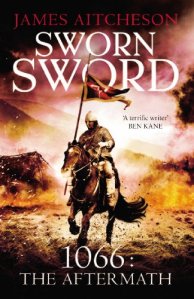
January 1069. Less than three years have passed since Hastings and the death of the usurper, Harold Godwineson. In the depths of winter, two thousand Normans march to subdue the troublesome province of Northumbria. Tancred a Dinant, an ambitious and oath-sworn knight and a proud leader of men, is among them, hungry for battle, for silver and for land.
But at Durham the Normans are ambushed in the streets by English rebels. In the battle that ensues, their army is slaughtered almost to a man. Badly wounded, Tancred barely escapes with his life. His lord is among those slain.
Soon the enemy are on the march, led by the dispossessed prince Eadgar, the last of the ancient Saxon line, who is determined to seize the realm he believes is his. Yet even as Tancred seeks vengeance for his lord’s murder, he finds himself caught up in secret dealings between a powerful Norman magnate and a shadow from the past.
As the Norman and English armies prepare to clash, Tancred begins to uncover a plot which harks back to the day of Hastings itself. A plot which, if allowed to succeed, threatens to undermine the entire Conquest. The fate of the Kingdom hangs in the balance …
Sworn Sword is a novel set in the years immediately after the Norman invasion of England in 1066. The story of William The Conqueror and the battle of Hastings is well known although few people stop to consider the aftermath. The English did not take happily to their new rulers and there was discontent everywhere, but nowhere was this more evident than in the north. This novel deals with the early uprisings against the Normans which led to the ‘Harrowing of the North’.
In Sworn Sword the knight Tancred is involved with the battles for Durham and York in 1069, the first of the serious Northumbrian uprisings. An integral part of the plot revolves around a secret which could lead to the uprisings spreading throughout the kingdom and potentially to the defeat of the Normans and restoration of English rule. Can Tancred and his friends find out the truth behind this secret and save Norman England? (No spoilers here, but the secret is based on historical fact).
Sworn Sword is a fast-paced action and adventure story which will appeal to fans of Bernard Cornwell who enjoy realistic and historically accurate renditions of warfare. Mr Aitcheson is a historian whose knowledge of the period immerses the reader in all aspects of life in Norman England from life in the cities and on the road, to the political discord and rivalries which form the basis of the plot of Sworn Sword during the turbulent years following Hastings. The key events in the novel did actually take place and many of the key characters (Guillaume Malet, Robert de Commines, Eadgyth etc.) are real historical personages. Where the author has shown skill is weaving his fictional characters into this historical background to create a believable adventure story which is just the beginning of Tancred’s struggles as the Northumbrian risings grow stronger.
As I wrote in my last article, the Japanese attack on the American fleet at anchor in Pearl Harbor precipitated the entry of the US into the Second World War. The population of the United States was understandable angry and eager for revenge; but Japan was so far away and America not yet fully prepared for war so what, if anything, could they do to build morale?
Courtesy USA Government @ IWM (OEM 3605)
Within a month of the attack, in January 1942, an audacious plot was hatched by the Americans: why not raid the Japanese mainland? In one blow they could inflict damage on Japanese industrial sites as well as to the psyche of the civilian Japanese population who believed that their homeland could never be attacked by a force coming all the way from America. At the same time, an attack on Japan would also improve America’s relationships with her other allies in the war and boost the morale of the American people.
The initial plan was to launch a bombing raid from aircraft carriers, recover the planes and head back home; but whilst the B-25 could take off from a carrier it soon became obvious that landing on a ship was going to be much more difficult. It was therefore decided to launch the attack from ships positioned east of Tokyo, but instead of turning round and heading back to the aircraft carriers the planes would fly on to either China or Vladivostok in the Soviet Union. When approached about this Stalin was not keen on the plan as he was afraid that it might provoke Japan to attack Russia and so the Americans decided that all of the planes were to head for China. (For an overview of US/China relations at this time please see my article about Pearl Harbor).
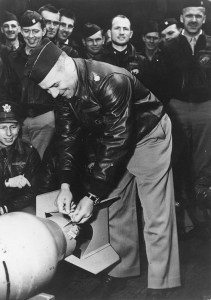
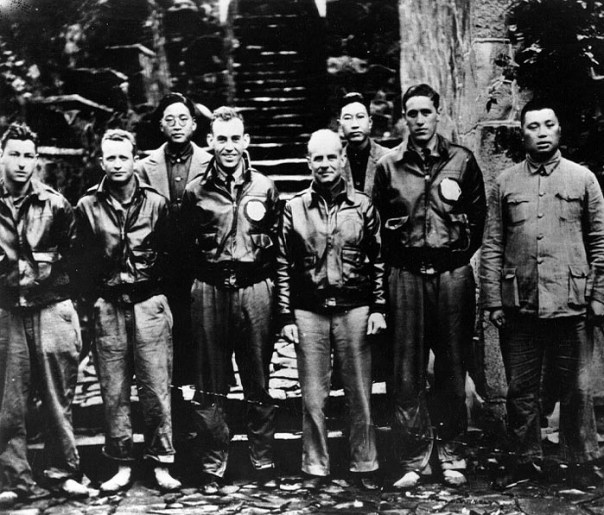
James H Doolittle with some of his Raiders
The raid was to be led by Lieutenant Colonel James H Doolittle; the planes to be used were prepared for the mission by adding extra fuel tanks and stripping out all non-essential equipment to lighten the aircraft. The volunteer crews began their training in early March 1942 with a focus on night flying, cross-country flying, low altitude approaches, and evasive manouvers.
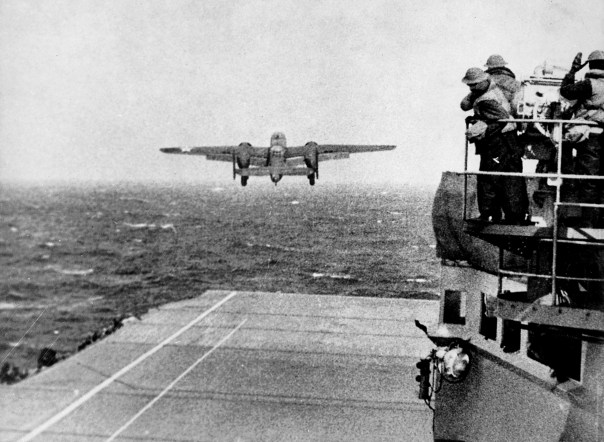
The Japanese knew that the Americans would not let the attack on Pearl Harbor go unpunished and so were monitoring US naval radio. From this they knew that an attack was planned for some time in April but had no radar so their early warning system was poor, relying on converted fishing trawlers positioned in parallel lines offshore to act as pickets. Surprisingly, one of these pickets detected the approaching US ships on 18th April, 650 miles from Japan, and whilst the plan had been to launch at closer to 400 miles from land the Americans could not risk losing more ships after Pearl Harbor and so launched immediately. This attack by long-range bombers took Japan completely by surprise as targets were hit in Tokyo, Yokohama, Nagoya, Yokosuka and Kobe where the American planes met very little opposition before flying on; one plane eventually landed in Vladivostok (where its crew were interned) whilst the other fifteen continued to China.
B-25 taking off from USS Hornet on the Doolittle Raid
The damage inflicted on Japan by the ‘Doolittle Raiders’ was minimal, but its effect on the enemy was enormous. As a consequence of the raid the Japanese decided that it was imperative to meet the US advance in the Pacific head-on (which led to the Battle Of Midway), whilst for civilians the belief in the invulnerability of their homeland was now gone. For the Americans the raid did a lot to restore their self-belief and pride after Pearl Harbor – their first major strike of the war had been an attack on the enemy capital and they now had the confidence that they would eventually be the victors.
But the story of The Doolittle Raid did not end with the American bombers reaching safety in China, and the consequences were far more wide-ranging than anyone could ever have anticipated. Unable to hit back directly at the Americans it was the Chinese who bore the brunt of the brutal revenge meted out by the Japanese.
Doolittle and his crew after crash landing in China
In early 1942 Manchuria as well as some industrial and commercial centers and key ports in China were occupied by Japan who was determined that she would hold on to these as well as prevent the Chinese from helping the Allied war effort. The American planners of the raid were aware of the situation before they set out, and they knew that the Chinese would suffer for the actions of the US but they went ahead regardless. The eighty volunteers who flew the Doolittle Raid knew before they set out that it was a one-way trip and so were prepared to bail out or crash-land in China when their fuel ran out; when this happened local guerrillas, missionaries and villagers willingly helped and cared for the downed airmen. Japan was quick to retaliate.
Individuals who had helped the Americans were identified by the little thank you gifts which the airmen had given them – maybe a cigarette packet, or a glove, or badge – these people were then tortured and murdered as punishment for the help they had given. But retaliation was not limited to individuals who had helped. One report by a Canadian missionary records how the Japanese flew 1,131 bombing raids against Chuchow (where the Doolittle Raiders first landed) in which 10,246 people were killed and another 27,500 left destitute when over 62,000 homes were destroyed, over 7,500 head of cattle killed and 30% of the local crops burned. Altogether there were twenty-eight market towns in the region, of which only three were not destroyed.
American airmen with some of their Chinese rescuers
The town of Ihwang was one of those where the civilian population helped the airmen, and one of the missionaries who worked there (Father Dunker) later described the Japanese retaliation – they raped all women aged 10 to 65, then shot everyone (men, women and children) as well as all the livestock they could find, the town was looted and then burned to the ground. The bodies of the civilians were left to rot.
The Japanese also took the town of Nancheng where they remained for a month. 800 women were rounded up and kept in a storehouse where they were repeatedly raped, the men were killed. Nancheng had a population of 50,000 when the Japanese arrived, when they left the town had been completely destroyed, hospitals looted, railway lines pulled up and the iron shipped back to Japan. The town burned for three days.
In the summer of 1942 the Japanese razed an estimated 20,000 square miles of China – livestock was slaughtered, irrigation systems wrecked beyond repair, crops burned, bridges and roads and airfields totally destroyed. But that was not the end. When the Japanese finally withdrew they contaminated rivers, wells and fields with plague, cholera, anthrax and typhoid; they left behind food rations contaminated with these diseases knowing that the hungry locals would eat them and so spread the sickness further. This part of China had been prone to such diseases before the Japanese action so it is not possible to know quite how many died as a direct result, but it was in the many thousands.
A US raid which had been designed to lift the spirits of the American people after Pearl Harbor led to a three-month campaign across the Kiangsi and Chekiang provinces of China in which it is estimated that 250,000 Chinese died, with the Japanese retaliation being likened to the Rape of Nanking in 1937-38. America honours the men who took part in the raid, but I hope they will also never forget the unsung, unnamed tens of thousands of Chinese heroes who will for ever be a part of this story.
There was a time when Cicero held Caesar’s life in the palm of his hand. But now Caesar is the dominant figure and Cicero’s life is in ruins. Exiled, separated from his wife and children, his possessions confiscated, his life constantly in danger, Cicero is tormented by the knowledge that he has sacrificed power for the sake of his principles. His comeback requires wit, skill and courage – and for a brief and glorious period, the legendary orator is once more the supreme senator in Rome. But politics is never static and no statesman, however cunning, can safeguard against the ambition and corruption of others.
Riveting and tumultuous, DICTATOR encompasses some of the most epic events in human history yet is also an intimate portrait of a brilliant, flawed, frequently fearful yet ultimately brave man – a hero for his time and for ours. This is an unforgettable tour de force from a master storyteller.
Dictator tells the story of Cicero, the great Roman statesman and orator, from the time he was forced to flee Rome to escape Julius Caesar to his eventual death*. Written in the style of a biography (purportedly by his former slave and secretary, Tiro) it gives us a glimpse into the tumultuous times which saw the death of the Roman Republic and the birth of an Empire. Tiro collated the works of Cicero as well as recording speeches in the senate verbatim (he developed the first system of shorthand, we still use some of his symbols today – &, etc., i.e., NB, e.g.), and it is his works which Robert Harris has drawn on to create his descriptions of the key characters in the early days of the Roman Empire, the political turmoil and martial conflict which they lived through.
It would be impossible to write about this period of history without a focus on politics, but Mr Harris cleverly entwines this with the personal lives of his characters, people whom he brings to life in all their complexity. We see their loves and hates, their strength of character, the ebb and flow of their allegiances; and it is these well-rounded characters who breathe life into this engrossing novel. Mr Harris is a skilful author who creates a believable Cicero, a man of lowly birth who rose to the greatest heights in the Roman Republic, a man of incredible intellect who had the gift of holding an audience in the palm of his hand with the strength of his oratory; a Cicero who we can all believe in and sympathise with. The descriptions of Roman life, the cities, travel by sea and on land, all are well researched and believable as Mr Harris utilises his apparently simple style to great effect, weaving a world which we can almost feel and smell and taste.
Many people believe that Cicero was one of the greatest Romans, not only as a politician and statesman but also a philosopher with deep insights into the human condition, a man who studied the ethics of the Greek masters and tried to apply them to his own time. All of this is portrayed in Dictator through Cicero’s own letters and speeches, bringing to life a man of personal courage whose strong principles had a profound impact on his world, for good and evil. I highly recommend this book to anyone with an interest in history and the human condition.
*I saw Dictator on the shelves in the library and it immediately appealed to me; it was not until I was half way through the book that I became aware that it is the final part of a trilogy about Cicero by Robert Harris. I enjoyed the book immensely and will definitely go back and read the first two parts – Imperium and Lustrum. If my review of Dictator appeals to you then I would recommend reading these two books first!
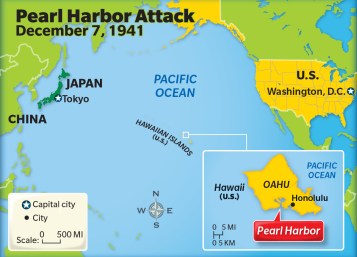
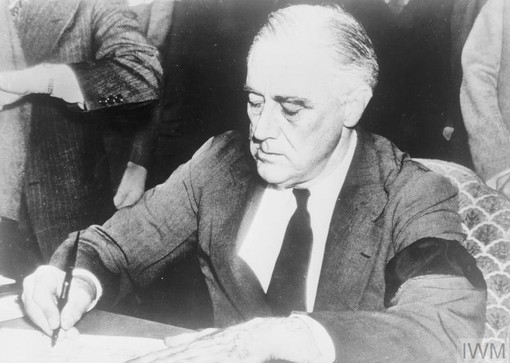
According to President Franklin D Roosevelt 7th December 1941 was a “a date which will live in infamy”. On that day the American naval base at Pearl Harbor on Oahu Island, Hawaii, was attacked by Japanese forces. Many people think that this attack came completely out of the blue but it was, in fact, culmination of more than a decade of steadily worsening relations between the United States and Japan.
American foreign policy in the Pacific in the late 1930’s was to support China against an increasingly aggressive Japan which had taken control of the Chinese province of Manchuria in 1931, although open warfare did not break out between Japan and China until July 1937. America continued to support China by giving the country a loan in 1938, and terminating their 1911 treaty of Commerce and Navigation with Japan in July 1939. By 1940 America was restricting exports to Japan which could be used in the war, and tensions between the two countries continued to mount. Matters were not helped when the Japanese allied themselves with the Axis powers (Germany and Italy). This caused America to sever all relations with Japan, freeze her assets and place an embargo on Japanese shipments carrying materials of war.
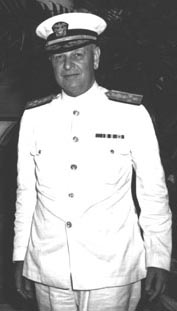
Admiral Yamamoto
Many of the hierarchy in the Japanese military resented the fact that America was supporting China and wanted to end their interference. They also saw the German invasion of the Soviet Union as an opportunity for Japan to extend her reach in the Far East without the intervention of Russia. Even so, there were attempts by some to smooth things over between America and Japan right through the autumn of 1941, although the Japanese Prime Minister had already privately decided that war was the only way forwards – his theory was that if the Japanese could destroy the American Pacific Fleet it would leave them able to conquer all of South East Asia unopposed. The attack on Pearl Harbor was planned by the Commander-in-Chief of the Combined Fleet of Japan, Admiral Yamamoto, with the fleet coming together in the Kuril Islands on 16th November, although Yamamoto was prepared to be recalled if negotiations with the Americans proved successful. Admiral Nagano, the Chief of the Naval General Staff did not want to risk the fleet so far from home, particularly as that would limit the forces they could use for other actions in the Far East, but Yamamoto threatened to resign if his plan was axed so all opposition was ignored.
On 26th November 1941 the American Secretary of State wrote to the Japanese to try to smooth things over, however his requirement that Japanese troops should be withdrawn from China and Indochina did not go down well. The note was seen as irrelevant by the Japanese anyway as their forces had already set sail to attack Pearl Harbor on the same day.
Admiral Kimmel
The US Pacific Fleet along with military and naval forces were stationed at Pearl Harbor as the tensions between the two nations steadily mounted. Admiral Kimmel and Lieutenant General Short were warned three times (16th October, 24th November, and 27th November) that war was possible and they should take appropriate defensive measures. Short ordered his forces to be on the alert for sabotage, and moved all of his planes to Wheeler Airfield to protect them, as well as ordering that radar should be monitored from 4 – 7am (the most likely time of day for an attack). Kimmel was equally relaxed in his preparations – although he was not able to locate the main parts of the Japanese Fleet he did not send his reconnaissance north-west (which would have been the logical direction for an attack to come from); he also allowed personnel on shore leave after mooring the entire fleet in the harbour.
On the US mainland the Japanese Ambassador had asked for a meeting with the American Secretary of State in Washington at 1pm on 7th December (7.30am Pearl Harbor). General Marshall, the American Army Chief-of -Staff sent a telegram to Kimmel to say that war was imminent, but it did not arrive in Pearl Harbor until after the attack began. There were other signs, however, that Kimmel should have realised could be fore-runners of an attack. The first happened four hours before the attack when a Japanese submarine was sighted near the Harbor, it was later fired upon by the USS Ward. Then at 7am, when the radar should have been switched off, Private George Elliott decided to get in some more practise; he noticed a large group of planes on the screen but was told to ignore them as a flight of bombers was expected to arrive that morning. Kimmell was still awaiting confirmation of the submarine encroachment when the air attack began. (Kimmel and Short were later blamed for mistakes and errors of judgement at Pearl Harbor and were dismissed.)
The Japanese had already landed forces in Malaya and Thailand a couple of hours before the attack on Pearl Harbor began (for them, Pearl Harbor was seen as a supporting operation). The attack against America was, however, incredibly well planned with an entire fleet including six air craft carriers, two battleships and three cruisers travelling 3,700 miles across the North Pacific undetected. It was necessary to refuel on the way which could not be done in rough weather and so the Americans did not think an attack could come from that direction. However, they were wrong, and at 7.55am on the morning of 7th December 1941 the attack began with 183 aircraft of the Imperial Japanese Navy attempting to damage or destroy as much of the US Pacific Fleet as possible.
In the first attack the planes and hangers on the island’s airfields were targeted by bombers as torpedo planes attacked the warships at anchor. Four battleships were hit in the first five minutes, followed minutes later by the sinking of the USS Arizona when her gunpowder supplies took a direct hit, killing 1,177 of her crew. The attack was devastating, but it was not the end as less than two hours later a second wave of 170 aircraft arrived. The Americans fought back but were completely unprepared (only 6 planes managed to get into the air) and in just two hours 18 American warships had been either damaged or sunk, almost 200 aircraft destroyed and over 2,400 American service men and women killed. The Americans were lucky that the three aircraft carriers, seven heavy cruisers and a division of destroyers attached to the Pacific Fleet were not in harbour and so escaped without damage. The Japanese in contrast lost less than 60 planes, 5 midget submarines, possibly 2 fleet submarines, and less than 100 men; the main fleet returned to Japan without being attacked.
The attack on Pearl Harbor had an immediate impact on the course of the Second World War. Up until that time the Americans had been supporting the Allies through the Lend-Lease Agreement by supplying war supplies, but most Americans did not want to get actively involved in the fighting. However, they were outraged by the Japanese attack and the next day the US declared war on Japan, finally entering the conflict on the side of the Allies.
The Tripartite Pact signed by Japan, Italy and Germany in September 1940 meant that Germany was obliged to go to war if America attacked Japan but not if Japan attacked America. Roosevelt did not want to be seen as the one to declare war on Hitler but knew that such a conflict would be inevitable if the US declared war on Japan. As he had foreseen, Hitler declared war on American in support of Japan on 11th December and the President was able to get the full support of Congress to declare war on Germany.
The Japanesse attack was devastating, but six of America’s eight battleships (excluding the Arizona and Oklahoma) were repaired and returned to service whilst the strategically important oil storage facilities on the island remained intact. The most important result of the attack, however, was it’s impact on the American public – the deaths of thousands of Americans in a surprise attack early on a Sunday morning without any formal declaration of war could only have one outcome – a uniting of public opinion behind the war effort, and the beginning of the end for Germany.
‘Powerful… Poignant, bleak and haunting, this is a small masterpiece’ Sunday Mirror
Brother and sister, Ted and Rose Howker, grew up in Mount of Zeal, a mining village blackened by coal. They know nothing of the outside world, though both of them yearn for escape. For Rose this comes in the form of love, while Ted seizes the chance of a job away from the pit. But neither can truly break free and their decisions bring with them brutal consequences…
‘Gripping all the way to its unexpected end’ Spectator
This is a little gem of a book, short but gripping. Ms Hill describes the pit village in all its gritty reality – the home of tired people struggling day by day with the harsh reality of mining life, crowded housing, back-breaking daily labour; a place some feel compelled to stay whilst others seek escape. The houses are dirty, not from want of a woman’s touch but from the all-pervading coal dust which blackens everything, including the lives of people for whom mere existence is hard leaving little time for enjoyment or expressions of love.
Yet love is there, buried deep in the close-knit community, whether it be the love of family or the love of neighbours. Ms Hill describes how support is offered to those who find it hard to make ends meet, and for those who are affected by the tragedy which all mining communities fear (no spoilers). Black Sheep is a bleak novel in many ways, yet that bleakness holds the reader through the atmospheric descriptions and the well-written characters. The reader will find themselves sympathising with Rose whose options were so limited that there was little hope of her ever finding a way out of the gruelling life which her mother had lived, and with Ted who finds the path out of the village to the clean air of the hills and the fulfilling life of working with animals. But will he be able to hang on to his freedom or will duty call him back?
The ending of this short novel is as moving as it is unexpected. Anyone who is familiar with Ms Hill’s work will not be expecting a hearts and flowers love story, but her deceptively simple style evokes a depth of understanding of people placed alongside the allegorical view of life as three levels of existence. Her description of Mount of Zeal – the ‘hell’ of the pit, the ‘world’ of the Middle Terrace, and the ‘Paradise’ that awaits those who can escape to the upper slopes of the hills which surround the pit and beyond – reflect the struggles that we all undergo in life. This book will not be for everyone, but I urge you to try it. Whether you read it as a simple tale of village life or look for deeper meaning, Black Sheep is a book which will stay with you long after you turn the last page.
Most people are familiar with the Cenotaph in London’s Whitehall which is the focus of Britain’s National Service of Remembrance every November and commemorates British and Commonwealth servicemen and women who died in the two World Wars and later conflicts. The ceremony is televised and is attended by Prince Charles (representing the Queen), religious leaders, politicians, representatives of state and the armed and auxiliary forces, all of whom gather to pay their respects to those who gave their lives defending others. It is a well-known and well-loved ceremony, yet many people are unaware of the history of the Cenotaph and how it came to be where it is.
The word ‘Cenotaph’ comes from the Greek for ‘empty tomb’ and is used to describe a tomb or monument erected to honour a person or group of persons who are buried elsewhere, or who have no known grave.
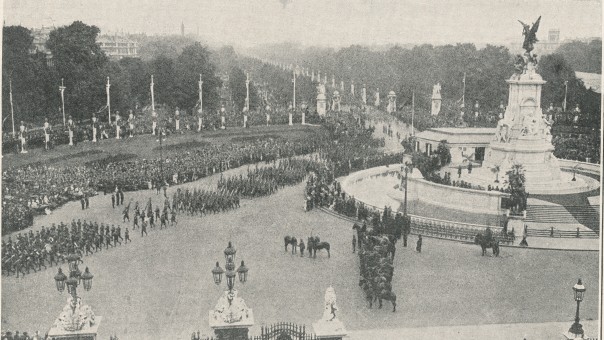
Peace Parade 19th July 1919
The First World War saw casualties on an unprecedented scale (the British Empire alone lost more than 1 million military personnel). Although the fighting ceased on Armistice Day on 11th November 1918 the war did not formally end until the signing of the Treaty of Versailles on 28th June 1919, and the British government decided to hold a victory parade of soldiers marching down Whitehall to celebrate this on 19th July 1919. The Prime Minister, David Lloyd George, decided that a temporary memorial for the troops to salute should be included as part of the parade and he approached Sir Edwin Lutyens to design it. (Lutyens was one of the most well-known architects of the time having designed much of New Delhi; he was also already involved in work with the Imperial War Graves Commission to create memorials in the cemeteries of the battlefields). Lutyens memorial for the Victory Parade was made of wood and plaster and completed in just two weeks.
The Saturday of the Victory Parade was a Bank Holiday and Public Holiday so that everyone could celebrate victory and remember the dead and wounded. The unveiling of the temporary Cenotaph took place on the previous evening and was a quiet, unofficial ceremony to which Lutyens was not invited. Thousands travelled to London overnight to see the Parade and experience the bands and performances in London’s central parks. In the morning King George V issued a message: ‘To these, the sick and wounded who cannot take part in the festival of victory, I send out greetings and bid them good cheer, assuring them that the wounds and scars so honourable in themselves, inspire in the hearts of their fellow countrymen the warmest feelings of gratitude and respect.’ During the Parade 15,000 soldiers and 1,500 officers marched past and saluted the Cenotaph, including General Pershing representing America, Marshal Foch representing France, with Field Marshal Haig and Admiral of the Fleet Beatty representing the British armed forces. The royal family also attended.
British victory march 19th July 1919
From the early days of the war, when casualty figures began to mount, it was decided that the fallen would be buried close to where they fell and the repatriation of the dead was forbidden. After the Victory Parade the temporary Cenotaph unexpectedly became a focus for those who had lost loved ones, a substitute grave for them to visit. For days after the Parade people came to lay wreaths and flowers at the foot of the memorial, an estimated 1.2 million visited during the first week alone.
Four days after the Parade war veteran William Ormsby-Gore, MP for Stafford, suggested in Parliament that a permanent Cenotaph should replace the temporary one; the idea was supported by many other MP’s and so was put to the Cabinet. The following week the idea was taken up by The Times newspaper as hundreds of letters came flooding in in support of a permanent memorial. The Cabinet agreed on 30th July that Lutyens should create a permanent memorial in Whitehall.
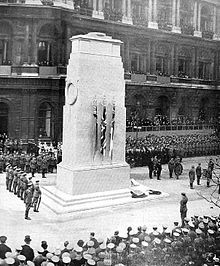
Lutyens made a few minor changes to his design – replacing real wreaths with stone sculptures, and using the subtle curves known as entasis (he had already incorporated this into his design for the Stone of Remembrance to be used in the war cemeteries). Lutyens wanted to replace the flags with sculptures because he thought that the real ones would soon look untidy, but this idea was rejected and real flags are still used today. Construction of the permanent Cenotaph began in May 1920. The design is a rectangular column made of Portland stone with an empty tomb surmounted by a wreath at its summit. The design is rather plain with the intention of focussing the eye and the thought on the tomb and a number of carved wreaths; the only words engraved are The Glorious Dead and the dates of the war. Lutyens Cenotaph is 35 feet (11 m) high and weighs 120 tonnes (120,00 kg.)
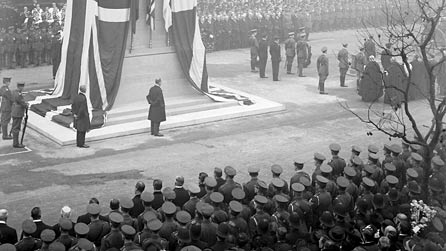
The new monument was unveiled on November 11th 1920 (this time Lutyens was present). The coffin of the Unknown Warrior was taken to his tomb in Westminster Abbey that morning on a route which took it past the Cenotaph. King George V laid a wreath on the coffin before unveiling the Cenotaph, then he acted as chief mourner and followed the gun-carriage of the Unknown Warrior to the Abbey. So many people visited the Cenotaph in the following days that Whitehall was closed to traffic; within a week the flowers lay 10 feet deep and more than 1.25 million people are thought to have paid their respects.
Unveiling the Cenotaph
The Remembrance Service of today has changed little since it was first introduced in 1921, with hymns, prayers, and a two minute silence observed before the laying of official wreaths on the steps of The Cenotaph. The ceremony ends with a march past of war veterans who salute the monument in a poignant gesture of respect for their fallen comrades.
Lutyens’ cenotaph design has been reproduced in other parts of the UK as well as in other countries allied to Britain, including Australia, Canada, and New Zealand. Although he had originally wanted the flags to be carved in stone this was overruled and real flags are still used. Immediately after the unveiling of the Cenotaph the flags on display were a Union Flag, a White Ensign and a Red Ensign on one side, with a Union Flag, a White Ensign, and a Blue Ensign on the other side. On 1 April 1943, an RAF Ensign was substituted for the White Ensign on the west side. The flags which are now displayed (since 2007) represent the Royal Navy, the British Army, the Royal Air Force and the Merchant Navy. The Blue Ensign represents the Royal Naval Reserve, the Royal Fleet Auxiliary, and other government services. In the early days the flags were changed every six to eight weeks so that they could be cleaned, and the flags would be used for 15 months before being replaced. By 1939 the flags needed to be cleaned every six weeks and were washed just twice before being replaced. When the flags are finally removed they are sent to the Imperial War Museum which gives them to accredited organisations.
The White Ensign, Union Flag, and Blue Ensign on the Cenotaph.
Lieutenant Willy Fraser, formerly of the Royal Flying Corps, has been delegated the most dangerous job on the Western Front – a balloon observer hanging under a gasbag filled with explosive hydrogen, four thousand feet above the Ypres Salient, anchored by a slender cable. Swept across enemy lines after his balloon is damaged, Willy is hidden by Belgian farmers, whom he grows close to during his stay. With their aid, he manages to escape across the flooded delta at the English Channel and return to his duties. But once he’s back in the air, spotting for artillery and under attack, Willy is forced to make an impossible decision that threatens the life of the woman he has come to love.
This novel by James Long is divided into two distinct parts. The first finds Willy Fraser in Berlin during the last few days before the outbreak of the First World War and follows him as he makes his way to Belgium keeping just ahead of the rapidly advancing German war machine. This well researched section tells of the heroic stand of a neutral country which fought hard for every inch of land as her army retreated to the final Yser enclave which the Belgians were able to maintain for the long years of war which lay ahead. This stand by a greatly outnumbered and ill-prepared army allowed the French and British the time to strengthen the border and halt the German race for Paris.
Two years later we find Willy Fraser serving as a balloonist, a role which few people know much about. Mr Long’s detailed research of the few first hand accounts of these men (few of them lived long enough to write about their experiences) is the framework on which this novel hangs. Tethered balloons flying at almost a mile high were sitting targets for enemy planes and artillery whilst the balloonists had to combat terrible conditions as they observed the enemy lines and called in attacks onto the big guns which were turning the trenches into desperate killing fields. There were numerous ways for observers to die – failed parachutes, burning up with their balloons, or being cut adrift and coming down behind enemy lines to name but a few – and life expectancy was short. The historical accuracy of The Balloonist draws the reader in, educating on little known aspects of the war without ever seeming to preach.
Added to the historical background of this novel is the story of Willy’s journey into himself, his character and motives which change as he lives through tumultuous times. It is here that I find the one weakness in the story as there are perhaps a few too many co-incidences bringing the main characters together at key moments but this is, after all, fiction so if you are able to suspend belief at times, and enjoy an action packed and pacey ‘boys own’ storyline you will enjoy The Balloonist.
On 23rd August 1939, just days before Germany invaded Poland in the opening moves of the Second World War, the world was surprised to see two sworn enemies – Germany and Russia – sign a Non-aggression Pact in which they agreed not to go to war against each other for the next ten years. For Stalin the treaty meant that Russia could stay on peaceful terms with Germany whilst building up her own military strength; for Hitler it meant that he would be able to invade Poland unopposed. In September Hitler attacked Poland and the country was soon under Nazi control, this meant that Hitler had got what he wanted from the Pact so in June 1941, much to the anger of Stalin, Germany invade Russia with more than 3 million troops. This was the largest invasion in history (in comparison the D Day landings in Normandy saw 156,000 Allied soldiers come ashore). Operation Barbarossa (the attack on Russia) was initially a success with the Russians losing 4,500 planes in just nine days, a number which constituted half of their air force, within six months the Russian army had lost 20,000 tanks. By the end of the year the Germans were within 15 miles of Red Square in the centre of Moscow and a desperate Stalin begged Churchill to send Russia tanks, planes and guns to halt the German progress.
Churchill didn’t like either communism or Stalin, but he knew that Britain would not be able to defeat Hitler alone. So far America was only sending supplies to Europe not troops and so Churchill had no real alternative but to help Stalin in an effort to keep a large part of Germany’s troops occupied in the east rather than freeing them up for an invasion of the British Isles. Churchill knew that to defeat Hitler in Russia would be a colossal undertaking and so he promised Stalin that there would be deliveries of supplies every 10 days. But how would they get there? They could be sent across the Pacific from America and then by train across Russia, or they could go around Africa and then overland from India, but both of these routes would take weeks, if not months. The only realistic route to deliver supplies quickly and regularly would be to go the north of Norway to the Russian ports of Murmansk and Archangel; the problem with that route was that Germany already held Norway so the convoys would have to run the gauntlet of German ships, submarines and planes as well as struggling with the treacherous conditions of the Arctic Ocean. As Churchill said, it should take about 10 days but it would be the worst journey in the world.
The Merchant Navy was delegated to man the convoys. Before the war merchant vessels had brought trade goods to Britain from all parts of the world, but the experienced sailors who served in the Merchant Navy had never signed up for active service during a war. As a non-military fighting force these men – aged from 14 to 70 – were ill-equipped with little more than a long coat, leather boots and balaclava. One of their main jobs whilst the ships were on the arctic run was to clear the ice from the decks so that it didn’t jam up the winches and guns, or build up until the ship became so top-heavy that it would capsize. Most of the ships in the Merchant Navy were old and slow, many dating from the First World War, and they had certainly not been designed for the harsh Arctic Ocean. The brave merchant seamen who took on this task were paid as little as £10 a month, and it was the rule that a sailor’s pay would be stopped the moment his ship sank!
Ice forms on a 20-inch signal projector on the cruiser HMS Sheffield while she is helping to escort an Arctic convoy to Russia
Only 1 of the 103 ships which sailed in the first 12 convoys to Russia was lost and so huge numbers of supplies reached their destination, so much so that in the Battle of Moscow at the end of 1941 75% of the tanks used by the Russians were British made and had arrived via the convoys. As well as tanks the ships cargos included fighter planes, fuel, ammunition, raw materials, and food. Ships would return to Britain either with ballast or some passengers who were mainly survivors of sunken merchant ships, British servicemen and Russian diplomats.
The convoys were co-ordinated by a control centre in Liverpool. At the heart of the convoy were the merchant ships with the supplies, usually travelling in rows eight abreast. Surrounding these were the warships which offered close protection – destroyers, armed trawlers and anti-aircraft ships. The distant protection was provided by heavy cruisers which would be 30 or 40 miles further out to combat any threat from German surface ships – the German ship Tirptz in particular was in Norwegian waters and considered a constant threat. Sometimes there were also one or two submarines offering protection to the convoy. In the summer months as the ice retreated the convoys would take the route from Iceland (usually off Hvalfjörður) north of Jan Mayen Island to Archangel, but as winter approached and the pack ice increased the convoys would take a more southerly route to Murmansk. From February1942 convoys also assembled and sailed from Loch Ewe* in Scotland.
Loch Ewe during the war
As if the threat of German attacks wasn’t enough the merchant convoys also had to contend with the severe weather conditions of the Arctic Ocean – fog, freezing temperatures which went down to -60, gales with winds of up to 100mph, mountainous waves, strong currents, drift ice, and the difficulties of navigating so close to the North Pole all meant that the loss rate for ships was higher than any other Allied convoy route. The journey meant days of heightened tension for the sailors, a particular fear was that your ship might sink because if it did there was little hope of rescue as you would only be able to survive for minutes in the freezing waters and the other ships in the convoy needed to keep moving as a unit and so often couldn’t stop to help.
The most infamous convoy was PQ17 which had the distinction of being the first significant joint Anglo-American operation of the war, was the largest arctic convoy to sail, and was also one of the biggest naval disasters of the 20th century.
The convoy of 35 ships in PQ17 assembled at Hvalfjord, Iceland, at the end of June 1942. One ship grounded when leaving harbour and another was damaged by floating ice and had to withdraw, but the remaining 33 merchant ships headed east for Russia on 27th June. The 33 British and American merchant ships were carrying enough tanks and munitions to equip an army of 50,000 men. By this time Germany had realised that the convoys had to be stopped if they were ever to defeat Russia and so Hitler had increased the number of planes, ships and submarines in Norway. British command recognised the danger and gave PQ17 a massive armed escort – a close escort of 19 ships and a cruiser force of 7 further out. The British were also put in charge of this joint Anglo-American force as they were the only ones with the experience of Arctic convoys. The ships set out at their top speed on a voyage that was expected to take about 10 days, and for the first 7 days there were no major incidents as any U-boats that came close were driven away by the destroyers, and the anti-aircraft ships saw off any German planes. (Film star Douglas Fairbanks Jr served onboard one of the escort ships for PQ17).
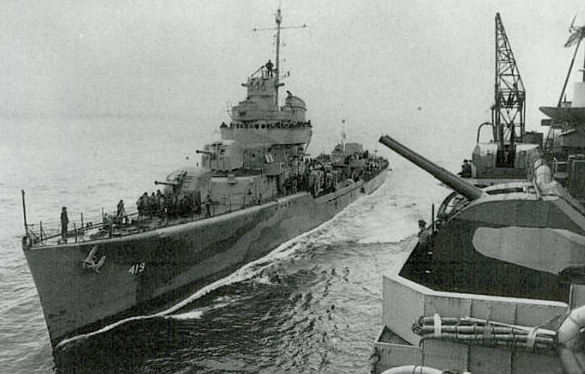
USS Wainright
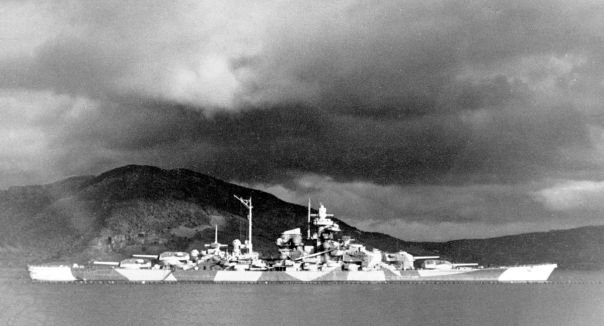
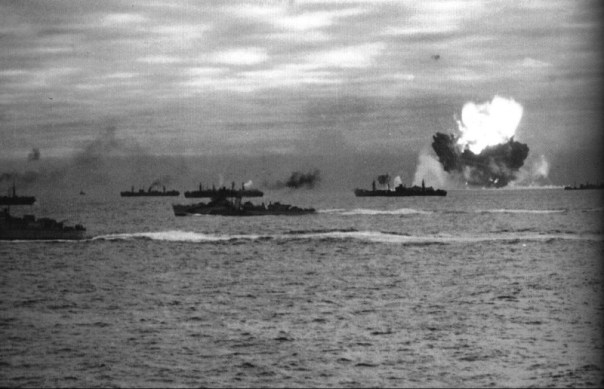
But the massive convoy’s luck did not hold out and disaster struck on 4th July at 8.20 pm when the Germans launched a full assault. The first wave of the attack came from a flight of Heinkel 111 torpedo bombers. The USS Wainright broke ranks, turned away from the convoy and headed off alone to try to shoot down the planes; the heavy fire they gave caused most of the German planes to drop their torpedoes too early or turn back. After this initial success another more persistent wave of bombers came and within a short time 3 merchant ships had been hit with a loss of just 3 German planes. At the same time Naval HQ in London received news from Swedish intelligence that German surface ships had left Norway and were heading for PQ17, they reported that the Tirpitz was with them. The Tirpitz was the most advanced warship in the world with massive armour yet it was fast and had a huge number of colossal guns. The ships protecting the convoy could fire their shells a distance of 16 miles, but the Tirpitz’s guns could hit them from 22 miles away. The convoy stood no chance against such a ship.
Tirpitz
First Sea Lord Sir Dudley Pound (who was suffering with a brain tumour) had to make a decision – should he order PQ17 to turn back? If he did so it was possible that without the supplies Russia could lose the war, but if he ordered the convoy to continue it was likely to be destroyed and Russia could still lose the war. Pound decided that the Cruiser escort should turn around and return to Britain because they couldn’t take on the Tirpitz and the British could not afford to lose so many ships. The convoy itself should be ordered to disperse and head for Russian ports on their own. His theory was that if the merchantmen remained together the Tirpitz would be able to sink them all, but if they scattered at least some of them should get through. The messages from London created a sense of panic amongst the convoy who were not sure what to do. When the cruiser escort turned around Captain Broome was left in charge of the close escort and took overall control of the convoy, but with the merchant ships scattering in all directions he believed that it would be impossible to protect them so he turned around too, thinking that he could perhaps help the cruisers fight the Tirpitz. The merchant ships were left alone with no protection and 800 miles still to go.
Sir Dudley Pound
The Germans began their main attack on PQ17 with a force of 133 bombers, 12 torpedo planes and 12 U-boats; the unprotected ships were sitting ducks and it was a disaster for the convoy. The attack continued for 2 days with 12 merchant ships lost in the first 24 hours; and during that time there was still no sign of the Tirpitz. First Sea Lord Pound was eventually informed that the Tirpitz was still at anchor in Norwegian waters, there had been no need to abandon the convoy after all.** This is when the most puzzling decision of all was made, rather than bring the convoy back together Pound, for some unknown reason, said it must remain scattered. That order meant the effective end of PQ17.
It was at this point that the hero of Convoy PQ17 appeared. Captain Gradwell was a volunteer sailor who had been a barrister before the war but was now in command of a trawler which had been converted with a couple of guns and depth charges, and whose crew was mainly fishermen. Gradwell decided that the order to abandon the convoy was so bad that he would disobey it and stay with the scattered merchant ships. He found 3 US merchantmen whose officers agreed to follow his trawler as he led them as far north as possible, intending to hide amongst the ice until the attack was over and then head for Archangel. Gradwell didn’t have the charts he needed for the area and so was using a Times Handy Atlas! And he only had a certificate to captain a leisure cruiser in coastal waters! Gradwell took the ships as far north as he could, only stopping when the ice was too thick to go further, then he ordered the crews to paint the ships white and cover the decks with white sheets and tablecloths. At least one German plane flew over but didn’t see the camouflaged ships against the ice. Gradwell then ordered the tanks on deck to be loaded and pointed south to where any enemy would come from. And there the ships waited whilst chaos reigned in the south. When a fog came down Gradwell decided that it was time to try to escape and led the ships back south. On the morning of 25th July, two weeks overdue, Gradwell and the three ships he was escorting arrived in Archangel. Only 11 out of 33 of the convoy’s ships reached the Soviet Union, and 153 men lost their lives on those that were sunk. Captain Gradwell was awarded the DSC for his actions on Convoy PQ17.
Arctic convoys continued to the end of the war and the mistake of scattering the ships in the face of a German attack was never made again; but PQ17 was not the only one of the 78 arctic convoy missions to suffer losses. A total of 104 Allied merchant ships and 18 warships were sunk with the arctic convoys; over 3,000 personnel were killed. Russia also lost 30 merchant ships and an unknown number of personnel. Germany lost 5 surface warships, 31 submarines, and an unknown number of aircraft in her attacks on the convoys.
Over four million tons of supplies were delivered to the Russians by the Arctic convoys including tanks, aircraft, trucks, tractors, telephone wire, railway engines, sheet metal, food, and boots. The supplies were not as vital towards the end of the war but the convoys continued as a symbolic show of unity amongst the Allies.
The role which the convoys played in keeping Russia in the war cannot be overstated, but because they were Merchant Navy those who crewed the merchant ships did not receive a medal at the end of the war. It wasn’t until March 2013 that the role they played was finally recognised and they were awarded the Arctic Star.
*RUSSIAN ARCTIC CONVOY MUSEUM near Loch Ewe in Scotland. Please take a look at their website, and call in if you are ever in the area – it is a fascinating museum. There is some interesting video of Loch Ewe here (filmed in 2012 so some information about the museum and medal is out of date).
**Aside from an abortive attempt to intercept PQ12 in March 1942 and a raid on Spitsbergen in September 1943, the Tirpitz spent most of the war in the Norwegian fjords. She was repeatedly attacked by Allied forces and was finally sunk in Tromsø fjord on 12th November 1944 by the RAF.
An empowering, thought-provoking feminist novel that will change the way you see the world. Perfect for fans of Elizabeth Day, Claire Fuller and Joanna Cannon.
1968. Veronica Moon, a junior photographer for a local newspaper, is frustrated by her (male) colleagues’ failure to take her seriously. And then she meets Leonie on the picket line of the Ford factory at Dagenham. So begins a tumultuous, passionate and intoxicating friendship. Leonie is ahead of her time and fighting for women’s equality with everything she has. She offers Veronica an exciting, free life at the dawn of a great change.
Fifty years later, Leonie is gone, and Veronica leads a reclusive life. Her groundbreaking career was cut short by one of the most famous photographs of the twentieth century.
Now, that controversial picture hangs as the centrepiece of a new feminist exhibition curated by Leonie’s niece. Long-repressed memories of Veronica’s extraordinary life begin to stir. It’s time to break her silence, and step back into the light.
The Woman in the Photograph takes the reader on a journey exploring the development of feminism in the UK from the 1960’s to the present day. It is innovative, thought-provoking, imaginative and moving. By following the career of Veronica we live fifty years of social history, charting the changing roles of women and discovering how far they have come yet how far they still have to go. The ‘descriptions’ of photographs that Veronica takes at key moments in feminist history give a real snapshot (pun intended!) of a particular time and place and are a testament to the authors descriptive writing and the clarity of her well-drawn characters.
Ms Butland has conducted in depth research for this novel which is crammed with information yet is never wordy or didactic, instead the reader experiences those years through the eyes of three very different women – Veronica, Leonie, and Erica – and is drawn into their lives and loves, their hopes and fears, their successes and failures. The Woman in the Photograph is unapologetic in this focus on the individual in the feminist movement but should not be seen as a simple history, it is so much more than that. This novel is also about the human heart with love and loss at its centre.
I must admit that when I first picked up The Woman in the Photograph I was not sure if it was for me, fearing that it might attempt be too moralistic and push feminism on the reader, but that is not the case. If you take the trouble to pick up this book you will certainly learn about the history of feminism but also enjoy a jolly good read.
The Woman in the Photograph is available on Amazon
Coco Chanel is a name recognised the world over as the French fashion designer and business woman who founded the global brand which carries her name. There have been questions since the end of the Second World War about her links with Germany during the conflict, particularly her liaison with German diplomat Hans Gunther von Dincklage. So how much of this was true and how much mere rumour?
Gabrielle ‘Coco’ Chanel was born in 1883 to a poor family; her mother died of TB when she was 12 and her father sent her and her two sisters to live in an orphanage at the convent of Aubazine where Chanel learnt how to sew, something which was to influence the whole of her life. When she was 18 the young Gabrielle moved to a Catholic girls boarding house in Moulins where she earned her living as a seamstress; she also liked to sing in cabaret, and it was whilst doing this that she got the nickname ‘Coco’.
Hugh Grosvenor, Duke of Westminster, and Coco Chanel
In the years between the wars Chanel had a couple of love affairs with wealthy and influential French aristocrats. She always wanted to be at the height of fashion and so designed her own hats; from that humble beginning she moved on to open her own boutiques in Deauville (which was the fashion centre of the ‘Roaring Twenties’) and Biarritz. Her boutiques, funded by her wealthy lovers, sold hats and fashionable clothing. The poor young girl who grew up in a Catholic orphanage now mixed with politicians and aristocrats from across Europe including Hugh Grosvenor, the Duke of Westminster, and it was at this time that she met and became friends with Winston Churchill.
In 1924, Chanel was looking to expand her empire and reach by putting her new perfume on the global market but she needed financial backing to do this. Chanel was introduced to Jewish businessmen and brothers Pierre and Paul Wertheimer who invested heavily in Parfums Chanel, taking the majority of the stock for themselves and another business partner whilst leaving Chanel with just a 10% stake in the company. As her company grew Chanel met and fell in love with Paul Iribe and, during their relationship, she financed his controversial journal Le Temoin (The Witness) which was an extremely xenophobic, ultra-nationalist, and racist publication. Chanel was heartbroken when Iribe died of a heart attack.
Paul Wertheimer
At the outbreak of war in September 1939 Coco Chanel surprised everyone by closing her businesses and putting her 2,500 employees out of work. As the German Blitzkrieg forged its way through northern Europe Chanel moved to the Pyrenees for safety whilst the Jewish Wertheimers chose to go into exile, but before doing so they placed Parfums Chanel in the hands of a trusted friend, the Christian business man Felix Amiot. The Wertheimer’s ship sailed for New York just a few days before France fell to the Germans, and as they moved further away from France Chanel returned to Paris where she moved into the Ritz hotel which was the place where most of the highest ranking
Pierre Wertheimer
German military staff preferred to stay, and where she had an affair with Hans Gunther von Dincklage.
Chanel still felt cheated by the Wertheimers and resented the fact that she only held a 10% share in her famous perfume; when she heard that the brothers were now producing No 5 in America she was furious and wanted to get revenge. Chanel decided to use the Aryanisation laws to take control of the company – after all she was Aryan whilst the Wertheimer’s were Jewish and so, by law, had no rights of ownership over Parfums Chanel. On 5th May 1941 Coco wrote to the government department charged with disposing of Jewish financial assets to say that Parfums Chanel was still the property of Jews who had legally abandoned it. She claimed that she had never received a fair share of the profits from the company and felt that the department could now compensate her for that. In the initial legal review Amiot was able to show that he had gained control of the company from the Wertheimers through legal means, but the company was still declared Jewish, partly thanks to a friend of Chanel’s who sat on the board. The next step for Chanel was to write to the Commissioner General for Jewish Questions asking for all shares and control of all the Wertheimer’s perfume companies (not only Chanel) be given to her. Amiot had an aviation business before the war and was now working with Junkers to provide planes for the Germans (he used this link as a means to save his workers from being sent to Germany in forced labour units whilst at the same time helping to finance a resistance group working with the British). When it came to choosing between a man supplying bombers for the Luftwaffe and a female fashion designer the Germans found in Amiot’s favour.
Felix Amiot
This was a resounding defeat for Coco Chanel, and it was at this point that she appears to have begun working for von Dincklage at the Abwher (the German intelligence service in which von Dincklage was highly placed in Paris) in return for his help in trying to regain control of Parfums Chanel. The influential German agent who was also her lover gave Chanel the Agent number F7124 and code name Westminster (after her lover from before the war). It was late 1943 and the Germans were losing ground on all fronts so von Dincklage first took Chanel to Berlin to meet Walter Shellenberg who was head of the SD, the Nazi party’s intelligence agency. Schellenberg was Himmler’s right-hand man and wanted to negotiate peace with the British whilst still continuing the war against Russia and America. In November 1943 Chanel was sent to Madrid on Operation Modelhut (Operation Model Hat) to use her connection with Churchill to convince him to end the war on terms set by Hitler. Chanel and Churchill had been close friends in the 1920’s so she had every expectation that she would at the very least be able to have personal communications with him. However, Chanel’s close friend, Vera Lombardi , also knew Churchill and informed the British that Chanel was a Nazi agent, effectively ending any chance that Coco had of success in her mission – Chanel wrote a number of letters to Churchill, but as she had been denounced he didn’t answer any of them. Coco returned to Paris in January 1944.
Chanel’s relationship with von Dincklage was no secret, and the Free France Secret Services seem to have known about the work that she was doing for him. When Paris was liberated on 25th August 1944 citizens sought out any collaborators, particularly women who had had relationships with the Germans. Just four days later, on 29th August 1944 two FFI resistance fighters arrested Chanel at the Ritz and she was questioned by the Free French Purge Committee about her work as a German agent. It has been implied that Churchill remembered their previous friendship and intervened with de Gaulle, for she was released after just two hours questioning, and in September 1944 Chanel re-joined von Dincklage in Switzerland. In 1949 Chanel once more faced questions about how she used the anti-semite laws to try to gain control of Parfums Chanel from the Wertheimer brothers, her relationship with von Dincklage, and her work for the Abwher, but denied all accusations against her. Chanel continued to live with von Dincklage until the mid 1950’s. She returned to Paris in 1954 and reopened her couture business with help from her friend Pierre Wertheimer, the man she had sought to destroy during the war but who was now reconciled to her (Amiot had returned the company to the Wertheimers at the end of the war). The fashion business of Coco Chanel prospered as never before.
Coco Chanel, who died in 1971, is one of a number of French artists who were accused of collaborating with the Nazis during the Second World War – including Maurice Chevalier, Jean Cocteau, Sacha Guitry and Edith Piaf. So what was she? A shrewd businesswoman and opportunist, or an active collaborator? It was not until 2014 when French intelligence agencies declassified a number of documents that it was finally confirmed that Coco Chanel had worked as a spy for the Germans during the Second World War. On example from the French Defense Ministry’s archives showed that France’s secret services had suspicions about Chanel’s Nazi connections at the time:
A source from Madrid informs us that Madame Chanel, in 1942-1943, was the mistress and agent of Baron Gunther Von Dincklage. Dincklage was the attaché to the German Embassy in Paris in 1935. He worked as a propagandist and was a suspected agent.
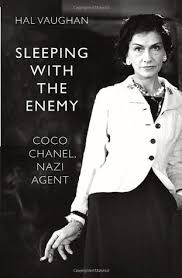
Another example comes from Hal Vaughan’s book ‘Sleeping with the Enemy: Coco Chanel’s Secret War’. He spent a lot of time reviewing American, German, French, and British archives, and says that Abwehr Agent 7124 whose code name was ‘Westminster’ went on missions around Europe to recruit new agents for the Third Reich, travelling to Spain with Baron Louis de Vaufreland, a Frenchman who worked as an agent for the Germans; his job was to find people who could be recruited or coerced to spy for Germany, and as Chanel knew the British ambassador to Spain she went with him as cover, and to offer him introductions.
After the publication of Hal Vaughan’s book a spokesperson for the Chanel company said that “Such insinuations cannot go unchallenged. She would hardly have formed a relationship with the family of the owners (the Wertheimers) or counted Jewish people among her close friends and professional partners such as the Rothschild family, the photographer Irving Penn or the well-known French writer Joseph Kessel had these really been her views. It is unlikely…We also know that she and Churchill were close friends for a long time. She apparently approached him about acting as an intermediary between the Allies and the Germans for a peace settlement known as Operation Modelhut. No one knows for sure exactly what happened or what her role was to be. There are several different versions and it will no doubt always remain a mystery.”
So I leave you with a question…Did Coco Chanel really support the Nazi cause or did she just do what she thought was necessary to retain her company in a time of war? Two things remain of interest to me. The first is her pre-war funding of Le Temoin which appears to show anti-semitic tendancies on her part. The second is the details of her relationship with General Walter Schellenberg who was chief of the German intelligence agency Sicherheitsdienst (Security Service) and the military intelligence spy network Abwehr (Counterintelligence) in Berlin and who sent Chanel on her mission to Madrid. Schellenberg was tried by the Nuremberg Military Tribunal at the end of the war and sentenced to six years’ imprisonment for war crimes; he was released in 1951 because he had an incurable liver disease. It is interesting to note that Chanel paid for his medical care and living expenses, supported his wife and family, and paid for Schellenberg’s funeral when he died – make of that what you will.
 January 1069. Less than three years have passed since Hastings and the death of the usurper, Harold Godwineson. In the depths of winter, two thousand Normans march to subdue the troublesome province of Northumbria. Tancred a Dinant, an ambitious and oath-sworn knight and a proud leader of men, is among them, hungry for battle, for silver and for land.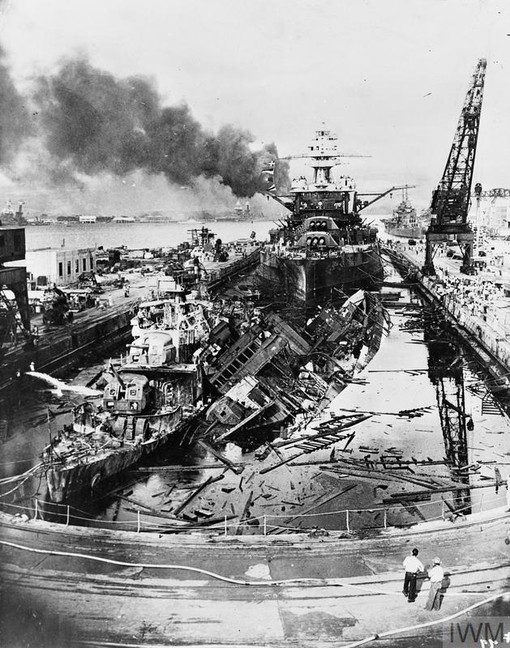






 ‘Powerful… Poignant, bleak and haunting, this is a small masterpiece’ Sunday Mirror
 Most people are familiar with the Cenotaph in London’s Whitehall which is the focus of Britain’s National Service of Remembrance every November and commemorates British and Commonwealth servicemen and women who died in the two World Wars and later conflicts. The ceremony is televised and is attended by Prince Charles (representing the Queen), religious leaders, politicians, representatives of state and the armed and auxiliary forces, all of whom gather to pay their respects to those who gave their lives defending others. It is a well-known and well-loved ceremony, yet many people are unaware of the history of the Cenotaph and how it came to be where it is.

 Lieutenant Willy Fraser, formerly of the Royal Flying Corps, has been delegated the most dangerous job on the Western Front – a balloon observer hanging under a gasbag filled with explosive hydrogen, four thousand feet above the Ypres Salient, anchored by a slender cable. Swept across enemy lines after his balloon is damaged, Willy is hidden by Belgian farmers, whom he grows close to during his stay. With their aid, he manages to escape across the flooded delta at the English Channel and return to his duties. But once he’s back in the air, spotting for artillery and under attack, Willy is forced to make an impossible decision that threatens the life of the woman he has come to love.





 An empowering, thought-provoking feminist novel that will change the way you see the world. Perfect for fans of Elizabeth Day, Claire Fuller and Joanna Cannon.


 Chanel’s relationship with von Dincklage was no secret, and the Free France Secret Services seem to have known about the work that she was doing for him. When Paris was liberated on 25th August 1944 citizens sought out any collaborators, particularly women who had had relationships with the Germans. Just four days later, on 29th August 1944 two FFI resistance fighters arrested Chanel at the Ritz and she was questioned by the Free French Purge Committee about her work as a German agent. It has been implied that Churchill remembered their previous friendship and intervened with de Gaulle, for she was released after just two hours questioning, and in September 1944 Chanel re-joined von Dincklage in Switzerland. In 1949 Chanel once more faced questions about how she used the anti-semite laws to try to gain control of Parfums Chanel from the Wertheimer brothers, her relationship with von Dincklage, and her work for the Abwher, but denied all accusations against her. Chanel continued to live with von Dincklage until the mid 1950’s. She returned to Paris in 1954 and reopened her couture business with help from her friend Pierre Wertheimer, the man she had sought to destroy during the war but who was now reconciled to her (Amiot had returned the company to the Wertheimers at the end of the war). The fashion business of Coco Chanel prospered as never before.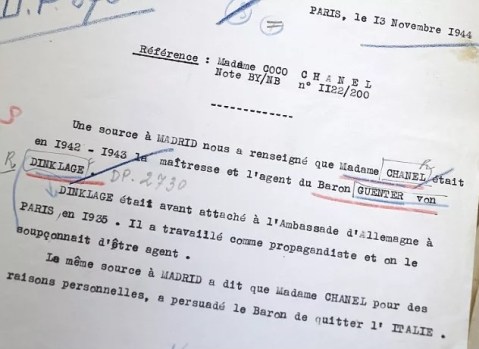
 Another example comes from Hal Vaughan’s book ‘Sleeping with the Enemy: Coco Chanel’s Secret War’. He spent a lot of time reviewing American, German, French, and British archives, and says that Abwehr Agent 7124 whose code name was ‘Westminster’ went on missions around Europe to recruit new agents for the Third Reich, travelling to Spain with Baron Louis de Vaufreland, a Frenchman who worked as an agent for the Germans; his job was to find people who could be recruited or coerced to spy for Germany, and as Chanel knew the British ambassador to Spain she went with him as cover, and to offer him introductions.

