Tag Archives: Book reviews

Recommended Read – House of the Hanged by Mark Mills

France, 1935: At the poor man’s end of the Riviera sits Le Rayol, a haven for artists, expatriates and refugees. Here, a world away from the rumblings of a continent heading towards war, Tom Nash has rebuilt his life after a turbulent career in the Secret Intelligence Service. His past, though, is less willing to leave him behind. When a midnight intruder tries to kill him, Tom knows it is just a matter of time before another assassination attempt is made. Gathered at Le Rayol for the summer months are all those he holds most dear, including his beloved goddaughter Lucy. Reluctantly, Tom comes to believe that one of them must have betrayed him. If he is to live, Tom must draw his enemy out, but at what cost to himself and the people he loves…?

House of the Hanged is a thriller with the majority of the story set in the mid-1930’s when the threat of war hangs over Europe once more, but no one is sure whether it will be fascist Germany who is the enemy, or communist Russia, or maybe a combination of the two.

The novel begins almost twenty years earlier in revolutionary Russia with the main character, Tom, failing to save the life of the woman he loves. The story swiftly moves on to the years leading up to the outbreak of the Second World War where Tom has given up working for British Intelligence and settled down in the south of France. As the novel progresses we learn more about Tom’s work, how it affected him, and how he is now trying to redeem himself, put the past behind him, and enjoy a life of peace. Each year Tom invites friends to join him at his villa for the summer; he also extends a welcome to refugees, particularly from Russia, as though his efforts to help them may in some way atone for not saving his love. After the thrilling opening the pace of the novel slows as we settle into the relaxed lifestyle of cocktail parties, sailing, swimming etc. in the south of France, but there is already a feeling that this year will not be like those which have gone before. When an attempt is made on Tom’s life the pace quickens again as he begins to question those around him – one of the people he is close to, perhaps someone he loves, has betrayed him.

Mr Mills has created a cast of well-drawn and believable characters in this novel, and the reader will enjoy learning about them and how they could be involved in the attempts to kill Tom. Is the threat to him linked to the current political climate, or has his past in Russia finally caught up with him? (Don’t worry, no spoilers here!) Tom is so unsure of the people around him that he keeps the danger to him a secret; all is calm on the surface, but the author has deftly created an undercurrent of fear and suspense which draws the reader in, helped in no part by his skilled writing, particularly in dialogue. Mr Mills has obviously researched this period of European history and has therefore been able to contrast the relaxed lifestyle of a particular social group on the French Riviera with the tension of a continent edging ever closer to all-out war. He has an evocative style which leaves the reader feeling immersed in a particular place and time – it is almost possible to feel the heat of the Mediterranean sun, the coolness of the water and the everchanging breeze – yet, at the heart, this is a well-paced cat and mouse thriller in which the pace is not slowed by the historical detail.

House of the Hanged is a classic spy story which would make a great holiday read for anyone who likes historical fiction, mysteries and intrigue. I will certainly be trying other books by this author.

House Of The Hanged can be found on Amazon

You can find out more about Mark Mills and his work here

You can find more of my Recommended Reads here

Belgravia by Julian Fellowes

Julian Fellowes’s Belgravia is the story of a secret. A secret that unravels behind the porticoed doors of London’s grandest postcode. Set in the 1840s when the upper echelons of society began to rub shoulders with the emerging industrial nouveau riche, Belgravia is peopled by a rich cast of characters. But the story begins on the eve of the Battle of Waterloo in 1815. At the Duchess of Richmond’s now legendary ball, one family’s life will change for ever.

Right from the start Belgravia immerses the reader in life in Victorian times with its detailed descriptions of two families. The initial scenes at a grand ball on the eve of Waterloo cleverly introduce the families who will become the main protagonists two decades later, as well as giving an initial insight into a society where class and position were all important. But things were changing in the nineteenth century, and this novel deftly portrays the currents of prejudice faced by wealthy self-made families when they came into contact with those with inherited wealth. This conflict is the backdrop to a story of love and loss, hope and fear, prosperity and debt, and as such it draws us in.

As always, Mr Fellowes has created a cast of characters who are all too human, with all the strengths and foibles which we possess ourselves. We can feel sympathy for some whilst others draw feelings of anger or even contempt from us as they live life in their ivory towers, expecting everything but giving nothing in return. The detailed research conducted by the author places these characters in an authentic historical setting where such behaviour was the norm, and it is a testament to skilled writing that we see the events of the novel through the eyes of Victorians and not our own with our two hundred years of hindsight. Belgravia immerses us in the past with its descriptions of houses, parties, costumes and transport of a bygone age; I found the description of the development of central London and its architecture during that period particularly interesting.

As with Downton Abbey Mr Fellowes cleverly interweaves the lives of the wealthy with those of their servants creating a novel which is well-paced with interesting plot twists to keep the reader wanting to find out more. With a deft touch the author gives us light romance, humour, mystery, suspense, scandal, conflict, and murderous intent. Belgravia is a classic love story which would appeal to anyone who loves books in a similar style to that of Jane Austin.

Mr Fellowes is able to bring the past alive for us is a way which helps us to understand the social and political conflicts of a time which, in some ways, is not too different from our own where reputation is all important for many people. If you like historical fiction, and enjoyed Downton Abbey, then I can pretty much guarantee that you will enjoy Belgravia.

Belgravia can be found on Kindle

You can find out more about Belgravia here

You can find more of my Recommended Reads here

The Orphan’s Tale by Pam Jenoff

(New York Times Bestseller)

In Nazi-occupied Holland, seventeen-year-old Noa snatches a baby from a train bound for the concentration camps, fleeing with him into the snowy wilderness surrounding the train tracks.

Passing through the woods is a German circus, led by the heroic Herr Neuhoff. They agree to take in Noa and the baby, on one condition: to earn her keep, Noa must master the flying trapeze – under the tutorage of mysterious aerialist, Astrid.

Soaring high above the crowds, Noa and Astrid must learn to trust one another…or plummet. But with the threat of war closing in, loyalty can become the most dangerous trait of all.

In this novel Noa, a Dutch teenager who falls pregnant after a one-night stand with a German soldier, is disowned by her family and forced to give up her baby. She later comes across a train pulling a cattle truck full of Jewish babies en-route to a concentration camp, and impulsively takes a child – partly because of her horror at the situation and partly because of the loss of her own child which has left her feeling guilty and bereft. Noa gets lost in a snow storm and expects to die, but is rescued by a travelling circus where she makes a strange alliance with Astrid who has her own complicated history as a Jew who had once been married to a German officer. The premise of this story may seem far-fetched but, surprisingly, it is based on a number of true stories from the Second World War. In her notes at the end of the novel Ms Jenoff explains how she came across two stories in the Yad Vashem archives whilst doing research for her job as a diplomat for the U.S. State Department handling Holocaust issues in Poland. The first story was an account of a boxcar full of babies being sent to a concentration camp, the second was the story of a German circus which had sheltered Jews during the war (the owner, Adolf Althoff, was named Righteous Among The Nations by Yad Vashem). The author has taken these stories and woven them together to create a fictional circus with characters and incidents which give us a glimpse of the fear and hardship of those who put humanity above nationality during one of the darkest periods of the 20th century.

Using parallel narratives Ms Jenoff tells an inspiring story of two very different women brought together by war; characters who are believable because they are so flawed – capable of generosity and selflessness at times, and at other times quite reckless and selfish; women who are changed for the better by the tragedies they have to endure. I must admit that I found Noa’s almost instant love for Luc, and his for her, rather improbable; for me this is the weakest part of the novel but, setting that aside, it does help the author to explore one or two other themes connected to war and conflict, particularly how a family (in this case Luc’s) can be divided by their beliefs and by what they feel is the best way for them to protect the people around them. Noa also seemed rather reckless at times as she knowingly did things which could jeapordise the safety of others but, having said that, one must remember that the character is just seventeen years old and I’m sure that the characteristic traits of a teenager could not be totally surpressed even during a time of war! The focus of this novel is on the relationship of these two women rather than the war itself, and I find this to be one of the strengths of the book. The two women journey from jealousy and suspicion to a grudging respect, and then even love for each other.

Ms Jennoff has also shown a detailed knowledge of circus life in her writing. The atmosphere of the circus ring is vividly evoked – the excitement and glamour as seen from the perspective of the customers. Yet this is well contrasted with life behind the scenes – the shabbiness, the hard work, the lack of privacy, the monotony. The author also conveys how life became much more difficult for German circuses during the war as restrictions were placed on them by the Nazis, yet the determination that ‘the show must go on’ shines through, particularly as the circus brings a feeling of normality and escapism to the people of towns and villages living under German occupation.

‘The Orphan’s Tale’ has a well-structured plot which is well paced with the tension rising steadily to the ultimate climax in the big top. Interestingly the pivitol role is a baby who has no words to speak and no actions which influence the tale; the purpose of his character is, in my view, to be a symbol for all those who were victims of the Nazis. The child represents every Jew, or gypsy, or homosexual, or disabled person taken by the regime; it doesn’t really matter who he is or where he came from, the underlying current of this novel is that he should survive to tell the tale and to live a life denied to so many others. ‘The Orphan’s Tale’ is historical fiction with a focus on how ordinary people survive during times of conflict and upheaval rather than on the key events of the war. If you are fond of character driven  historical novels you will probably enjoy this.

The Orphan’s Tale can  be found on Amazon

You can find out more about Ms Jenoff here

You can  find more of my Recommended  Reads here


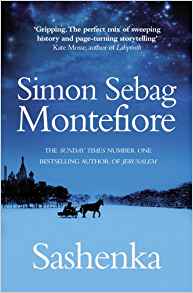
Sashenka by Simon Sebag Montefiore

Winter, 1916. In St Petersburg, snow is falling in a country on the brink of revolution. Beautiful and headstrong, Sashenka Zeitlin is just sixteen. As her mother parties with Rasputin and her dissolute friends, Sashenka slips into the frozen night to play her role in a dangerous game of conspiracy and seduction.
Twenty years on, Sashenka has a powerful husband and two children. Around her people are disappearing but her own family is safe. But she’s about to embark on a forbidden love affair which will have devastating consequences.

Sashenka’s story lies hidden for half a century, until a young historian goes deep into Stalin’s private archives and uncovers a heart-breaking story of passion and betrayal, savage cruelty and unexpected heroism – and one woman forced to make an unbearable choice …

Sashenka is a classic historical fiction novel focusing on the lives of a family across generations. Encompassing the story of Russia through the 20th century Mr Montefiore has woven a fascinating tale of the rise and fall of Soviet Russia and its impact on Sashenka, the daughter of a wealthy family, who embraces the message of equality within the communist doctrine. As with all good books in this genre a number of historical figures are featured, and it is their interaction with fictional characters which is so appealing – you can know the history of Russia, but the way it impacts on this fictional family is new to you and, as such, draws you in.

As always, Mr Motefiore has conducted detailed research into the period he is writing about. The description of St Petersburg under the last of the Tsars gives an insight into two very different Russias – high society with its materialism and decadence, coupled with the secret police and their attempts to destroy the fledgling communist party set against the extreme poverty of millions of women and children whose men are sent to fight in the First World War. The novel then leaps forward to the Soviet period under Stalin and focuses on the fear and insecurity of people like Sashenka, people who have been loyal communists from the very beginning yet are just as likely to suffer under Stalin’s mercurial rule. The final section is moving in the way it portrays life after communism, the search of people who lived through difficult times for those they loved and lost, most not expecting any kind of reunion but just wanting to know what happened to their families.

The author of Sashenka has created believable characters who can be idealistic yet brutal, worldly yet naïve, and who it is easy to sympathise with. This is not a comfortable novel to read, at times it can be quite brutal, but to omit such sections would give a false picture of those times in Russia and do a great disservice to the real people on whose lives these fictional characters are based. The style of Mr Montefiore’s writing is clear and precise at times but can then switch to a description of deep love and passion, whether between a man and woman or a woman for her children, and as such the book has a great emotional impact.

Sashenka is a novel full of plot twists and turns, it is well-paced and vivid, complex and passionate, and incredible evocative of time and place with its accurate historical backgound; in all a gripping read which I would recommend to anyone with a love of historical fiction or of Russia.

Sashenka can be found on Amazon

You can find out more about Simon Sebag Montefiore here

You can find more of my Recommended Reads here

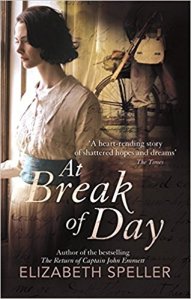
Recommended Read – At Break Of Day by Elizabeth Speller

In the summer of 1913, the world seems full of possibility for four very different young men.
Young Jean-Baptiste dreams of the day he’ll leave his Picardy home and row down-river to the sea.

Earnest and hard-working Frank has come to London to take up an apprenticeship in Regent Street. His ambitions are self-improvement, a wife and, above all, a bicycle.

Organ scholar Benedict is anxious yet enthralled by the sensations of his synaesthesia. He is uncertain both about God and the nature of his friendship with the brilliant and mercurial Theo.

Harry has turned his back on his wealthy English family, has a thriving business in New York and a beautiful American wife. But his nationality is still British.

Three years later, on the first of July 1916, their lives have been taken in entirely unexpected directions. Now in uniform they are waiting for dawn on the battlefield of the Somme. The generals tell them that victory will soon be theirs but the men are accompanied by regrets, fears and secrets as they move towards the line.

1st July 1916 will always be remembered as the day that the Battle of the Somme began, a day of appalling loss of life in the midst of terrible confusion. At Break Of Day is the story of what led four young men to be there on the Somme on that day, and what happened to them. As you begin to learn about these young men you discover why they joined up and what led them, inexorably, to be in that place at that time; and as you read you know that, statistically they will not all survive to the end of this story.

Ms Speller introduces us to four very different young men, giving each his own distinctive voice in the narrative and crafting believable characters whom it is easy to sympathise with. It takes great skill to write about four main characters using slightly different styles in a way that makes them believable and yet very distinct for the reader, so avoiding any possible confusion. As the story moves towards its climax the lives of the protagonists cross briefly and often unknowingly. This had the potential to feel contrived and weaken the story line, but the author’s deft handling of the narrative made it all seem so natural – after all these four disparate characters are no different to those thousands of young men from so many different places and backgrounds who did, in reality, find themselves in that same place on that same day with such tragic consequences.

Many of us know about the First World War from documentaries, photographs and the poems written in the trenches, and At Break Of Day certainly evokes that sense of a landscape of mud and craters, barbed wire and fortified positions, horror and despair. I felt it was a clever plotline for Ms Speller to have her French soldier, Jean-Baptiste, growing up on the banks of the Somme as we see how the beautiful pastoral home that he loves is changed beyond all recognition by the terrible destruction of the First World War, and it is not difficult to see this as a metaphore for the way the Battle of the Somme changed men of hope and vitality into wounded and scared men who would never be the same again, if they survived at all.

The final section of this novel brings our characters together on that one fateful day. Here Ms Speller describes the trenches and no man’s land; the officers, soldiers, and medics; the fear and confusion. This section, like the remainder of the novel, is well researched and gives an insight into a little known soldier – the cycle messengers and their folding bicycles which they often carried over the rough terrain as they struggled to deliver orders in a sea of confusion. It is research which truly enhances the novel without ever being heavy or slowing the storyline.

At Break Of Day re-creates for us an image of life at the beginning of the 20th century with all its sense of hope and promise, and then shows how that hope and promise was shattered. It encapsulates the fragmented nature of the battlefield and so evokes some understanding of what it might have felt like to be a soldier during the first day of the Battle of the Somme. It is an intensely moving novel though never sentimental and although it is, finally, about death and destruction, it is also about family and friendships and love. Reading this novel is not always easy but it is something which I would recommend as a reminder to all of the utter futility of war.

At Break Of Day can be found on  Amazon

You can find out more about Elizabeth Speller here

You can find more of my Recommended Reads here

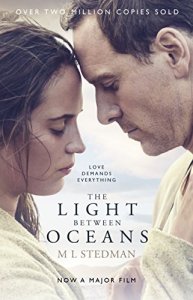
Recommended Read – The Light Between Oceans by M L Stedman

A boat washes up on the shore of a remote lighthouse keeper’s island. It holds a dead man – and a crying baby. The only two islanders, Tom and his wife Izzy, are about to make a devastating decision.
They break the rules and follow their hearts.

After reading the above description I was expecting ‘The Light Between Oceans’ to be a romance/crime thriller, but in fact it turned out to be so much more. Set in Australia in the aftermath of the First World War it is a moving tale of how difficult it was for survivors of that conflict to integrate back into society, how their loved ones were affected by these shadows of men from the trenches, and how those whose husbands, brothers and sons never came back from the war struggled to understand the appalling waste and come to terms with their loss. This sounds like a novel in itself, yet it is purely the backdrop for a story packed with emotional highs and lows and a sympathetic understanding of human psychology.

The main characters of the novel struggle throughout with the concepts of right and wrong, and with putting these into some sort of acceptable order. Is it ever right to break the law to help a loved one who is suffering? Can love conquer all? Can we close our eyes to the suffering we may have unknowingly caused to someone else once that has been revealed to us? You will find yourself sympathising with Tom as he struggles to support the woman he loves, even though it goes against his conscience, and you will also find yourself sympathising with the other main characters too. ‘The Light Between Oceans’ is an incredibly well written novel with believable characters who draw you into their stories. Ms Stedman has great skill as a writer in that she is able to describe the places and environment which are inhabited by her story in a way which makes you feel as though you are there breathing the salty air, feeling the wind and rain etc. whilst at the same time she creates characters, including some very minor ones, whose lives you can fully appreciate and whose driving forces are wholly believable.

The themes of love and loss, fear, anger, and hope are played out against the backdrop of a lighthouse on a rocky island, The Light Between Oceans of the title, and Ms Stedman has clearly put a lot of time and effort into researching the life of a lighthouse keeper in early twentieth century Australia. Her writing is very descriptive and the reader feels an affinity for the small-town community on the mainland as well as the incredibly difficult life of the lighthouse keeper and his family. It is a period of Australian history which I was not familiar with yet, by the end of the book, felt wholly engaged with.

This book is a highly emotional and moving read, I can guarantee that you will go on a roller-coaster ride of emotions and be left pondering some big philosophical questions at the end. ‘The Light Between Oceans’ is certainly a book which will stay with you for some time to come and I heartily recommend it.

The Light Between Oceans can be found on Amazon

You can find out more about M L Stedman here

You can find more of my Recommended Reads here

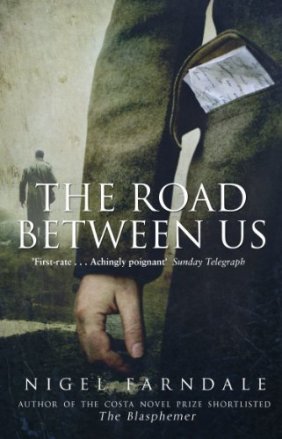
The Road Between Us by Nigel Farndale

1939: In a hotel room overlooking Piccadilly Circus, two young men are arrested. Charles is court-martialled for ‘conduct unbecoming’; Anselm is deported home to Germany for ‘re-education’ in a brutal labour camp. Separated by the outbreak of war, and a social order that rejects their love, they must each make a difficult choice, and then live with the consequences.
2012: Edward, a diplomat held hostage for eleven years in an Afghan cave, returns to London to find his wife is dead, and in her place is an unnerving double – his daughter, now grown up. Numb with grief, he attempts to re-build his life and answer the questions that are troubling him. Was his wife’s death an accident? Who paid his ransom? And how was his release linked to Charles, his father?

As dark and nuanced as it is powerful and moving, The Road Between Us is a novel about survival, redemption and forbidden love. Its moral complexities will haunt the reader for days after the final page has been turned.

‘The Road Between Us’ is a thought provoking novel which touches on subject matter which can make it uncomfortable reading at times. Following the stories of a father and son (one during the Second World War and the other set in the present day) Mr Farndale weaves a picture of love and loss, of discrimination and cruelty, yet also of loyalty and hope. During the war Charles loses his commission for ‘conduct unbecoming’ and spends the rest of the conflict searching for and attempting to rescue his lover, Anselm, who had been deported to Germany for ‘re-education.’ In the present Charles’s son, Edward, is released after eleven years in captivity and is also searching for love and hope, both of which he has buried deeply in order to survive his long period of isolation and deprivation.

Mr Farndale has approached the difficult subjects in his novel with respect and sensitivity. His descriptions of place and character are vivid, making the reader feel as though they are there and drawing them into the story. Even though some of the subject matter is difficult I found myself wanting to read more, to discover what made these characters tick and how they came to terms with aspects of their lives which were so troubling at times. It is the mark of a great novel to keep you reading under such circumstances, the key here being the believable characters who are drawn so sympathetically.

The historical context of ‘The Road Between Us’ has been well researched which gives a depth of plausibility to the story – the ‘re-education’ workcamps, the treatment of homosexuals etc. The dialogue has an authentic ring which brings the characters to life, dialogue which reflects the authors understanding of human psychology and encourages the reader to look deeper into themselves. All in all, this is a very moving story and compelling reading; it has a great narrative, the feel of both thriller and love story, intelligent and literary writing.

If you like historical novels which explore the human condition with depth and sensitivity then I heartily recommend ‘The Road Between Us’ to you.

(I have deliberately avoided going into details of this story as it would be difficult to do so without spoiling it for you!)

‘The Road Between Us’ can be found on Amazon

You can find out more about Nigel Farndale on his website 

You can read more of my Recommended Reads here

Recommended read – ‘A Town Like Alice’ by Nevil Shute

a-town-like-alice

Jean Paget is just twenty years old and working in Malaya when the Japanese invasion begins. When she is captured she joins a group of other European women and children whom the Japanese force to march for miles through the jungle – an experience that leads to the deaths of many. Due to her courageous spirit and ability to speak Malay, Jean takes on the role of leader of the sorry gaggle of prisoners and many end up owing their lives to her indomitable spirit. While on the march, the group run into some Australian prisoners, one of whom, Joe Harman, helps them steal some food, and is horrifically punished by the Japanese as a result.

‘A Town Like Alice’ is a classic which loses none of its appeal with the passage of time. The description of life for the English women and children who are unwanted prisoners of the Japanese, forced to march for months on end by Japanese officers who refuse to take responsibility for them, is harrowing. You would be forgiven for saying that something as inhumane as that could never have happened – but it did, though in Sumatra not Malaya. Mr Shute met with one of those women after the war, and this novel is a tribute to her strength and endurance and that of those who were held with her, and those who died during their long captivity.

You may also be forgiven for thinking that the story must be depressing, it is not. This is a novel of hope not despair. Mr Shute uses his characters to show us the good in humanity, the willingness to help others despite personal cost – Joe, the Australian soldier, who stole to feed the women, with tragic consequences; Jean’s struggles as she tries to cope with the ‘normality’ of England after the war, unable to begin life again because of a burden of guilt she carries from her time as a prisoner; the kindness and support show to Jean by her solicitor, Noel. Mr Shute skilfully weaves a believable plotline which takes Jean back to Malaya and on to Australia, searching for answers and for a purpose in life. Can she re-build her life in a new country in ‘a town like Alice (Springs)’ which Joe told her so much about?

This is a well-researched and well written novel in which Mr Shute immerses the reader in life in three very different locations – war-torn Malaya, bombed out London and the developing outback – with the effortlessness of a master wordsmith. This is a story of ordinary people with an extraordinary tale to tell; a timeless tale of love and loss, of romance and redemption. ‘A Town Like Alice’ is one of the books I’ve read more than once and always enjoy coming back to. If you have never read this modern classic you really must give it a go.

‘A Town Like Alice’ can be purchased from Amazon

You can find out about more about the life and work of Nevil Shute at the Nevil Shute Norway Foundation

Recommended read – The Gift Of Rain by Tan Twan Eng

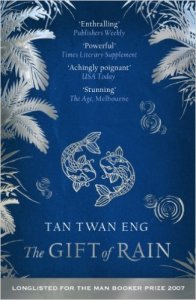
the-gift-of-rain-by-tan-twan-engPenang, 1939. Sixteen-year-old Philip Hutton is a loner. Half English, half Chinese and feeling neither, he discovers a sense of belonging in an unexpected friendship with Hayato Endo, a Japanese diplomat. Philip shows his new friend around his adored island of Penang, and in return Endo trains him in the art and discipline of aikido.

But such knowledge comes at a terrible price. The enigmatic Endo is bound by disciplines of his own and when the Japanese invade Malaya, threatening to destroy Philip s family and everything he loves, he realises that his trusted sensei to whom he owes absolute loyalty has been harbouring a devastating secret. Philip must risk everything in an attempt to save those he has placed in mortal danger and discover who and what he really is.

With masterful and gorgeous narrative, replete with exotic and captivating images, sounds and aromas of rain swept beaches, magical mountain temples, pungent spice warehouses, opulent colonial ballrooms and fetid and forbidding rainforests Tan Twan Eng weaves a haunting and unforgettable story of betrayal, barbaric cruelty, steadfast courage and enduring love.

In ‘the Gift Of Rain’ the reader is immersed in life in Malaya during the 1940’s. Tan Twan Eng writes some of the best prose I have read in a long time, and it pays to take the time to read slowly and savour this poetic and evocative language. Whether he is describing the beauty of Malaya or the brutality of occupation the author places the reader there, in the midst of the action, in such a way that it easy to become lost in this book. Supporting the lyrical descriptions is a cast of characters who are multi-faceted and totally believable. It is easy to sympathise with Philip in his search to find out where he belongs; even when he makes choices which we might not agree with we can understand his reasons and fervently hope that he will find the love, acceptance and peace that he is searching for.

This book is written in two distinct sections. The first, set in Penang in 1939, moves at a gentle pace as Philip meets a Japanese aikijitsu master, and through his lessons with Endo develops a physical, intellectual and spiritual awareness which remains with him for the rest of his life. There is a strange bond between the two which seems to transcend time and space, and the playing out of this relationship is the pivot of the whole book. The second part of the book takes place after the Japanese invasion and is faster paced, dramatic and hard hitting. Philip finds that life puts him in a position which challenges his ethics and morals; does his loyalty lie with his family or with Hayato Endo? Or does he have a much broarder loyalty to the people of Malaya? And where does his sense of self fit within this conflict?

‘The Gift Of Rain’ evokes a real sense of time and place, giving the reader insights not only into the history of Malaya but also of Japan and China. The way that the Second World War impacted on the different ethnic groups and their relationships with each other is the cloth of which this story is woven; it is a testament to the thorough research which Tan Twan Eng has made of the history of these countries, and of the colonial impact which played a part in shaping events. Why does history seem to see British occupation of Malaya as acceptable, unlike the Japanese occupation which is seen as criminal? What responsibility did the colonial power have to the people of Malaya, and they to it? There are no easy answers to this, and the questions raised are played out through Philip’s own personal search for identity.

Tan Twan Eng has created a book which looks at the darker side of life yet which holds an incredible balance. One could almost describe the whole novel as an evocation of the ying and yang of life, the balance of duty and loyalty, the image of a civilised and refined Japan which can be selfish and brutal at the same time. It is a book which is incredibly difficult to categorise. Part historical fiction and part martial arts treatise, part philosophy and part a coming of age story, it is a book which draws the reader in from the very first words and doesn’t let go, even after the last page has been turned. I have read this book a number of times and come back to it again and again, learning something new each time. I heartily recommend ‘The Gift Of Rain’ as one of those few books which will leave a lasting impression on you for some time to come.

The Gift of Rain is available on Amazon 
Tan Twan Eng has a website here
You can find more of my book reviews here

Recommended Read – Life After Life by Kate Atkinson

life-after-life-by-kate-atkinson

What if you had the chance to live your life again and again, until you finally got it right? During a snowstorm in England in 1910, a baby is born and dies before she can take her first breath. During a snowstorm in England in 1910, the same baby is born and lives to tell the tale. What if there were second chances? And third chances? In fact an infinite number of chances to live your life? Would you eventually be able to save the world from its own inevitable destiny? And would you even want to?

Life After Life’ is not the usual type of historical novel that I review. This is a fascinating story which explores the concept of life and time. What would happen if we lived the same life over and over again? Would it always be the same or would things change? Would we be able to guide our destiny to avoid the bad things which happen in life or to seek to achieve a goal which appears to be out of reach? Ms Atkinson uses the life/lives of Ursula to explore this theme.

Ursula is born one snowy day in 1910. She dies without taking her first breath but then is born again in the same situation with one minor difference which allows her to live. The novel continues to follow Ursula as she is born and dies, again and again. Each time her life is changed in some small way which leads to much larger changes as the years go by. Edward Lorenz asked, ‘Does the flap of a butterfly’s wings in Brazil set off a tornado in Texas?’ In this novel Ursula finds that her choices, as well as the decisions which people make all around her, do indeed lead to great changes – lives saved or lost, war or a chance for peace, all made possible through something as small as the proverbial flap of a butterfly’s wings.

Knowing, in part, what is going to happen to Ursula leaves you rooting for her, hoping that she will make a certain choice, speak to a certain person, avoid a certain action. In some of her incarnations you find yourself hoping that she survives and is happy, in others you hope that her death comes more quickly and she can start a new and better life. It is a strange novel in this sense, yet compulsive reading.

The reason I am recommending this book as historical fiction is the period in which it is set. Ursula lives during the turbulent years of both World Wars, and Ms Atkinson conveys these times in incredible detail. Her fictional accounts of the London blitz are some of the best I have read – both harrowing and inspiring. In another life Ursula lives in Germany during the Second World War. The descriptions of the changes from pre-war euphoria through nationalism to war and, finally, despair in Berlin during the last days of the Reich bear testimony to the depth of research which the author has carried out.

‘Life After Life’ is a unique novel in its structure. It is also a novel rich in historical detail and, in addition, a compelling portrait of Ursula and her family. Ms Atkinson’s writing cuts to the heart of human hopes and dreams, ambitions, loves and losses; the reader comes to love or hate the characters who are well drawn and believable, the kind of people you could meet almost anywhere.

The author writes with great skill, producing a novel which is thought provoking, moving and at times uncomfortable. It is the sort of book which leaves the reader reflecting on life, destiny and fate. What might be the consequences of our actions? Can we shape the future by a single word or deed or is it all pre-ordained? This is not a light read, but if you are looking for something entertaining and educational which leaves you asking questions and wanting more then I heartily recommend that you read ‘Life After Life’.

This novel won the 2013 COSTA Novel Award, and deservedly so.

‘Life After Life’ can be found on Amazon

Kate Atkinson’s website can be found here

More of my Recommended Reads can be found here.