Tag Archives: historical fiction

First review in for ‘The Cavalier Historian’

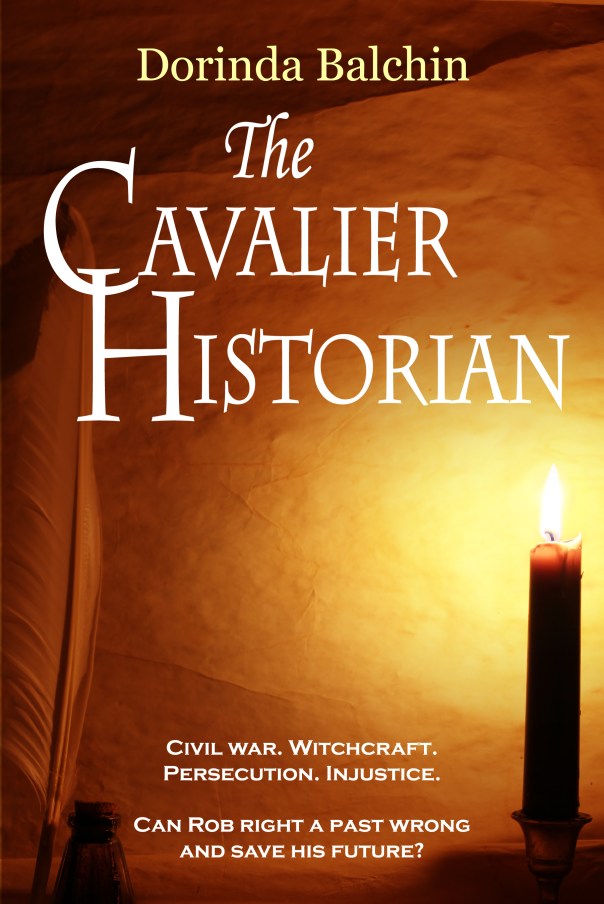
Cover_Kindle_front coverI woke up this morning with just days to go before ‘The Cavalier Historian’ is published on kindle and feeling rather nervous. Now I have a big smile on my face after receiving my first pre-publication review by Romuald Dzemo writing for Readers’ Favorite. Romuald has given my new novel five stars, which is a wonderful achievement from such a large and respected review site. So, thank you, Romuald, for the review – and the consequent boost to my confidence!

Romuald’s review:
A story that begins with a man waking in the middle of the night, feeling cold and uneasy, to find an ugly woman lurking in his room and telling him she’d waited many years to face a certain Mr. Hardwycke is a good promise for an adventure. The Cavalier Historian by Dorinda Balchin is this story, a tale that features witchcraft, civil war, and a gruesome injustice.

Robert Hardwick has been entrusted with the task to help transform the legendary Marston Manor in Oxfordshire into a themed attraction on the English Civil War. But strange things begin to happen as he starts this exciting project. Someone seems to be working against him, making sure that he doesn’t make any progress. He doesn’t have to investigate because his dreams create the link for him, thrusting him back in time to relive the awful events that took place during the war, and the witch trials of 1651. A woman named Rebekah seems to be at the center of the mystery. Can Robert right the injustice she’d suffered back then?

Part historical and part paranormal, The Cavalier Historian is a story that allows the reader to relive the horrors of the Civil War and the persecution of witches, a story about one of the controversial events in English history. What is most astounding is the bridge the author creates between then and now, making the story read as though it was happening now. The descriptions are vivid and readers will enjoy how the settings and culture are portrayed through the masterful use of language. The plot is fast-paced and intriguing, and I enjoyed the suspense created around the ghostly woman. Dorinda Balchin is a good storyteller with the gift of making the supernatural feel as real as the rainbow and creating characters readers want to stick with. Brilliant. Loved it so much!

Book review – ‘The Truth of the Line’ by Melanie Taylor

the-truth-of-the-line-by-melanie-taylorIn 1572, the good looking and talented Nicholas Hillyarde paints the first of many portraits of Elizabeth I, England’s “Virgin Queen”. His ability to capture the likeness of his patrons makes him famous and his skills are much sought after by the rich and powerful members of the Elizabethan Court. His loyalty to Elizabeth even leads him to becoming part of Sir Francis Walsingham’s information network. One day he is approached by a young man with an intriguing commission. Hillyarde is to paint the man holding a lady’s hand – a hand which descends from a cloud – complete with a puzzling motto: “Attici Amoris Ergo”… There is something familiar about this young man’s face, and Hillyarde is led down a dark path of investigation to discover who this young man may be. Who is the young man? Has Hillyarde stumbled across a dark royal secret, and, if so, is there evidence hidden elsewhere?
‘The Truth Of The Line’ is an intriguing novel. On the one hand it is steeped in historical fact from descriptions of life at Elizabeth’s court to the life of a gentleman at home, from the political situation at the time to the detailed descriptions of Elizabethan art; on the other hand it is an historical novel which will keep any lover of mystery entertaind.

‘The Truth Of The Line’ is a testament to the detailed research which historian Melanie Taylor has put into this book. Nicholas Hilliard was a ‘court limner’ who painted miniature portraits; he was also a goldsmith, which enabled him to create beautiful settings for his portraits. (You can see some of his work in the National Portrait Gallery, London). It was this position at court which enabled Hilliard to come into contact with many of the key players in Elizabethan society, and to be a part of some of that time’s most memorable moments. Quite a lot is known about the life and work of Nicholas Hilliard, but this novel is the first book that I am aware of to hint at a secret which the artist may have discovered when painting the mysterious young man who appears on the cover of this book. Who was he? And why the strange, almost nonsensical, motto? Although a work of fiction the details of the clues which Hilliard follows are based on Ms Taylor’s skilled interpretation of actual documents and paintings. There was a great deal of symbolism in Tudor art which enabled people to pass on a message without the use of incriminating words, and the author seamlessly moves from those symbols which are known in the art world to others which she has ‘discovered’ through her own detailed research. You will certainly be left wondering if Hilliard’s (and Ms Taylor’s?) conclusions about the young man he painted, and his relationship to key members of the royal court, could possibly be true.

If you are interested in history, or art, or cryptic clues then I think that you will enjoy this novel. It certainly left me wondering – what if…?

You can find out more about Melanie Taylor here

‘The Truth Of The Line’ can be found on Amazon

You can find more of my book reviews here

Oxford, where North and South are reversed!

People often ask me if I find the research needed to write good historical fiction is hard work. My answer is always the same – if you love finding out about the past as much as I do then research doesn’t feel like work at all!

I often find out something unusual when reading about life in the past, and delving into the impact that the English Civil War had on Oxford is no exception. I’m no geographer but I’ve often wondered why North Parade in Oxford is actually south of South Parade; it doesn’t make any sense. But when you look at what was going on there in the seventeenth century it all becomes perfectly clear. King Charles I had his headquarters in the area around Oxford University whilst the Parliamentarians held north Oxford. So the Royalist front line was to their north and was situated roughly where North Parade is today. The Roundhead’s frontline was to their south, hence South Parade. So there is a logical historical explanation for a strange looking geographical anomaly!

One of my aims in writing novels is to educate my readers through fiction. I hope that those who read ‘The Cavalier Historian’ will get a broader understanding of the English Civil War whilst enjoying a good book. If you want to pre-order your copy it is available on Amazon now.

Cover_Kindle_front cover


Book review – ‘The Fort’ by Bernard Cornwell

the-fort‘Captivate, kill or destroy the whole force of the enemy’ was the order given to the American soldiers in the summer 1779.

Seven hundred and fifty British soldiers and three small ships of the Royal Navy. Their orders: to build a fort above a harbour to create a base from which to control the New England seaboard.

Forty-one American ships and over nine hundred men. Their orders: to expel the British.

The battle that followed was a classic example of how the best-laid plans can be disrupted by personality and politics, and of how warfare can bring out both the best and worst in men. It is a timeless tale of men at war.

The Fort tells the story of the military action which took place at Penobscot Bay where General McLean of the British Army was sent to set up a garrison to control the New England seaboard and offer a place of refuge for loyalists fleeing from the American War of Independence. The American rebels in their turn planned to oust the British in a show of strength. The novel is told from four perspectives – both the British and American, and for each side descriptions of the action on land and at sea. This gives the reader a feel for the complexity of what was going on and also the rivalries which can cause problems for military expeditions. One problem I initially had with this approach though is that some of the sections, particularly at the beginning of the book, were quite short and I had to stop to remind myself which side I was reading about; but as the story progressed this became less of a distraction. I found myself becoming increasingly engrossed in the story and eager to find out what happened next.

The American War of Independence is not something I have studied in any great depth so the story of Fort George was completely new to me. As with all of his novels Mr Cornwell has obviously spent a great deal of time researching this period, and this action in particular, and has conveyed a real feel for warfare at the time. I was particularly impressed with his descriptions of the navel engagements from both a tactical point of few and from the perspective of the sailors. Such battles must have been truly terrifying for the participants.

Fans of Bernard Cornwell’s ‘Sharpe’ novels may be surprised by this book; it has a very accurate historical focus but less attention is given to the personal lives and romantic relationships of the characters. Having said that, most of the people who appear in this novel are real historical figures and much of their conversation and actions is based on authentic documents. This gives the novel a real feeling of authenticity, placing the reader in the midst of the conflict and eliciting feelings of anger and frustration towards some of the people (I have completely changed my view of Paul Revere!) whilst leaving me wanting to know more about others (in particular Lieutenant John Moore who went on help reform and develop the British Army and who appears to have been a fascinating character).

The Fort is not a novel for those who like historical stories where the main protagonist is in a fight of ‘good and evil’ against an opponent who holds some sort of a grudge against them, and where the hero then goes on to win the day pretty much all by himself. But if you like a well-researched, accurate account of a little known event in history then I would recommend that you take the time to read and appreciate The Fort.

‘The Fort’ can be found on Amazon

Bernard Cornwell’s website

More of my book reviews can be found here


New novel to be published on 1st November

The waiting is finally over…

My new novel, The Cavalier Historian, will be released on kindle on 1st November.

Why not pre-order your copy now. It’s quick and easy. Simply order and forget, then you can start reading on 1st November.

The date for the publication of print copies will be released soon

Cover_Kindle_front cover


‘The Cavalier Historian’ book cover preview

Good news!

 My new book now has its title and cover and will be published later this year.
 For all who have been waiting for a preview – here it is!

Cover_Kindle_front cover


Marston Manor is an old manor house in Oxfordshire which the new owner plans to turn into a ‘themed’ attraction based on the years of the English Civil War.  When historian, Robert Hardwick, joins the project he is delighted to discover a family link with Marston dating back to the time of King Charles I and the witch persecutions of the 17th century.

But right from the start disturbing events raise mistrust and fear on the estate.  Who, or what, is trying to halt the plans for the Manor?  Can the disruption and sabotage be linked to the traveller camp in the woods or to the more sinister appearances of a ghostly old woman?  And just who is Rebekah, and why does she have such a hold over Rob?

In his haunted dreams Rob finds himself living through the turbulent years of the English Civil War, experiencing it all through the eyes of his ancestor, Simon. Dreams which begin gently enough in the days leading up to war in 1642 but which become ever more frightening, ending with the terrifying events of the witch trials of 1651.

Rebekah is a novel which follows characters separated by more than three centuries, living in the 17th century yet somehow linked through time to present day events.  Over the centuries they live through war and peace, experience love and loss, suffer fear and persecution yet, at the very end, is it possible for them to find hope for the future?

Intrigued? I hope so!
In my novel Simon often writes his thoughts and fears into a diary during the Civil War which is why I have chosen this design for the cover. Do you like it? Please do let me know what you think!


Book review – ‘The Lady From Zagreb’ by Philip Kerr

The Lady From ZagrebSummer 1942. When Bernie Gunther is ordered to speak at an international police conference, an old acquaintance has a favour to ask. Little does Bernie suspect what this simple surveillance task will provoke . . .

One year later, resurfacing from the hell of the Eastern Front, a superior gives him another task that seems straightforward: locating the father of Dalia Dresner, the rising star of German cinema. Bernie accepts the job. Not that he has much choice – the superior is Goebbels himself.

But Dresner’s father hails from Yugoslavia, a country so riven by sectarian horrors that even Bernie’s stomach is turned. Yet even with monsters at home and abroad, one thing alone drives him on from Berlin to Zagreb to Zurich: Bernie Gunther has fallen in love.

‘The Lady From Zagreb’ is the tenth in a series of novels by Philip Kerr about German detective Bernie Gunther. These novels have well-constructed plots and are a pleasure to read for anyone who is a fan of detective novels. What makes them unique, however, is the historical setting. Bernie is a detective in Germany during the Second World War and the story gives us a different perspective on the conflict – from the point of view of a German who does not support the Nazis but has to try to survive to the end of the war. Disillusioned and cynical he often hides his feelings with a defensive blanket of sarcasm and dry humour, yet this detective is intelligent and persuasive with a belief in truth, justice and honour which is at odds with Nazi Germany.

Mr Kerr’s knowledge of Germany during the war years is extensive, and he expertly weaves the plot of his novel into the historical timeline – an international criminal conference in 1942 held at the villa where the ‘Final Solution’ to the Jewish question was decided; harrowing descriptions of the brutality of war in Yugoslavia; the Swiss plan to blow up key mountain passes if Germany tried to invade; these are just a few of the historic details which bring this novel to life. The author also expertly weaves real historical characters into ‘The Lady From Zagreb’, from Walter Schellenberg to Goebbels, Kurt Waldheim to Paul Meyer-Schwerendbach. Some of these names are familiar, others less so, but together they give this novel a real feel for time and place both descriptively and historically.

‘The Lady From Zagreb’ is an atmospheric novel which will draw a complex mix of emotions from the reader – anger, horror, sympathy, surprise, empathy to name just a few. It is a novel which will keep you turning the pages as you tread with Bernie Gunther the treacherous path between obedience, honour and survival.

In this novel Mr Kerr has expertly woven together the murder of a man by being struck over the head with a bust of Hitler, a missing priest and a mysterious body in a lake. Add to that a twist in the tale to equal any good detective story and you have a book which will appeal to anyone who loves the intricacies of a good crime story as well as historical fiction. I heartily recommend ‘The Lady From Zagreb’, and all of Mr Kerr’s novels about the cynical idealist Bernie Gunther.

‘The Lady From Zagreb’ can be found on Amazon

Philip Kerr’s website

More of my book reviews can be found here

Book review – ‘Winter Of The World’ by Ken Follett

Winter Of The World‘Winter Of The World’ is the second part of Ken Follett’s trilogy about the twentieth century. It is an ambitious novel, taking readers from 1933 through the Second World War to 1949. The plotting is complex with characters in the US, England, Germany and Russia who experience some of the key points of this period of history – the rise of Hitler, the Nazi euthanasia programme, the war in Europe, Pearl Harbour, war in the Pacific, the development of the atom bomb, the aftermath of war in Germany – the list could go on and on. The raft of characters and wide ranging storylines does mean that some important parts of this period of history are missed or skimmed over, but that is perfectly understandable.
The historical information in this book creates a believable backdrop for the lives and loves of the fictional characters, and is testament to the in depth research which Mr Follett must have carried out. The characters are quite well rounded and believable of themselves, although the fact that they are almost all upper class or wealthy does give a certain bias to the book; even the family which comes from a Welsh mining village is involved in politics and has MP’s amongst them. I realise that Mr Follett does this to move the plot on, but I would have preferred to read about a few more ‘ordinary’ people.

Mr Follett has a way with words which brings scenes to life; he also writes in a way which keeps the story moving at a good pace and so draws the reader into his world. The first novel in the series, ‘Fall of Giants’, which deals with the first thirty years of the last century, should be read before this novel to give an understanding of who the main characters are and where they came from, but as that is an equally well researched and well written novel reading it will be no hardship!

‘Winter Of The World’ is a novel which will be enjoyed by people with an interest in twentieth century history, and also fans of Mr Follett’s previous books. I heartily recommend it.

Winter Of The World can be found on Amazon

Ken Follett’s website

More of my book reviews can be found here

An absolutely amazing story that needs to be read

I would like to thank Jodie at Whispering Stories for her lovely review of Heronfield. As an author it means a great deal to me to know that my work has touched someone in this way. Here’s what Jodie said:

Set in Europe during the Second World War, Heronfield takes us on a six year journey of war, friendship, love, sadness, and hope. We meet many different characters, a few of whom are taken right into our heart.

I became strongly attached to one of the main characters, Tony. A young man hardly in his twenties, he is secretly recruited as a British agent in the efforts to foil Hitler’s war. I found myself feeling sorry for him when certain members of his family turned against him for shirking his duties when in fact, unbeknown to them, he was doing the exact opposite, but was duty bound not to tell them.

I felt the turmoil and heartache he was going through. He showed a tremendous amount of strength and courage throughout the story – all borne by his passion to defeat Hitler, to prove to his father that he was indeed fighting in the war, and most of all, the driving force to keep going – his love for a woman.

Another character I enjoyed reading about was Sarah, a volunteer nurse. She gets stationed at Heronfield, a family home turned war hospital. She has plenty of heartache along the way but it makes her stronger over the years. As the story progresses and I found myself rooting for her all the way.

Some characters are constant, and others are fleeting, but memorable all the same. We come across a German soldier who makes us realise that they are not just the enemy. They are human too.

The German soldier does a selfless and heartfelt deed. We meet him again later on in the story and he has the opportunity to end a life. Instead he chooses to back down and explains that he doesn’t agree with Hitler, but if he doesn’t fight under the regime then he’s as good as dead anyway. It’s a touching scene and puts a different spin on the people behind the enemy faces.

The story grabbed me from the opening pages, with the graphic descriptions of the attacks on innocent civilians by the Germans. It’s harrowing but draws you right in, and you get a real sense of what actually went on during the war.

I liked the mini segments that gave real life time lines of what was happening during the war in various locations. It gave a sense of where the story would head next, and the progress of the war. They were superbly detailed without being boring.

The author has expertly carried out her research. The environment descriptions, the horrors of war, the abhorrent conditions of concentration camps, torture methods meted out, and many more besides are so wonderfully detailed that I found myself there. I winced at the persecution of innocents, gasped and grimaced at the torture methods bestowed on one of the characters, and I shed quite a few tears along the way.

My heart was in my mouth many times and the raw emotion grabbed at me and didn’t let go, even after finishing the book. I’ve never read a story that’s taken me by the soul and stayed with me quite the way Heronfield has done, and that’s a really good and beautiful thing – and a sure sign of a brilliantly well-written story.

Sadly I can only give this book five stars. I wish I could give it more but five is the maximum! An absolutely amazing story that needs to be read.

If Jodie’s review has intrigued you why not read Heronfield yourself and see if you agree?

If you have already read Heronfield, then have you thought of leaving a review? I love to hear what my readers think.

Book review – ‘The Nightingale’ by Kristin Hannah

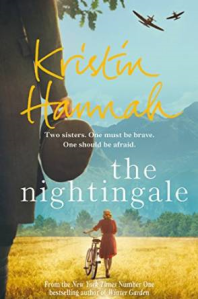
The Nightingale‘The Nightingale’ is a novel which will grip you from start to finish with its portrayal of life for two sisters in France during the Second World War. Vianne’s husband is taken by the Germans to a labour camp. Having a daughter makes Vianne cautious, intent on ensuring that they both survive the war. Her sister, Isabelle, is younger, more daring; a girl who has felt unloved for most of her life and feels she needs to do something, anything, to give meaning to her existence. Yet as the years progress, as hunger and lack of all luxuries set in, so the characters change to meet their changing circumstances. Small changes at first, but for each action there is a consequence leading, almost inevitable, to more dangerous actions. This is real life in the sense that it is moral choices that people make which mould them, choices which they sometimes wish they didn’t have to make but which cannot be avoided.

The Nightingale’ covers many aspects of life in occupied France – living with German officers who are billeted in your home, whether you like it or not; the treatment of Jews; the harsh realities of Occupation; the French Resistance; escape routes for Allied pilots across the mountains into Spain. Unusually, this novel’s two central characters are women, giving us a deeper understanding of what life was like away from the battlefields of the war, and helps us to realise that there are more battles to be fought than those involving guns and bombs.

The relationship between the two sisters changes dramatically during the novel as they finally come to realise the strengths and weaknesses which they each have, both different yet both equally brave and selfless in their attempts to help the lost and vulnerable under Nazi occupation.

This novel is well-paced, the plot developments work well, the characters are believable and many faceted, the dialogue realistic. The novel begins in America in 1995 with a French immigrant receiving an invitation to a ceremony in France to honour a heroine of the Second World War. Part of the suspense of the novel is wondering which of the sisters it is to honour, and which is the one who received the invitation. Did they both survive the war?

The Nightingale’ is fiction but is based on the lives of real people who put their lives on the line to help others during the German occupation of France. Many of these people made the ultimate sacrifice, but those who did survive rarely spoke of their experiences, sometimes because their memories were just too painful, or maybe because they felt that they had done nothing more than others. In ‘The Nightingale’ Kristin Hannah pays tribute to these people in a story full of pain and fear, yet also humanity and courage. It is a novel which I can heartily recommend to you.

The Nightingale can be found on Amazon

Kristin Hannah’s website

You can find more of my book reviews here