
There was a time when Cicero held Caesar’s life in the palm of his hand. But now Caesar is the dominant figure and Cicero’s life is in ruins. Exiled, separated from his wife and children, his possessions confiscated, his life constantly in danger, Cicero is tormented by the knowledge that he has sacrificed power for the sake of his principles. His comeback requires wit, skill and courage – and for a brief and glorious period, the legendary orator is once more the supreme senator in Rome. But politics is never static and no statesman, however cunning, can safeguard against the ambition and corruption of others.
Riveting and tumultuous, DICTATOR encompasses some of the most epic events in human history yet is also an intimate portrait of a brilliant, flawed, frequently fearful yet ultimately brave man – a hero for his time and for ours. This is an unforgettable tour de force from a master storyteller.
Dictator tells the story of Cicero, the great Roman statesman and orator, from the time he was forced to flee Rome to escape Julius Caesar to his eventual death*. Written in the style of a biography (purportedly by his former slave and secretary, Tiro) it gives us a glimpse into the tumultuous times which saw the death of the Roman Republic and the birth of an Empire. Tiro collated the works of Cicero as well as recording speeches in the senate verbatim (he developed the first system of shorthand, we still use some of his symbols today – &, etc., i.e., NB, e.g.), and it is his works which Robert Harris has drawn on to create his descriptions of the key characters in the early days of the Roman Empire, the political turmoil and martial conflict which they lived through.
It would be impossible to write about this period of history without a focus on politics, but Mr Harris cleverly entwines this with the personal lives of his characters, people whom he brings to life in all their complexity. We see their loves and hates, their strength of character, the ebb and flow of their allegiances; and it is these well-rounded characters who breathe life into this engrossing novel. Mr Harris is a skilful author who creates a believable Cicero, a man of lowly birth who rose to the greatest heights in the Roman Republic, a man of incredible intellect who had the gift of holding an audience in the palm of his hand with the strength of his oratory; a Cicero who we can all believe in and sympathise with. The descriptions of Roman life, the cities, travel by sea and on land, all are well researched and believable as Mr Harris utilises his apparently simple style to great effect, weaving a world which we can almost feel and smell and taste.
Many people believe that Cicero was one of the greatest Romans, not only as a politician and statesman but also a philosopher with deep insights into the human condition, a man who studied the ethics of the Greek masters and tried to apply them to his own time. All of this is portrayed in Dictator through Cicero’s own letters and speeches, bringing to life a man of personal courage whose strong principles had a profound impact on his world, for good and evil. I highly recommend this book to anyone with an interest in history and the human condition.
*I saw Dictator on the shelves in the library and it immediately appealed to me; it was not until I was half way through the book that I became aware that it is the final part of a trilogy about Cicero by Robert Harris. I enjoyed the book immensely and will definitely go back and read the first two parts – Imperium and Lustrum. If my review of Dictator appeals to you then I would recommend reading these two books first!
Dictator can be found on Amazon
You can find out more about Robert Harris here
You can find more of my Recommended Reads here
 ‘Powerful… Poignant, bleak and haunting, this is a small masterpiece’ Sunday Mirror
 An empowering, thought-provoking feminist novel that will change the way you see the world. Perfect for fans of Elizabeth Day, Claire Fuller and Joanna Cannon.
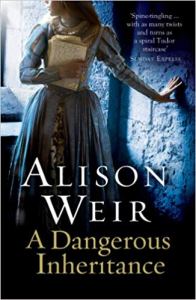 Two women separated by time are linked by the most famous murder mystery in history, the Princes in the Tower.
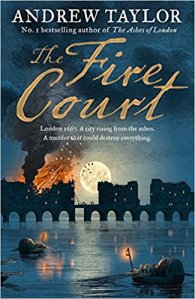 Somewhere in the soot-stained ruins of Restoration London, a killer has gone to ground…
 Somewhere in the soot-stained ruins of Restoration London, a killer has gone to ground…
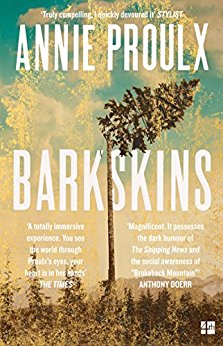 Longlisted for the baileys women’s prize for fiction 2017
 In the uneasy post-war peace of occupied Germany, a British soldier is billeted to a bombed Hamburg hotel. Alex’s days are spent investigating Nazi war criminals, but it is a chance meeting with a German university professor in a shabby back-street bookshop that changes his life. Having befriended the professor and his wife, Alex falls in love with their only daughter, Lisa, only to discover that the professor may not be as innocent as he first appeared. The stale aftermath of a long and hideous war has left the old society in ruins. There are still many secrets to uncover and Alex has to ask himself what is more important – love or truth? As he digs deeper into the professor’s past Alex is forced to recognise that he cannot have both.
 It is late summer in East Sussex, 1914. Amidst the season’s splendour, fiercely independent Beatrice Nash arrives in the coastal town of Rye to fill a teaching position at the local grammar school. There she is taken under the wing of formidable matriarch Agatha Kent, who, along with her charming nephews, tries her best to welcome Beatrice to a place that remains stubbornly resistant to the idea of female teachers. But just as Beatrice comes alive to the beauty of the Sussex landscape, and the colourful characters that populate Rye, the perfect summer is about to end. For the unimaginable is coming – and soon the limits of progress, and the old ways, will be tested as this small town goes to war.
 Vikram Seth’s novel is, at its core, a love story: the tale of Lata – and her mother’s – attempts to find her a suitable husband, through love or through exacting maternal appraisal. At the same time, it is the story of India, newly independent and struggling through a time of crisis as a sixth of the world’s population faces its first great general election and the chance to map its own destiny.
 Dorinda Balchin - Author