It was 75 years ago today that the world awoke to a new age as the first V1 rocket fell on the city of London.
We are all used to the term ‘Weapons of Mass Destruction’, and prior to the Second World War the only weapon which could have been called that was the gas used in the trenches during the First World War. The shells used to deliver the gas were of a conventional nature, but what the Germans later developed was something completely different so that when Hitler’s new weapons rained down on London for the first time in 1944 they were almost incomprehensible in their sophistication and power. What were they? And where did they come from?
In 1939 the Oslo Report alerted London to the development of new and very advanced weapons in Germany, but the report wasn’t taken seriously – if Britain couldn’t build such weapons then obviously Germany would be incapable of it too – and it was a number of years before the threat of missile weapons aimed at Britain from the continent was recognised by the Allied powers. It was on 29th September 1943 that Albert Speer publicly promised retribution against the mass bombing of German cities, saying that the Nazis now had a new ‘secret weapon’; Hitler intended to deploy thousands of these weapons, and if he had succeeded he would almost certainly have destroyed the city of London.
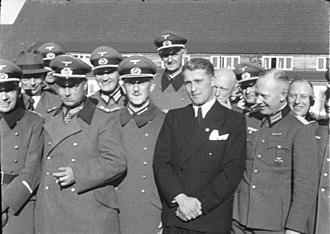
Research and development of the ‘secret weapon’ was carried out in a purpose-built facility at Peenemunde on the Baltic coast, which was the biggest research centre in the world between 1936 and 1945 and the first ever missile test site. With brilliant scientists like Wernher von Braun Germany was way ahead of the Allies in missile technology, and by 1942 they were making good progress with the test launch of the first V1 missile. Then, on 3rd October 1942, the Germans launched the first V2 rocket into the stratosphere at supersonic speed, changing the face of warfare for ever. The ‘V’ in their name stood for Vergeltungswaffen meaning‚ ‘revenge weapon‘, and Hitler hoped that they would be in place in time to punish Britain for the destruction of German cites and turn the tide of the war in his favour.
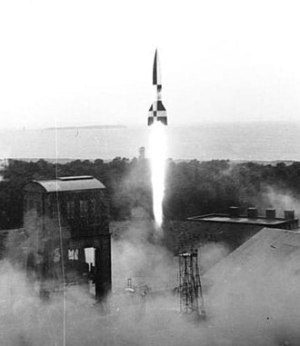
Allied spy planes had already identified Peenemunde as a key site in Hitler’s weapons development programme, and on 17th and 18th August 1943 more than 500 bombers set off from Britain to destroy the facility. The raid was very successful, causing severe damage at the site and putting back the missile programme by 8-12 weeks, but more importantly from the Allied point of view some of the most important scientists involved in the project were killed during the raid, a loss which could not be replaced. As well as Peenemunde, the Allied spy planes had also identified a huge concrete bunker at St Pol in northern France, and an even bigger one in a quarry at Wizernes, 40km from the English Channel. They were not sure what these structures were for but knew that they must be vitally important to the Germans (they were actually intended launch sites for the V-weapons). These missile sites in northern France were bombed following the raid on Peenemunde, and although the huge thick concrete domes were effectively bomb proof the foundations were damaged by ‘near misses’ which made some of the sites inoperable. The only bomb that could touch the massive concrete structures was the 12,000lb ‘Tall Boy’ and the even bigger ‘Grand Slam’ bombs designed by Barnes Wallis, the mastermind behind the ‘Bouncing Bomb’.
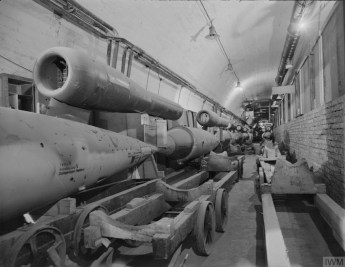
The Germans could not afford the losses caused by the Allied bombings and so the V-weapons programme was relocated to the forests of Blizna in Poland and the Hertz mountains of Germany. A mountainside just outside the small town of Nordhausen was turned into an underground factory to make V-weapons, the tunnels were so long and deep that it was hard for the allies to bomb them, and impossible for them to know what was happening inside. The SS were put in charge of the V-weapons programme at this critical stage and they conscripted 60,000 slave labourers to work there, housing them in the concentration camp at Dora. The tunnels stretched for 21km, and the conditions for the workers were terrible. Until the spring of 1944, prisoners were mostly kept underground in unstable tunnels, deprived of daylight and fresh air. The mortality rate was higher than at most other concentration camps with prisoners who were too weak or ill to work were sent to Auschwitz-Birkenau or Mauthausen camps to be killed. In 1944, a compound to house forced laborers was finally built above ground level south of the main factory area, giving the workers some relief from the atrocious conditions underground. Once full production of the missiles began towards the end of 1944, the Dora-Mittelbau concentration/work camp had a prisoner population of at least 12,000.
As the final elements of the V-weapons were put together work went ahead to create launch sites in northern France with many hidden ramps being created in woods. These were V1 storerooms and launch sites aimed at Southampton, Portsmouth and London; the Germans planned to use these sites to launch up to 2,000 V1’s every day.

The V1 was a small pilotless winged bomb which carried 1 ton of high explosives and was powered by a jet engine which enabled it to travel at a maximum speed of 400 mph with a maximum reach of 200 miles (this distance decreased in poor weather conditions). A pre-set magnetic compass together with a gyroscopic auto-pilot helped it to find and maintain its course, while at the front of the flying bomb was a small propeller which measured the distance covered and shut the power to the engine when the pre-set distance had been reached, hopefully over its target. The first V1 landed on London on 13th June 1944, a week after the D Day landings. After 15th June around 100 V1’s were being launched against Britain every day, and the ‘Doodlebug’ or ‘Buzzbomb’ as they were called (named after the sinister sound they made) brought terror to the streets of London. When the sound of its engine stopped people ran for cover as the flying bomb fell from the sky. This new terror became known as ‘Britain’s Baby Blitz’.

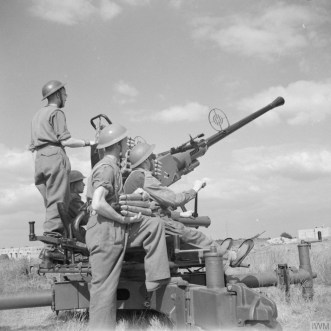
Thousands were killed in the V1 attacks and the British fought back with everything they could. There were massed anti-aircraft guns on the south-east coast of England, and RAF pilots would either shoot down or tip over the flying bombs to force them off course. V1’s flew straight and level so they were relatively easy to take out once sighted and many were shot down before they reached their target. Of the estimated 8,000 or 9,000 launched anti-aircraft guns shot down over 1,800, a similar number were brought down by the RAF, and 200 were destroyed by barrage balloons. The greatest single loss of life caused by a V1 killed 121 people when a flying bomb landed on the Guards Chapel at Wellington Barracks during a service.
D Day had started just days before the launch of the first V1, and as the Allies advanced through northern Europe they soon overran the V1 emplacements in northern France and Holland. The launch sites were steadily pushed further and further back until England was no longer within their reach and the last doodlebug fell on London 7th September 1944.
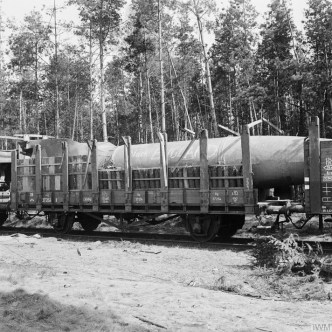
The Baby Blitz was not, however, over. The following day, 8th September 1944, the first V2 crashed into Chiswick in London with devastating effect. At 14m high it was a streamlined rocket as tall as a four-storey building. Its engine burned a mix of liquid oxygen and alcohol-water, and it was the first missile to reach the edge of space before falling at supersonic speed, ensuring that it came out of nowhere with no warning, delivering its payload of 1 ton of high explosive at a terminal speed of 2,386 mph. The first V2 took an estimated 5 minutes to fly the 200 miles from its launch site in the Hague to London, and there was no defence against it. As the V2 explosions came without warning, the government initially attempted to conceal their cause by blaming them on defective gas pipes which had been damaged by earlier bombing. But as more and more of the missiles landed on London the public were not fooled and soon began referring to the V-2s as “flying gas pipes”.
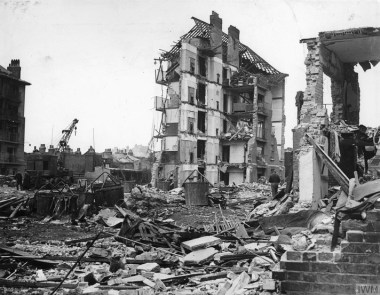
By October the offensive was relentless. A particularly devastating strike was on 25 November 1944 when a V-2 exploded at the Woolworth’s store in New Cross Road, killing 168 people and seriously injuring 121 more. It was difficult for Military Intelligence and the RAF to take out these missiles at source as launch sites were not fixed. The Germans would pour an innocent looking concrete slab then, just before launch a truck would arrive with the rocket, set up, fuel it, launch it and drive off. The continued Allied advance through Europe allowed them to overrun these sites, and this is what saved London with the last V2 falling on the city on 27th March 1945. The final death toll of Hitler’s Vergeltungswaffen project was discovered when Dora camp was liberated and thousands of dead slave workers were found stacked outside the underground tunnels, the SS had not even bothered to bury them.
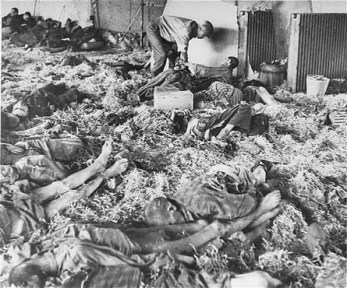
Germany’s V-weapons caused over 30,000 casualties in England (9,000 deaths, the rest wounded) and left hundreds of thousands homeless. Yet despite this, the overall destruction they caused was less than the Blitz of 1940-1941. In fact, more slave labourers died making the V-weapons (an estimated 20,000) than civilians were killed during the offensive.
But the successful creation of the V-weapons had ushered in a new type of warfare. The Americans and Russians rushed to grab this new technology and the scientists who had created it with Werner von Braun eventually going on to be one of the lead scientists on the American Saturn 5 project which took man to the moon.

 Hedwig Eva Maria Kiesler, a Jew born in Vienna on 9th November 1914, is better known to the world as the Hollywood actress Hedy Lamar. As a child she was interested in acting and theatre, but she also had a passion for inventing things and at the age of 5 she was able to take apart and rebuild her old-fashioned music box. Her father was a banker who loved Hedy’s intellectual curiosity and interest in technology and would happily spend time explaining to her how things worked. Hedy grew up to be one of the most beautiful women in the world and began her acting career in Europe where at the age 16 she went to a film studio and got a walk on part. The young actress became world famous when she appeared naked in a film called Ecstacy which was banned by Hitler and denounced by the Pope. When she was 19 Hedy married a munitions tycoon, Fritz Mandl, who was allied with the Nazis even though he was Jewish; it was not a happy marriage. By 1937 it was clear that war would be inevitable; Jews were being systematically denied their rights which led to the death of Hedy’s father from stress and worry. Hedy left her husband and escaped to England with her mother where Hedy met the film director Louis B Mayer and went to Hollywood to work for him.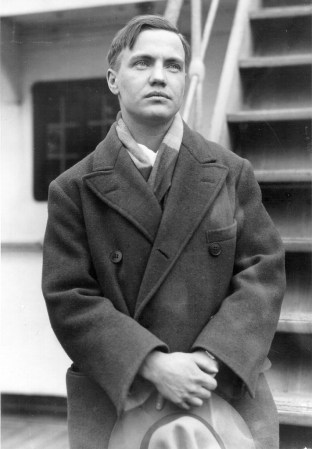
 This is where her friend the composer George Anthiel came in. George came up with the idea which would make Hedy’s concept work using the same system as that used by pianos which play themselves – the rolls activate piano keys so why couldn’t they activate radio frequencies in both the torpedo and the ship? The idea was for two rolls of card with holes in them (similar to those used by the pianos) to start at the same time and run at the same speed so the ship and torpedo could secretly communicate on the same pattern of frequencies; there were 88 frequencies, the number of keys on a piano, and it would be impossible for the enemy to jam these all at the same time as it would require too much power; it would also be almost impossible to crack the system as each pair of rolls could be uniquely created using a random pattern. George and Hedy took their idea to the National Inventors Council in 1941, and the Council put them in touch with a physicist at Cal Tech called Sam Mackeown, who was an expert on electronics. On 11th August 1942, U.S. Patent 2,292,387 was granted to Antheil and “Hedy Kiesler Markey”, Lamarr’s married name at the time. George and Hedy took the invention to the navy but they rejected it, and the US government seized her patent in 1942 as the ‘property of an enemy alien’.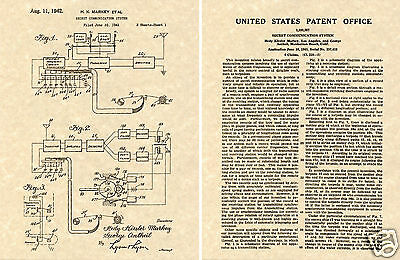



 We have all seen photos of Winston Churchill giving his famous ‘V for Victory’ sign during the Second World War, but we actually have Belgian tennis star Victor de Laveleye to thank for this iconic sign. de Laveleye competed in the 1920 and 1924 Olympic Games for Belgium, but he was also a politician who served as Minister of Justice in 1937. As the Germans pushed west in 1940 de Laveleye fled to Britain where he was put in charge of the BBC’s broadcasts to occupied Belgium and soon became the symbol of free Belgians everywhere. On 14th January 1941 Laveleye asked all Belgians to use the letter ‘V’ as a symbol of resistance and a rallying cry to fight the invaders because, he said, ‘V is the first letter of Victoire (victory) in French and Vrijheid (freedom) in Flemish, like the Walloons and the Flemish who today walk hand in hand, two things that are consequences of each other, Victory will give you Freedom’. He went on to say that “the occupier, by seeing this sign, always the same, infinitely repeated, [will] understand that he is surrounded, encircled by an immense crowd of citizens eagerly awaiting his first moment of weakness, watching for his first failure.” The Belgian people willingly adopted the sign and the letter immediately began to appear daubed on walls in Belgium, the Netherlands, Northern France, and other parts of Europe, a symbolic act of defiance against the Nazis.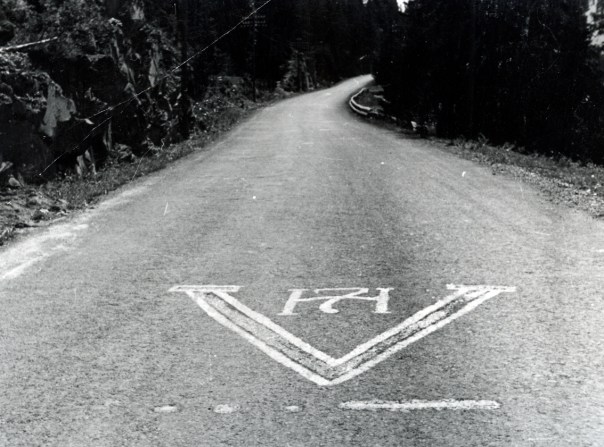
 Winston Churchill realised how successful this symbol was in uniting people against Hitler’s regime and decided to use it during a speech in July 1941 when he said that ‘The V sign is the symbol of the unconquerable will of the occupied territories and a portent of the fate awaiting Nazi tyranny. So long as the people continue to refuse all collaboration with the invader it is sure that his cause will perish and that Europe will be liberated.” Churchill continued to use the sign as his ‘signature gesture’ for the remainder of the war.



















 Dorinda Balchin - Author